


 Netanyahu’s Brief US Trip Highlights Strains With Trump
  Gaza Faces Evacuation Crisis as War-Damaged Buildings Risk Collapse
  US Senate Rejects Iran War Powers Resolution in 50-49 Vote
  Trump Administration Plans Faster FDA Reviews for Smoke-Free Nicotine Products
  North Korea Rejects Nuclear Test Warning, Calls Nuclear Status Irreversible
  US, China Extend Trade Truce to Jan. 10 Ahead of Trump-Xi Summit
  Judge Orders Trump to Restore White House Access for CNN, MS NOW and Politico
  Yemen Violence Displaces 130,000 as Civilian Toll Rises
  Netanyahu Defends Israel at UN as Delegates Stage Walkout
  France Defends Netanyahu Airspace Clearance Despite ICC Warrant
  Abbas Reaffirms November 28 Palestinian Elections
  Sudan Rejects US Legitimacy Remarks, Defends Sovereignty
  US Officials Split Over Response to Israeli West Bank Settlements
  Mexico-US Trade Talks Delayed to October as Tariff Negotiations Continue
  Venezuela Promises Elections as Delcy Rodriguez Pledges Democratic Transition
  Russian Envoy Dmitriev Heads to US for Ukraine Talks
  EU Defence Build-Up Too Slow for 2030 Russia Readiness Goal


 Add as a preferred source on Google
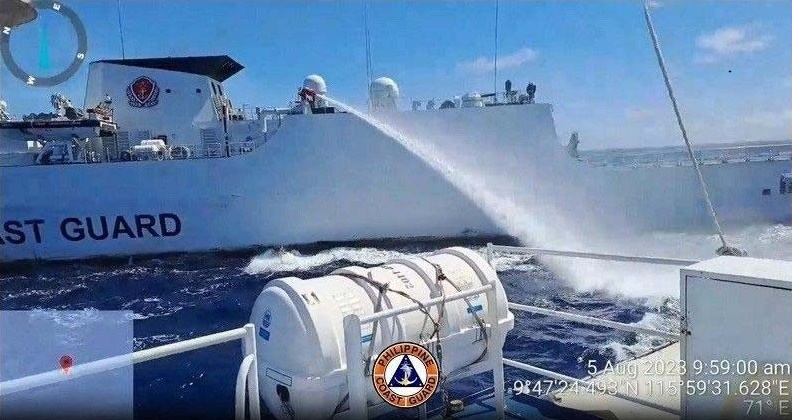
China recently carried out military drills, including live-fire exercises, in waters east of Luzon Island in the Philippines, highlighting rising tensions in the South China Sea. The announcement came as the United States and the Philippines, along with allied forces, launched their annual Balikatan joint military exercises, which now extend closer to disputed maritime areas.
More than 17,000 troops from the U.S., the Philippines, and partner nations are participating in this year’s Balikatan drills, which run from April 20 to May 8. Notably, Japan has deployed combat troops for the first time, signaling stronger regional security cooperation amid ongoing geopolitical strains between Tokyo and Beijing.
According to China’s Southern Theater Command, its Naval Task Group 107 conducted operations focused on live-fire shooting, coordinated sea-air maneuvers, rapid deployment, and maritime resupply missions. These activities aim to strengthen China’s joint combat readiness and overall naval capabilities. While Beijing did not disclose the precise location or timing of the drills, it described them as necessary actions aligned with international law and current regional security needs.
China has consistently criticized joint military exercises between the Philippines and its allies, arguing that such activities heighten tensions in the Indo-Pacific region. Meanwhile, the Balikatan exercises include expanded operations in Luzon, with new maritime strike drills planned on Itbayat Island, the northernmost part of the Philippines located just 155 kilometers from Taiwan. Beijing considers Taiwan part of its territory, a claim strongly rejected by Taipei.
Additional counter-landing and live-fire drills are scheduled in Zambales province, near the contested Scarborough Shoal, an area under Chinese control but claimed by the Philippines. The South China Sea remains a critical global trade route, handling over $3 trillion in commerce annually, and continues to be a flashpoint for territorial disputes.
China has also emphasized its long-term strategy to boost maritime strength, with Premier Li Qiang calling for enhanced naval innovation and protection of national sovereignty.







