


 Britain Courts Anthropic Amid US Defense Department Dispute
  Chinese Universities with PLA Ties Found Purchasing Restricted U.S. AI Chips Through Super Micro Servers
  SpaceX IPO Filing Expected This Week as Valuation Could Surpass $75 Billion
  SoftwareONE Posts 22.5% Revenue Surge in 2025 on Crayon Acquisition
  Meta and Google just lost a landmark social media addiction case. A tech law expert explains the fallout
  Makemation: a Nollywood movie that shows AI in action in Africa
  UPS and Teamsters Reach Agreement to Limit Driver Severance Program
  OpenAI Executive Shake-Up Ahead of Anticipated 2026 IPO
  MATCH Act Targets ASML and Chinese Chipmakers in New U.S. Export Crackdown
  Rubio Directs U.S. Diplomats to Use X and Military Psyops to Counter Foreign Propaganda
  California's AI Executive Order Pushes Responsible Tech Use in State Contracts
  Norma Group Posts Revenue Decline in 2025, Eyes Modest Recovery in 2026
  Elon Musk Ties SpaceX IPO Access to Mandatory Grok AI Subscriptions
  Nike Beats Q3 Estimates but China Weakness and Margin Pressure Weigh on Outlook
  Cathay Pacific Holds Firm on Flight Capacity Amid Middle East Conflict and Rising Fuel Costs
  Annie Altman Amends Sexual Abuse Lawsuit Against OpenAI CEO Sam Altman
  Microsoft's $10 Billion Japan Investment: AI Infrastructure and Data Sovereignty Push


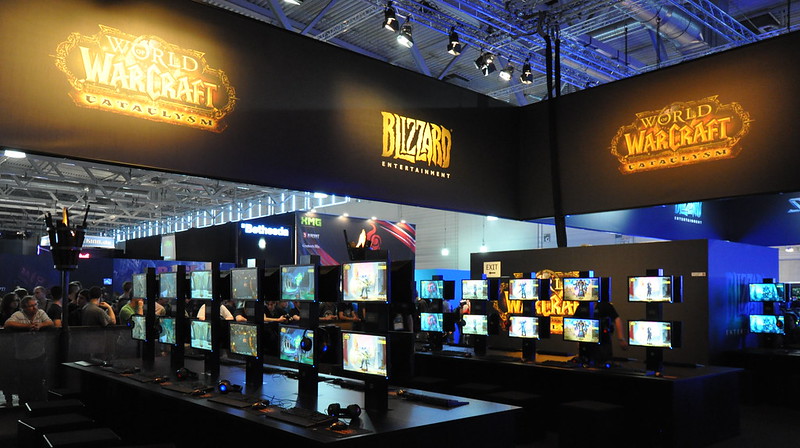
Blizzard Entertainment and Chinese gaming giant NetEase had apparently been working on more video game projects behind the scenes. However, the companies reportedly had disagreements on an unannounced “Warcraft” mobile game leading to its cancellation.
Not to be confused with “Warcraft Arclight Rumble,” Bloomberg reported that the now-canceled project was codenamed Neptune. It was set in the “World of Warcraft” universe, but it was planned to be a spin-off game as it would have featured events that take place in a different timeline.
The same report claimed NetEase dissolved a team with more than 100 developers following Neptune’s cancellation. The canceled project was supposed to be a massively multiplayer online mobile game, suggesting it would have been a very different experience from “Warcraft Arclight Rumble.” The game, which was announced last May, will be a free-to-play action strategy title with collectible Minis.
It is not entirely clear why Blizzard and NetEase ended up canceling the project even though it has been in development for several years. Bloomberg only said the “Warcraft” mobile game was canceled because Blizzard and NetEase had “disagreed over terms” of the Neptune development.
Niko Partners said in a report in May that China makes up one-third of the global mobile gaming market with more than 640 million gamers this year, and it is expected to grow to 679 million gamers by 2026. But China has extremely strict guidelines, including requiring foreign publishers to have Chinese partners so they can sell video games in the country.
Blizzard’s partnership with NetEase is then evidently crucial for the Irvine, California-based publisher. And as the report pointed out, the cancellation of the “Warcraft” mobile game raises questions about the companies’ partnership for other projects.
But it is worth noting that Blizzard and NetEase had been partners long before the now-canceled “Warcraft” mobile game entered development. The latter has been distributing “World of Warcraft” games and expansions in China since 2009. The companies have also partnered for the recently released mobile game “Diablo Immortal,” which became available in China in late July.
Photo by Marco Verch from Flickr licensed under Creative Commons







