


 Trump Plans Military Complex Inside Washington Triumphal Arch
  Trump Administration Removes Confederate Memorial Criticism From Arlington Website
  Russian Drone Attacks Kill Four in Kyiv Region, Including Three Children
  Australia Defends Social Media Algorithm Law Amid US Concerns
  South Korea to Brief Lawmakers on $350 Billion US Investment Package
  Trump Scales Back Endangered Species Act Protections
  SEC Seeks ISS Client Voting Records in Proxy Adviser Probe
  U.S. Imposes New Visa Restrictions Over South Africa Policies
  US Resumes Immigrant Visa Processing for Hungary, Poland
  Australia Plans New Rules Giving Users Control Over Social Media Feeds
  Vietnam, US Trade Deal Could Be Signed Soon, To Lam Says
  ICE Agent Arrested in Minneapolis Over Venezuelan Man Shooting
  Lula Meets Mamdani in New York as Elections Approach
  DOJ Will Investigate AI-Related Crimes, Attorney General Blanche Says
  US, Japan and South Korea Back Taiwan Ahead of Trump-Xi Summit
  Trump Open to Pezeshkian Meeting as Iran Tensions Escalate
  CNN, MS NOW and Politico Sue Trump Over White House Media Ban


 Add as a preferred source on Google
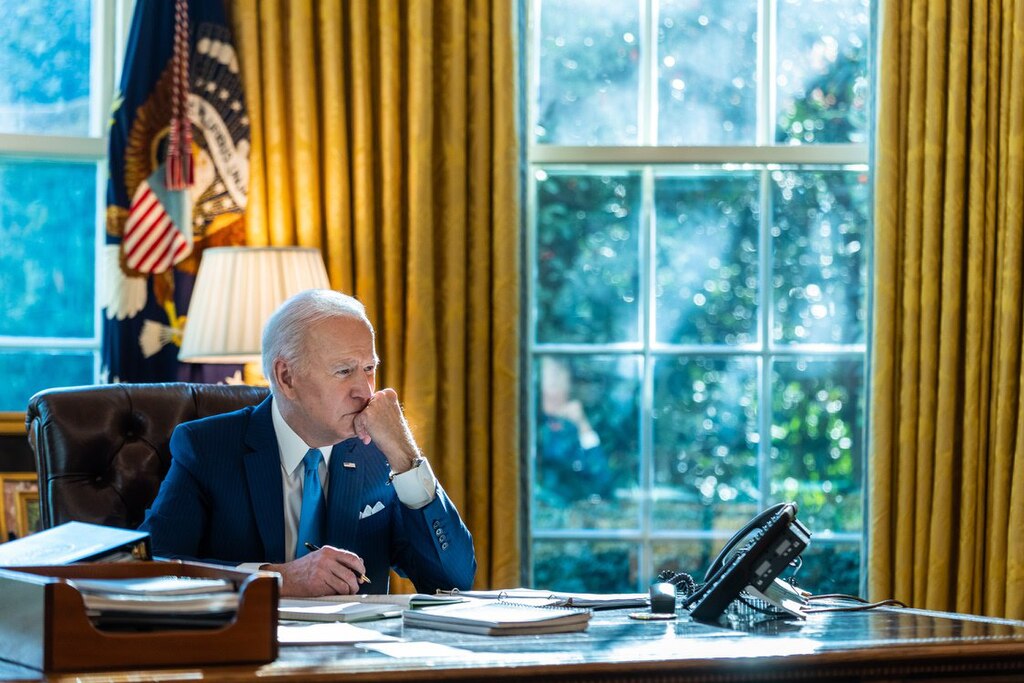
President Joe Biden is introducing an executive order to strengthen cybersecurity standards for federal agencies and contractors, targeting vulnerabilities exposed by recent cyberattacks linked to China. The order, expected soon, focuses on secure software development, validation processes, and enhanced oversight by the Cybersecurity and Infrastructure Security Agency (CISA).
According to a draft seen by Reuters, vendors must provide documentation proving adherence to secure development standards, which will be validated through CISA's attestation program. Non-compliance could result in legal action. This measure follows several high-profile breaches, including a 2023 hack of U.S. Treasury emails, allegedly linked to Chinese operatives—a claim Beijing has denied.
Tom Kellermann of Contrast Security supports Biden’s push but criticizes the timelines for implementation as inadequate given the immediate threats from China, Russia, and cybercriminal groups. “We’re facing a cyber insurgency targeting critical infrastructure and federal agencies,” he said.
The order also addresses vulnerabilities in access tokens and cryptographic key management, which hackers exploited in the May 2023 breach of top U.S. officials’ emails, as noted by Microsoft.
Brandon Wales of SentinelOne highlighted the order’s continuity with prior administrations’ efforts to bolster cybersecurity capabilities. He emphasized the need for urgency, citing China as a “pacing threat” while acknowledging the broader landscape of cyber risks.
The White House and CISA declined to comment. While experts see the order as a step forward, many stress the importance of swift and comprehensive action to counter escalating cyber threats. Biden’s cybersecurity reforms aim to fortify the nation’s digital defenses and ensure resilience in the face of sophisticated cyberattacks.







