


 Appeals Court Rejects Trump Third-Country Deportation Policy
  FDA Names Permanent Drug and Biologics Center Chiefs
  NATO Boosts Intelligence Sharing Amid Russia Hybrid Threats
  Trump, Xi Focus on Trade and AI at White House Summit
  FCC Approves Foreign Investment in $110B Paramount-Warner Bros. Deal
  US Backs Musk in Fight Against EU’s €120 Million X Fine
  Saudi Arabia Shuts East-West Oil Pipeline After Drone Attack
  Japan Private-Sector Growth Slows as Domestic Demand Weakens
  Fed’s Hammack Says Bond Yield Surge Is Not Driven by Inflation Fears
  US Stock Futures Fall as Treasury Yields Surge Ahead of Trump-Xi Summit
  France Defends Netanyahu Airspace Clearance Despite ICC Warrant
  Gold Holds Near $4,275 as Rising Treasury Yields Fuel Fed Rate Hike Bets
  US Northeast Airports Resume Operations After Telecom Outage Disrupts Thousands of Flights
  Trump Administration Removes Confederate Memorial Criticism From Arlington Website
  South Korea, US Discuss Warship Building Cooperation
  Gold Prices Fall as Treasury Yields Rise on Fed Rate Hike Bets


 Add as a preferred source on Google
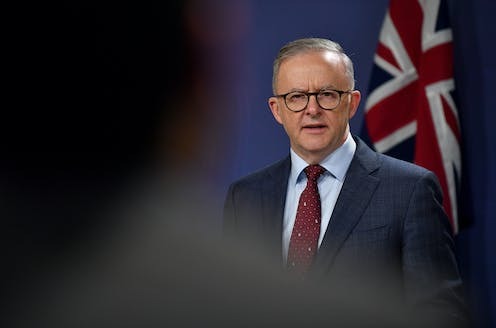
Australia’s Prime Minister Anthony Albanese clarified that the recent decision to ease restrictions on U.S. beef imports was not influenced by U.S. President Donald Trump. The announcement comes as both countries engage in broader trade discussions.
The import curbs, implemented in 2003 over concerns about bovine spongiform encephalopathy (mad cow disease), have been under review for a decade. Albanese stated on Australian Broadcasting Corp television that the decision was “not political” and confirmed Trump never raised the issue during their recent phone call.
Trump previously hailed the policy shift, suggesting the U.S. would export “so much” beef to Australia. U.S. Agriculture Secretary Brooke Rollins also described the move as a win for Trump. The easing could potentially help smooth negotiations on U.S. tariffs targeting Australian steel, aluminium, and pharmaceuticals, which Canberra hopes to reduce.
Australia’s agriculture minister emphasized that the policy change followed a “rigorous science and risk-based assessment” confirming U.S. cattle monitoring measures sufficiently address biosecurity risks. However, the National Party, part of the conservative opposition, warned that “biosecurity should not be political” and called for an independent review.
Despite the policy shift, analysts expect minimal impact on trade volumes. Australia remains one of the world’s largest beef exporters with competitive pricing. In 2023, Australia exported nearly 400,000 metric tons of beef worth $2.9 billion to the United States, while only 269 tons of U.S. beef entered Australia.
The easing of import rules was first reported by the Australian Financial Review and comes amid heightened trade tensions and negotiations between Canberra and Washington.







