


 FDA Pilot Program Eases Rules for Nicotine Pouch Makers
  NASA's Artemis II Crew Arrives in Florida for Historic Moon Mission
  NASA Artemis II: First Crewed Moon Mission Since Apollo Takes Four Astronauts on 10-Day Lunar Journey
  Neuralink Expands Brain Implant Trials with 12 Global Patients
  Trump Signs Executive Order to Boost AI Research in Childhood Cancer
  Cogent Biosciences Soars 120% on Breakthrough Phase 3 Results for Bezuclastinib in GIST Treatment
  Is space worth the cost? Accounting experts say its value can’t be found in spreadsheets
  Trump and Merck KGaA Partner to Slash IVF Drug Costs and Expand Fertility Coverage
  SpaceX’s Starship Completes 11th Test Flight, Paving Way for Moon and Mars Missions
  SpaceX Pivots Toward Moon City as Musk Reframes Long-Term Space Vision


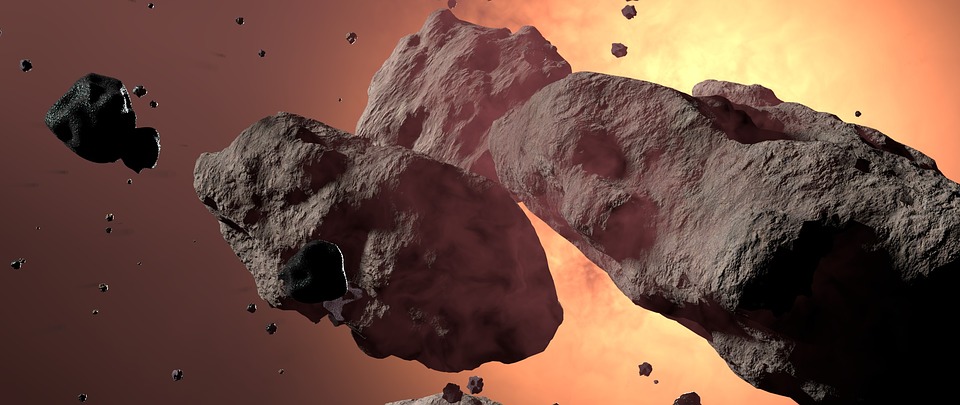
There have been instances of asteroids slipping past detection of the asteroid trackers on Earth, however, the most recent instance has likely made astronomers confused. One particularly large asteroid flew by Earth and the Moon, but astronomers only noticed it a few days later.
Express reports that the asteroid referred to as 2020 LD, passed by Earth last week on June 5th. However, astronomers only saw that it passed by two days later. 2020 LD measured 400 feet in diameter, equivalent to five blue whales and experts said that 2020 LD is the biggest asteroid to pass between Earth and the Moon since 2011, being the 45th asteroid to fly by at a lunar distance of the planet so far this year.
2020 LD came in relatively close to Earth, at a distance of 190,559 miles and passing at a rate of 60, 826 miles per hour. NASA has classified it as a Near-Earth Object or NEO.
The likelihood of an asteroid collision is small but not impossible, with a one in 300,000 chance. From learning about 2020 LD, it signals a great need for space agencies to continue monitoring the skies for potentially hazardous asteroids that may make an unannounced visit to Earth. Fortunately, many agencies are already taking measures to prepare and protect the planet from any rogue asteroids that could make it through the atmosphere.
Millions of years ago, an asteroid collision was widely believed to be responsible for the mass extinction of the dinosaurs. However, a new study revealed that these rocks may have also provided the foundations of life on Earth. Researchers from Osaka University, Tohoku University, National Institute for Materials Science, and Center for High-Pressure Science & Technology Advanced Research conducted a study on amino acids that were present on meteorites and how it interacted with the saltwater in the Earth’s oceans.
Running the study through a simulation, they found that these amino acids could form compounds such as glycine and alanine upon contact with the Earth’s atmosphere. Therefore, these amino acids act as a catalyst for biological processes.
There is a theory that Mars once had oceans, which means that the same process could have helped provide the foundations of life on the red planet.







