


 Federal Judge Blocks Pentagon's Blacklisting of AI Company Anthropic
  SpaceX Eyes Historic IPO at $1.75 Trillion Valuation
  Samsung Electronics Posts Eightfold Profit Surge Driven by AI Chip Demand
  Apple Turns 50: From Garage Startup to AI Crossroads
  China's Push to Steal Taiwan's Chip Technology and Talent Raises Security Alarms
  Britain Courts Anthropic Amid US Defense Department Dispute
  Apple's Foldable iPhone Faces Engineering Setbacks, Mass Production Timeline at Risk
  NASA's Artemis II Mission: First Crewed Lunar Journey Since Apollo
  Microsoft Eyes $7B Texas Energy Deal to Power AI Data Centers
  SMIC Allegedly Supplies Chipmaking Tools to Iran's Military, U.S. Officials Warn
  Meta and Google just lost a landmark social media addiction case. A tech law expert explains the fallout
  Reflection AI Eyes $25 Billion Valuation in Massive $2.5 Billion Funding Round
  Nanya Technology Shares Surge 10% After $2.5 Billion Private Placement from Sandisk and Cisco
  Australia's Social Media Ban for Under-16s Sparks Global Movement
  SK Hynix Eyes Up to $14 Billion U.S. IPO to Fund AI Chip Expansion


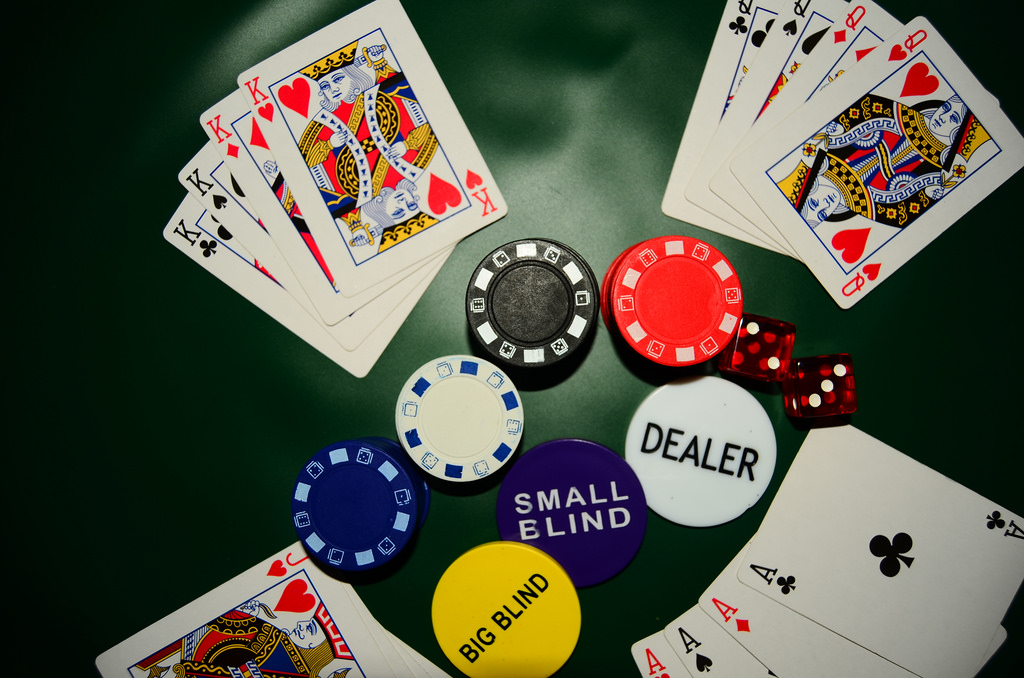
It seems the reign of terror of artificial intelligence is still gathering steam. After beating professional Chess and Go players, a machine recently handed poker professionals a big, steaming pile of beat down. This is particularly noteworthy because of how much playing poker relies on reading opponents instead of the cards. If an AI can beat humans at poker, there’s practically no field they can’t win in.
The AI in question was made by researchers from Carnegie Mellon and went head to head with four of the best poker players in the business after a play in a Pittsburg casino that lasted 20 days, Wired reports. The game was Texas Hold ‘Em with no limits, which is an incredibly complicated form of poker that requires a lot of long-term consideration when it comes to the bets.
Now, another interesting factor when it comes to poker games is the matter of luck, which is something that can be incredibly difficult to influence short of cheating. So one would think that something like a machine shouldn’t have the advantage there.
Tuomas Sandholm, a professor at Carnegie Mellon and Noam Brown, a grad student made the AI. They called it Libratus, which translates to “balance” from Latin. By the time the games ended, Libratus was ahead $1.7 million compared to its competitors.
This is a huge difference compared to the last AI performance that the pair initiated last year. As to how the AI managed this feat this time around, Daniel McAulay, one of the players that went against it spoke to Wired and explained.
“It splits its bets into three, four, five different sizes,” McAulay, 26, said. “No human has the ability to do that.”
This adds another notch to the already overwhelming level of complex analytics and calculations that current AIs are able to do, Futurism reports. It also indicates that what might seem uncertain or pure luck to humans is just a mathematical problem that can be solved by a machine.







