


 Novo Nordisk Strikes €1.17 Billion Nanexa Drug Delivery Deal
  Wall Street Ends Flat as Oil, Treasury Yields and Fed Jitters Rattle Markets
  AstraZeneca Halts Phase III Volrustomig Lung Cancer Trial After Efficacy Setback
  US Stock Futures Fall as Treasury Yields Surge Ahead of Trump-Xi Summit
  Tesla Semi Rollout Begins at Nevada Factory
  GSK Unveils $2.52 Billion Cost-Cutting Plan to Accelerate Drug Pipeline
  Costco Revenue Beats Estimates as Inflation Drives Bulk Shopping
  Japanese Yen Rebounds as Trump Flags Currency Weakness
  Hims & Hers Shares Fall as GLP-1 Costs Widen Q2 Loss
  Akamai Shares Surge on $11.6B Anthropic AI Cloud Deal
  European Stocks Fall as Bond Yields and Geopolitical Risks Weigh
  Asian Stocks Fall as Surging Bond Yields Rattle Markets
  SpaceXAI to Double Nvidia Chips at Colossus 2 by Year-End
  Japanese Bank Stocks Surge as Bond Yields Fuel Rate Hike Bets
  New Mexico Measles Outbreak Cost Reached $5.4 Million, Study Finds


 Add as a preferred source on Google
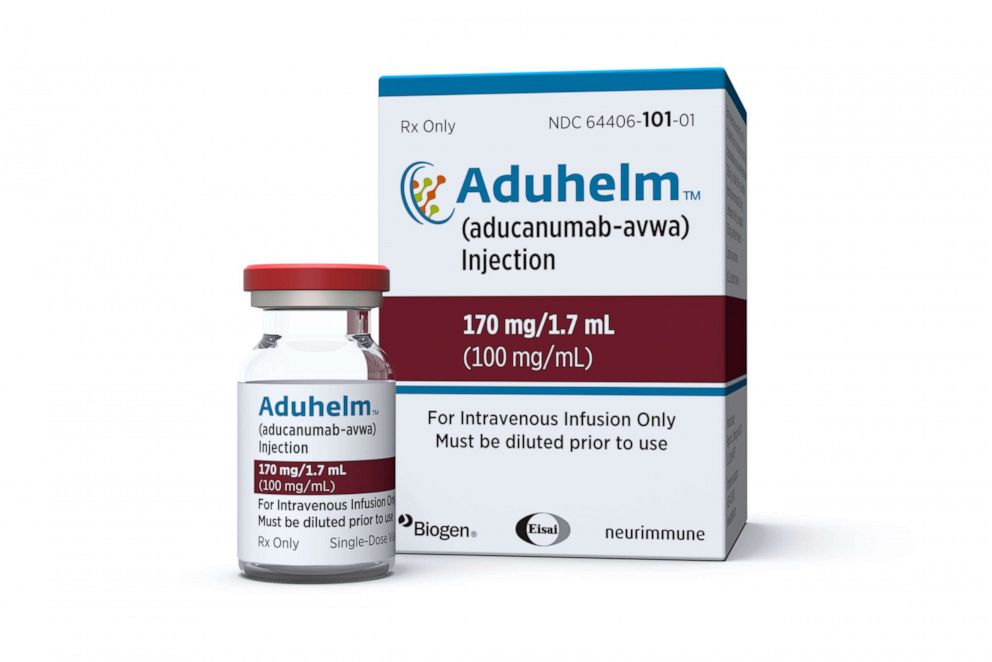
Eisai Co. and Eli Lilly and Co. plan to seek accelerated US approval for experimental Alzheimer's drugs amid the Centers for Medicare & Medicaid Services (CMS)'s decision to severely limit coverage of Biogen’s Alzheimer’s drug Aduhelm for Medicare subscribers.
Through Medicare, Medicaid, the Children's Health Insurance Program, and the state and federal health insurance markets, CMS supervises national health insurance programs for 100 million people.
Like Aduhelm, Eisai's lecanemab and Lilly's donanemab are monoclonal antibodies that remove beta-amyloid, a type of protein fragment that builds up in Alzheimer's patient's brains. The two drugmakers expect the outcomes of planned Phase III trials to finally validate earlier-stage evidence under consideration by the US Food and Drug Administration (FDA).
Roche Holding AG is developing gantenerumab, a fourth plaque-targeting antibody, although it is not pursuing an accelerated FDA evaluation.
The FDA approved Biogen's Aduhelm in June under the agency's accelerated pathway, based on the drug's plaque-clearing ability rather than proof that it slows cognitive decline in Alzheimer's patients. It is the first drug in this class and the first Alzheimer's treatment approved in the United States in 20 years.
Medicare, on the other hand, has opted to limit routine reimbursement to Alzheimer's medications that have been approved through the usual FDA procedure and are based on "a direct assessment of clinical benefit."
Nearly 64 million Americans aged 65 and older are covered by Medicare, thus the coverage decision could affect 85 percent of those who would normally use the drugs for the age-related disease.
Eisai, which is partnered with Biogen, has stated that it plans to submit a rolling FDA application for lecanemab via the accelerated pathway by the middle of the year. The Japanese pharmaceutical company also stated that it hopes to receive data from its 1,800-patient Phase III trial this fall.
If the results are positive, Eisai believes the massive study will be able to meet Medicare's "high level of evidence" criterion for coverage.
The goal of the trial is to show that lecanemab can reduce the rate of cognitive and functional decline by at least 25 percent.
Roche also plans to release the results of gantenerumab's Phase III trial later this year.
In a statement, Lilly stated that it expects to finish its current, rolling application for fast FDA approval of donanemab this year. It won't know the findings of a Phase III trial of the medicine until mid-2023, according to the company.
The Indianapolis-based corporation claims that Medicare coverage restrictions for FDA-approved pharmaceuticals are "unnecessary, restrictive, and inappropriate."







