


 Russia Charges Telegram Founder Pavel Durov With Facilitating Terrorism, Seeks International Arrest
  Samsung Q2 Profit Surges on AI Memory Chip Demand, Forecasts Strong Second Half
  Robinhood Q2 Earnings Beat Estimates, But HOOD Stock Falls as Investors Question Profit Quality
  X Challenges Australia’s Expanded Social Media Ban Enforcement Powers
  Chipotle Q2 Earnings Beat Expectations as Sales Growth Drives Higher 2026 Outlook
  Toyota First-Half Global Sales and Production Decline on Weak China Demand, RAV4 Transition
  World game at war: why some European nations have threatened a World Cup boycott
  Same sparkle, different story: how lab-grown diamonds are transforming the market
  Exosens H1 Profit Beats Forecasts as Defense Demand Drives Growth
  Microsoft Stock Jumps as Azure Growth, AI Revenue Beat Expectations
  TSMC Gradually Restarts Japan Chip Plant After Kumamoto Earthquake
  Starbucks Stock Jumps as Q3 Earnings Beat, Sales Growth Drives Higher 2026 Outlook
  Barclays Q2 Profit Beats Forecasts as Investment Banking Strength Offsets Higher Costs
  Meta CEO Zuckerberg Opposes U.S. Ban on Chinese AI Models, Warns Against Overregulation
  OpenAI Revenue Surges After GPT-5.6 Launch as IPO Expectations Grow
  SK Hynix Q2 Profit Hits Record as AI Memory Chip Demand Fuels Growth
  SpaceX Wins $1.6 Billion U.S. Space Force Launch Contracts for Falcon 9 Missions Through 2027


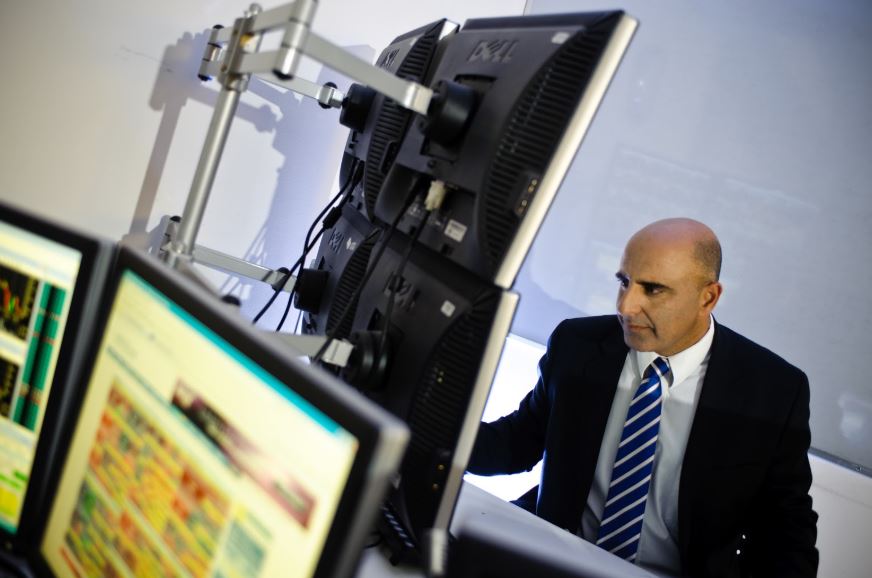
The boom in information has affected our collective and individual behavior, with tech giants trying to manage big data sets by using artificial intelligence (AI) and machine learning techniques to ensure a tailored experience. This information explosion has touched upon the financial markets as well. If you heard about fast-food (with McDonald’s and Starbucks) or fast fashion (with H&M and Zara), you might agree that we experience an increase in fast investing and fast trading. The world is changing so fast, and the pace of worthy fundamental data releases and events is so high that we don’t have time to wait for years to generate a decent return – we should act now.
Day trading is a logical result of the current trends, and it might be the best trading approach in 2019. More investors are turning, at least partially, to day trading to gain from solid stock price trends.
But before we go any further, let’s make a clear distinction between traders and investors. Remember that the first group refers to those who gain from short-term price changes while investors are the ones who buy stocks and hold these for months or even years to generate a return. Day trading is suitable for anyone who wants to gain generous returns from price fluctuations while investing is appropriate for wealthy individuals with large deposits. Meir Barak, head of Tradenet tells us his belief is that the way to turn a profit in financial markets is day trading, because the longer you hold the position, the more you are exposed to unpredicted volatility. “Trading makes sense whatever the market conditions. Investing mostly works in bull markets , so you are bound to lose about a third of the time whatever stock picks you make”
Investors who watch US stocks know that 2018 ended with a massive correction.
In fact, the S&P 500 index, which tracks 500 of the largest companies in the US, ended the year lower than the level it started it. While the first weeks of 2019 have been bullish, we still don’t know what’s next, also judging by how quickly the bearish trend started in December 2018.
There is a lot of uncertainty these days, with many global economic and political changes in the spotlight. Think about Brexit, the political crisis in Venezuela, Trump’s national emergency declaration, US-China trade relationship, and many other hot topics of today. This is clearly not the best time to engage in a long-term investment.
On the other hand, one can benefit from short-term price fluctuations anytime, even during crises. This is why day trading should be regarded as a better alternative this year. Barak tells us, “it’s plain to see how life works for investors, and it’s not a pretty picture. Any occurrence in Westminster, Caracas, or Washington can affect your entire portfolio. If you follow Tradenet’s day trading chat room, you can see we are pretty much indifferent to most fundamental changes.”
You might think that the correction is gone as February 2019 has been a solid month for the US stock market, perhaps implying another long-term bullish rally that will culminate with new record highs. This looks like an ideal story for investors. However, if we drill deeper and understand the fundamentals behind the current bullish rally, we’ll see that the demand often comes from the corporations themselves. The US companies are buying back their own stock to return some cash to shareholders and support their share prices.
Michael Hartnett of Bank of America Merrill Lynch commented on the current bullish trend in an interview with the New York Times:
“The speed of the rally is uncomfortable. To turn from a seller to a buyer in a week is, again, psychologically very tough for people.”
Indeed, when the buybacks cease, we might see the correction again, so day trading seems to be the least risky approach to win from this uncertainty.
Meir Barak, the author of bestseller “The Market Whisperer,” helps novice traders understand the ins and outs of the stock markets and day trading. Barak has been day trading on a regular basis for years, and now he uses Tradenet to share his palette of strategies and approaches to help beginners and professional traders reap the most benefits.
While long-term investing is the preferred strategy among professional and wealthy investors, day trading is a better alternative for those who start from scratch and learn the markets through checking the charts and technical analysis tools on a daily basis.
This article does not necessarily reflect the opinions of the editors or management of EconoTimes.







