


 Volvo Cars Q2 Profit Falls as Automaker Bets on EX60 EV to Drive Recovery
  United Airlines Beats Q2 Earnings, Raises 2026 Profit Outlook Despite Higher Fuel Costs
  UBS Boosts China Tech Bets, Adds Kuaishou and Meituan to Focus List
  SpaceX Stock Falls Below IPO Price as Investors Weigh Losses and Lockup Expiry
  Nvidia Partners With Fanuc and Yaskawa to Accelerate AI Robotics in Japan
  Hyundai Takes Full Control of Boston Dynamics to Accelerate Humanoid Robot and AI Strategy
  BHP Q4 Iron Ore Output Rebounds as Copper Prices Boost Revenue
  Uber to Acquire Delivery Hero in $14.8 Billion Deal to Expand Global Food Delivery Business
  Sodexo Unveils Shift & Grow 2030 Strategy, Targets Over 5% Revenue Growth by Fiscal 2030
  Apple Intelligence Cleared for China as Alibaba and Baidu AI Power iPhone Features
  Seven & i Eyes Żabka Stake in Major European Expansion Push
  Eli Lilly Eyes AtaiBeckley Acquisition to Expand Psychedelic Mental Health Pipeline
  Stripe, Advent Offer Over $53 Billion to Acquire PayPal in Major Fintech Deal
  SEB Q2 Profit Rises on Strong Lending, Record Fee Income, Announces New Share Buyback
  Jamie Dimon Warns Anthropic's Mythos AI Poses National Security Risks
  Moonshot Launches Kimi K3, China's Largest Open-Source AI Model
  Apple Intelligence China Approval Lifts Alibaba and Baidu Shares


Fast food prices at popular chains like McDonald's and Taco Bell have surged due to inflation, labor shortages, and other factors, leaving consumers frustrated.
Inflation and Labor Shortages Drive Fast Food Prices Skyward, Doubling Costs at Major Chains
Fast cuisine has traditionally been associated with consumers. Franchises such as McDonald's, Wendy's, Taco Bell, and others would expeditiously deliver delectable, nutritionally questionable dishes for a few dollars. According to Mental Floss, this equation, however, has yet to be rendered obsolete by a confluence of factors, including inflation, employee scarcities, and potentially corporate avarice. The grease cloth on your passenger seat will cost you at least $20.
A decade ago, the financial advice website FinanceBuzz compiled data from 2014 to determine the extent to which fast food center prices have risen. Certain restaurant chains charge twice as much for an equivalent quantity of meals.
Menu items at The Golden Arches experienced the most substantial price increase of the decade, increasing by an average of 100 percent, equivalent to three times the national inflation rate during the same period. A previously $1.59 order of medium potatoes now costs $3.79. The price per 10-piece Chicken McNuggets order increased from $5.99 to $10.99. The only soft drink to outpace inflation was a medium-sized one, which rose from $1.29 to $1.61.
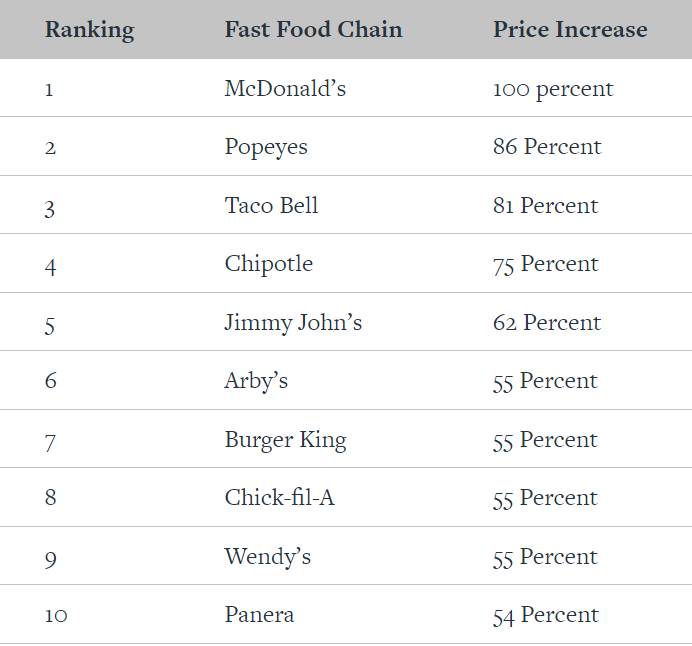
Photo by Mental Floss
Taco Bell Prices Double, Starbucks and Subway See Significant Hikes Amid Inflation and Consumer Discontent
Taco Bell, a longtime provider of tacos that can be purchased with spare change from the center console, also performed unfavorably, experiencing an 81% decline. The cost of their Cheesy Gordita Crunch increased by twofold, from $2.49 to $4.99.
FinanceBuzz also discovered that Starbucks and Subway experienced increases of 39 percent each, comparable to the inflation rate. However, consumers may still experience sticker shock, contingent upon the menu item: As of 2014, a footlong Subway club cost $7. Now, it costs $9.99.
Local fast-food restaurants may have prices different from those of their franchised counterparts. Franchisees frequently own and operate these restaurants at the regional level and have the authority to determine their prices.
It is yet to be seen how these astronomical price increases will affect customer loyalty, but the immediate outlook is bleak. Many individuals have voiced their discontent on social media platforms regarding the exorbitant cost of an option designed to save money. Or, as Kevin Roberts, a consumer, told CBS News, "The whole conceit was that you were getting some OK-level of food for a low price and you could get it quick. Now I can't justify the expense. If I'm paying $15 for a burger and [fries] and drink and it's McDonald's quality, forget about it—I'm going home."
Photo: Microsoft Bing







