


 Gold Prices Slip as High Treasury Yields Weigh on Bullion
  Tokyo Inflation Jumps to 2.7%, Boosting BOJ Rate Hike Expectations
  Oil Prices Surge as U.S.-Iran Tensions Fuel Supply Fears
  Bank of America Sees EUR/USD at 1.15 by Year-End
  Nasdaq Futures Jump as Micron Earnings Boost AI Trade
  Dollar Hits Three-Month High as US Treasury Yields Surge
  Australia Inflation Accelerates to 4% After RBA Rate Hike
  Asian Stocks Mixed as Markets Await U.S. Jobs Data
  Asian Stocks Rise as Bond Yields Ease Ahead of U.S. Inflation Data
  Asian Currencies Mixed as Yen Slides on BOJ Rate Signals


 Add as a preferred source on Google
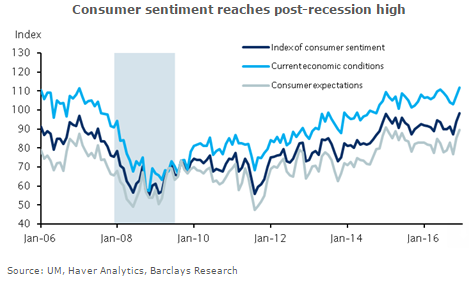
Consumer sentiment in the United States reached post-recession high during the month of December, post the victory of U.S. President-elect Donald Trump and expectations of a protectionist policy by him.
The University of Michigan index of consumer sentiment was revised slightly higher in the final December estimate to 98.2, from 98.0 and reached a post-recession high. The current conditions index was revised slightly lower to 111.9 (previous: 112.1), while the expectations index was revised higher to 89.5 (88.9).
Both short- and longer-term inflation expectations were revised lower, to 2.2 and 2.3 percent, from 2.3 and 2.5 percent respectively. Inflation expectations in this survey remain soft and the latest decline brings the longer-run measure to its historical low.
"Ongoing solid readings on consumer confidence reinforce our view that GDP growth should remain firm in the near term, and we see the level of confidence as consistent with ongoing strength in consumer spending," Barclays Research said in its latest research note.
Meanwhile, the dollar index traded at 102.87, down -0.14 percent, while at 6:00GMT, the FxWirePro's Hourly Dollar Strength Index remained neutral at -14.80 (a reading above +75 indicates a bullish trend, while that below -75 a bearish trend). For more details, visit http://www.fxwirepro.com/currencyindex







