


 China Cuts Tariffs on U.S. Farm Goods but Excludes Soybeans
  TSMC Accelerates 2nm Expansion as AI Chip Demand Surges
  California Bans Memecoins Issued by Public Officials Under New Law
  US Plans Iran Sanctions Waiver for Pilgrim Flights to Iraq
  Trump Denies Offering Iran Sanctions Relief for Nuclear Concessions
  Samsung Invests $1 Billion in KKR’s Helix AI Infrastructure
  UN Experts Urge US to Halt Third-Country Migrant Deportations
  UK Police Probe Foreign State Link in RAF Fairford Plot
  US Appeals Court Upholds Anthropic AI Supply Chain Ban
  Morgan Stanley Raises TD Synnex Price Target to $359 on Strong AI Demand
  Second DOJ Lawyer Exits Trump Probe
  Malaysia Begins Deportation of 1,500 Myanmar Nationals
  TikTok Reaches $100 Million Alabama Settlement Over Child Safety Claims
  DaVoice Sues Perplexity AI Over Trade Secrets
  Bitcoin Slides Below $84K as Trump Signals Possible New Iran Strikes
  Apple CEO John Ternus Plans Major Overhaul
  OpenAI Agents Access U.S. Government Websites During Testing


 Add as a preferred source on Google
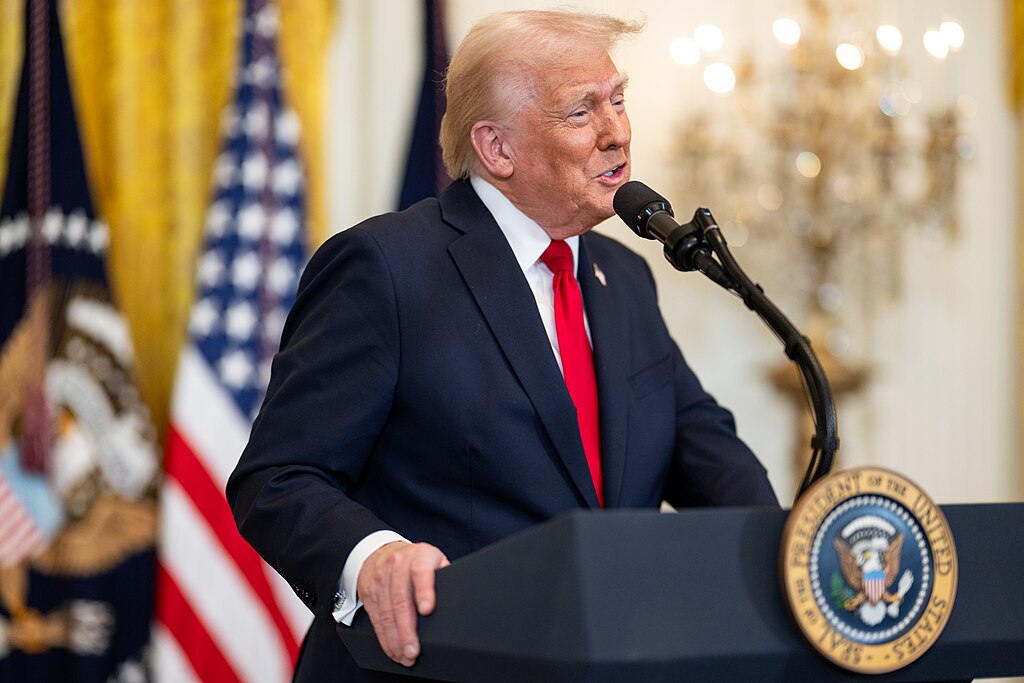
President Donald Trump and executives from major technology companies signed a voluntary artificial intelligence agreement in Washington on Tuesday, establishing a set of principles intended to guide the development and oversight of increasingly powerful AI systems.
Speaking to reporters after meeting with technology leaders at the White House, Trump compared the AI accord to a constitution and described it as “morally binding.” He said the agreement represents a form of protection as the United States seeks to maintain its leadership in artificial intelligence while addressing potential safety risks.
The agreement centers on voluntary safeguards and self-regulation by AI companies. House Speaker Mike Johnson described it as a joint commitment that would require participating companies to maintain strong internal controls, while reports said the framework includes both internal and external reviews of advanced AI technology.
Trump also said his administration is considering creating an AI oversight committee consisting of roughly 10 members. The proposed panel would monitor developments across the industry, although details about its membership, authority and responsibilities have not been finalized.
The initiative comes as governments worldwide grapple with how to oversee rapidly advancing artificial intelligence. Some leading AI companies and executives have urged policymakers to address potentially serious safety risks, increasing pressure on governments to determine how much regulation is necessary without slowing technological innovation.
Trump has generally favored a lighter regulatory approach. He said Tuesday that AI companies should engage in significant self-policing and that the government should avoid restricting the technology’s development.
His position also reflects opposition to international efforts that he believes could impose excessive controls on U.S. artificial intelligence. During his address to the United Nations General Assembly last week, Trump rejected attempts to establish what he characterized as a global framework for controlling AI.
The new voluntary AI accord therefore signals an approach centered on industry safeguards and oversight rather than sweeping new federal AI regulations.







