


 Oil Prices Surge Above $93 as Trump Escalates Iran Pressure and Strait of Hormuz Tensions Deepen
  Kremlin Says New EU Sanctions Won’t Hurt Russian Banks
  Ukraine and Latvia Sign Drone Defense Deal to Boost Military Cooperation in 2026
  New Zealand Manufacturing Slips Back Into Contraction in May
  Dollar Stabilizes as Markets Weigh Middle East Ceasefire Prospects and Central Bank Policy Outlook
  Trump Signals Opposition to USMCA Renewal as U.S. Reviews Trade Relations with Canada and Mexico
  Lebanon Resists Iran Pressure as Israel-Hezbollah Ceasefire Talks Stall
  US Stock Futures Rise on Iran Peace Deal Hopes as SpaceX Debuts After Record IPO
  Changchun Targets EV Growth as China’s Auto Industry Consolidation Accelerates
  US Appeals Court Keeps Trump’s 10% Global Tariff in Effect During Ongoing Legal Battle
  US Stock Futures Rally as U.S.-Iran Peace Talks Boost Market Sentiment Despite Ongoing Strikes
  US Urges Europe to Impose Ebola Travel Restrictions Ahead of FIFA World Cup 2026
  Japan Producer Prices Surge in May, Strengthening Expectations of BOJ Rate Hike
  Japan Core Inflation Seen Steady in May Ahead of BOJ Rate Hike
  Asian Stocks Rally as Trump Signals Iran Peace Deal; Tech and Chip Shares Rebound Strongly
  Trump Administration Plans Deportation of Iranian Migrants to Central African Republic Under New Third-Country Deal
  Peru Election 2026: Fujimori Holds Narrow Lead as Contested Votes Face Review


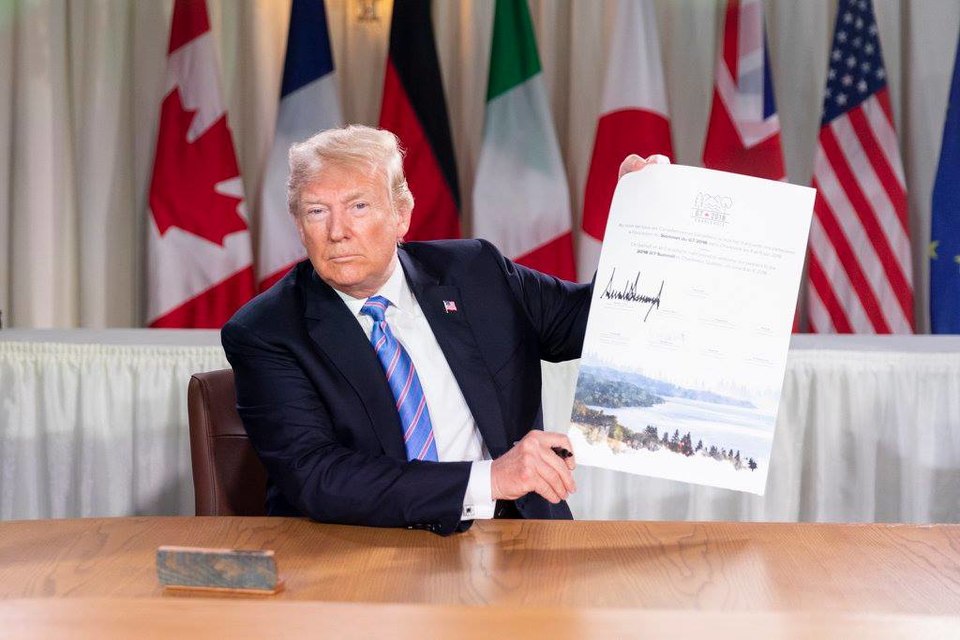
U.S. President Donald Trump announced on Thursday that a peace agreement with Iran is close to completion, stating that a final document could be signed in Europe within days, potentially as early as this weekend.
Speaking to reporters, Trump said a “great settlement” had been reached to end the conflict with Iran, with only the finalization of documents remaining. He added that the signing ceremony may take place in Europe and described the development as a major breakthrough for regional stability.
Trump also claimed that the Strait of Hormuz would immediately reopen once the agreement is signed. In addition, he said the United States would lift its naval blockade of Iranian ports and coastal areas as part of the deal.
During a virtual tele-rally later in the evening, Trump declared that the war with Iran had effectively ended and stated that Tehran had agreed never to pursue nuclear weapons. Earlier in the day, he reportedly canceled planned U.S. military strikes against Iran, signaling a shift toward diplomacy. According to Trump, all parties involved have approved the key points of the proposed agreement.
The announcement boosted investor confidence, sending major U.S. stock indexes sharply higher while oil prices declined. Markets reacted positively to signs of easing tensions in the Middle East, a region critical to global energy supplies.
Reports indicated that U.S. and Iranian officials continued negotiations overnight, including discussions on unfreezing Iranian funds. Reuters cited Iranian sources who said efforts to finalize a preliminary agreement have intensified.
Despite the diplomatic progress, uncertainty remains. The United States and Iran exchanged military strikes for a second consecutive day on Thursday. U.S. Central Command said American forces targeted several Iranian military sites in what it described as self-defense following the downing of a U.S. helicopter near the Strait of Hormuz.
Iran responded with attacks targeting U.S. military facilities and allies across the Gulf region. Meanwhile, tensions between Iran and Israel also persisted, with both sides continuing military exchanges linked to the broader regional conflict.
Although crude oil prices fell after Trump's comments, they remain significantly above pre-conflict levels, raising concerns that higher energy costs could fuel inflation and potentially influence future central bank interest rate decisions.







