


 Global Markets Slide as AI, Crypto, and Precious Metals Face Heightened Volatility
  Russian Stocks End Mixed as MOEX Index Closes Flat Amid Commodity Strength
  China Extends Gold Buying Streak as Reserves Surge Despite Volatile Prices
  Trump Lifts 25% Tariff on Indian Goods in Strategic U.S.–India Trade and Energy Deal
  Asian Currencies Stay Rangebound as Yen Firms on Intervention Talk
  Vietnam’s Trade Surplus With US Jumps as Exports Surge and China Imports Hit Record
  UK Starting Salaries See Strongest Growth in 18 Months as Hiring Sentiment Improves
  Australian Pension Funds Boost Currency Hedging as Aussie Dollar Strengthens
  Yen Slides as Japan Election Boosts Fiscal Stimulus Expectations
  Trump Signs Executive Order Threatening 25% Tariffs on Countries Trading With Iran
  Trump’s Inflation Claims Clash With Voters’ Cost-of-Living Reality
  Lee Seung-heon Signals Caution on Rate Hikes, Supports Higher Property Taxes to Cool Korea’s Housing Market
  Japan Economy Poised for Q4 2025 Growth as Investment and Consumption Hold Firm
  South Africa Eyes ECB Repo Lines as Inflation Eases and Rate Cuts Loom
  Oil Prices Slip as U.S.-Iran Talks Ease Middle East Tensions


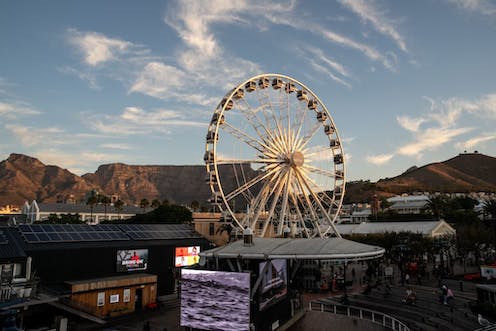



For the past 16 years South Africans have dreaded rolling power cuts euphemistically dubbed “loadshedding”. These are caused by the ailing state power entity Eskom’s crumbling infrastructure and its over-reliance on ageing and poorly maintained coal-fired power stations. Loadshedding has worsened in 2023, with some areas experiencing power cuts for up to 10 hours a day.
This crisis affects every aspect of the country’s economy, including its vibrant tourism sector. Tourism is a vital contributor to the South African economy. In 2019 the country welcomed over 10 million foreign visitors. The sector contributed up to 6.4% of the gross domestic product along with 1.5 million jobs (9.3% of total jobs).
These figures have contracted significantly because of the COVID-19 pandemic. Visitors are returning. But the financial recovery and viability of the sector, which is composed mainly of small businesses, continues to be hampered by the electricity crisis.
If tourism businesses are to literally and figuratively keep the lights on they must transition towards renewable electricity generation. There are three reasons for this. First, providing consistent electricity to their guests is essential for any tourism business. Second, renewable energy is less damaging to the environment than coal-based generation and its greenhouse gas emissions. Finally, customers are increasingly aware of environmental concerns. Many demand more sustainable tourism products and adjust their travel choices accordingly.
We are a team of interdisciplinary researchers with interests in tourism, sustainability and the environment who recently collaborated on a research paper that studied South Africa’s potential to break away from old forms of energy generation towards low carbon electricity generation. There are already some positive moves in this direction. But much more remains to be done. This will require the tourism industry and other economic sectors to step up.
What’s already being done
Some work is already being done to enhance the tourism sector’s environmental sustainability. The government’s Tourism Environmental Implementation Plan, published in 2021, facilitates greater participation by tourism establishments in renewable electricity generation and saving.
One initiative included in the plan is the tourism department’s Green Tourism Incentive Programme. It supports small tourism businesses by providing free energy and water audits. These can lead to improved efficiencies and the introduction of subsidised renewable energy systems. So far, 111 renewable energy projects have been funded. The Green Tourism Incentive Programme pays approximately two-thirds of investments. Individual businesses finance the remaining third.
In the private sector, the City Lodge hotel group shows what can be achieved by installing renewable energy systems. In 2020, solar panels generated just over 10% of the electricity requirements of the group’s 59 hotels.
Nature-based tourism is one of the mainstays of South African tourism products. South African National Parks, the body that manages national parks, has installed solar PV panels at 19 of its 21 parks. It is also putting in place other low-carbon strategies as well as climate adaptation plans.
Getting it done
While these examples are encouraging, they remain limited in size and scope. Most innovation in South Africa towards sustainable energy generation has been self-funded as a business survival strategy to deal with the consequences of power cuts. The shift to renewable electricity, along with its greenhouse gas and air pollution benefits, is a happy coincidence.
A broader transition, helped by access to finance on terms that can smooth its way, is necessary to bring about a system change for tourism. This can place the sector on a path that decouples it from coal-based electricity. It will also ensure that small businesses can adopt renewable electricity.
The green energy shift in tourism is already taking place in developed economies in Europe. Turkey is another encouraging example. It has introduced a sustainable tourism programme; solar PV panels are used widely by businesses and households alike.
Through shifting the tourism sector to renewable energy, tourism in South Africa can be part of the just transition too. This transition must include small and community-based tourism players. And, while tourism must play its part, other economic sectors should also step up.
Supportive South African policies are indispensable in developing an enabling environment for sustainability transitions. The state and its institutions must take greater responsibility and accountability to advance the social sustainability of energy policies. One way this could happen is by making the Green Tourism Incentive Programme more accessible to tourism enterprises across the country.
Kate Rivett-Carnac co-authored the research on which this article is based.













