


 Wildfires ignite infection risks, by weakening the body’s immune defences and spreading bugs in smoke
  Asian Stocks Mixed Ahead of Trump-Xi Meeting
  Akamai Shares Surge on $11.6B Anthropic AI Cloud Deal
  Dollar Hits Two-Month High as Fed Rate Hike Bets Rise
  Lake beds are rich environmental records — studying them reveals much about a place’s history
  How to create a thriving forest, not box-checking ‘tree cover’
  As the Black Summer megafires neared, people rallied to save wildlife and domestic animals. But it came at a real cost
  Asian Currencies Mixed as Dollar Holds Near Two-Month High
  Drug pollution in water is making salmon take more risks – new research
  RBI Uses $10 Billion Currency Swaps to Drain Excess Rupee Liquidity
  Fed Unveils Stablecoin Rules Under GENIUS Act
  What’s so special about Ukraine’s minerals? A geologist explains
  Former OpenAI Data Center Chief Chris Malone Joins Nvidia
  JPMorgan Names Lavatelli Japan Chief in Leadership Shake-Up
  China Vanke Shares Jump as Beijing Moves to Ease Debt Pressure
  US 10-Year Treasury Yield at 6% Emerges as New Market Risk Threshold
  Fungi are among the planet’s most important organisms — yet they continue to be overlooked in conservation strategies


 Add as a preferred source on Google
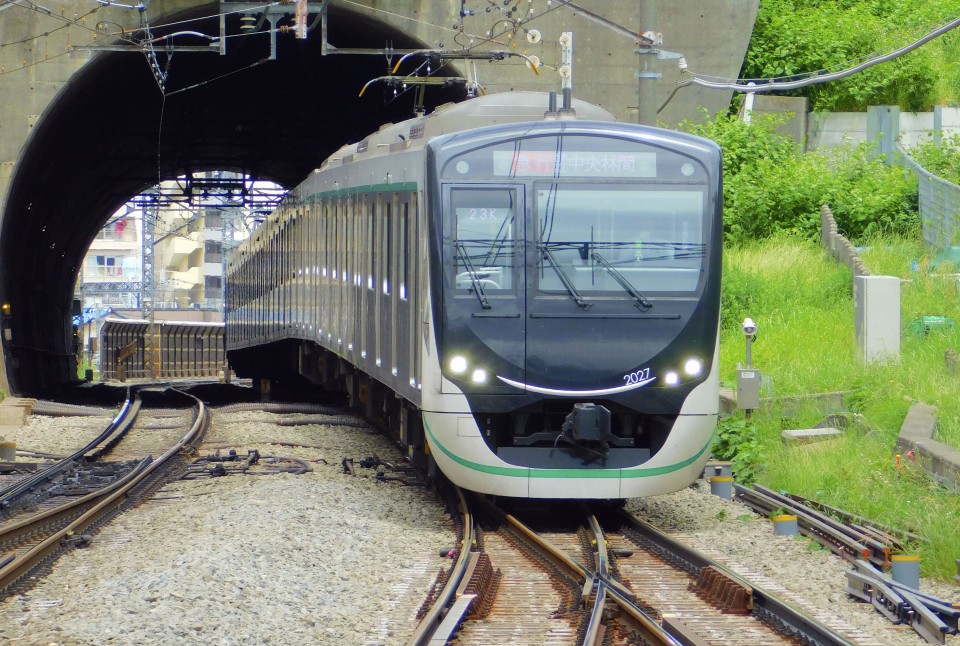
Tokyu Railways' trains running through Shibuya and other stations have switched to power generated only by renewable sources, pulling down its carbon dioxide emissions to zero.
Green energy is being used at all its stations, including for vending machines for drinks, security camera screens and lighting.
Tokyu, which employs 3,855 people and connects Tokyo and Yokohama, is Japan's first train company to fulfill that goal. It claims that the carbon dioxide decrease is equivalent to 56,000 Japanese homes' annual average emissions.
Nicholas Little, director of railway education at Michigan State University's Center for Railway Research and Education, applauded Tokyu for supporting renewable energy but emphasized the need of increasing the bottom-line amount of renewable energy.
Tokyu's trains feature some of the most environmentally friendly rail technology available. Batteries and hydrogen power are the other two choices.
Converting from diesel trains to hydrogen-powered lines in rural areas, as well as switching from gas-guzzling cars to electric, would provide greater benefits, he claimed.
Even though Japan continues to utilize coal and other fossil fuels, Tokyu paid an undisclosed amount to Tokyo Electric Power Co, the utility that was responsible for the 2011 Fukushima nuclear disaster.
Such efforts are critical if Japan, the world's sixth-largest carbon emitter, is to meet its 2050 carbon-neutral goal.
According to the Institute for Sustainable Energy Policies, a Tokyo-based independent non-profit research group, only approximately 20% of Japan's electricity comes from renewable sources.
This is in stark contrast to New Zealand, where renewable energy accounts for 84 percent of total energy consumption. New Zealand hopes to achieve this goal by 2035.







