


 The importance of teaching students what AI can’t do
  HP Stock Drops 9% Despite Q3 Earnings Beat and Raised 2026 Outlook
  Apple’s Phil Schiller Steps Back as Leadership Shake-Up Accelerates
  U.S. Disrupts China-Linked Hacking Campaign Targeting Government Agencies
  Pinterest Stock Falls as CFO Julia Brau Donnelly Resigns
  ING Says Yen Is 20% Undervalued Against Dollar
  SpaceX Mobile Network Could Cost Up to $130 Billion, Bernstein Says
  Meta Agrees to $18 Billion Settlement, Tightens Teen Social Media Rules
  29 US states are suing Meta. What might it mean for the rest of the world?
  MediaTek Shares Jump 10% on Nvidia’s $3.5 Billion Investment
  Luxshare Shares Rise as First-Half Profit Jumps 18%


 Add as a preferred source on Google
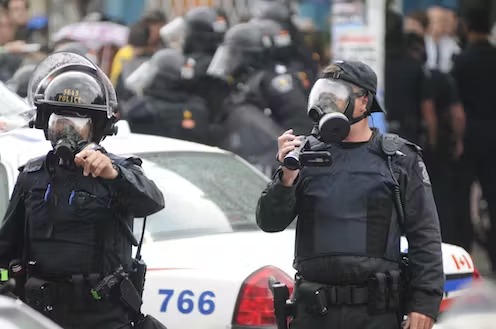

The proliferation of technology for everyday living can be seen through ChatGPT writing term papers or robots serving meals at a restaurant.
Technology can also be used towards less utilitarian ends. Unfortunately, deepfakes — digitally altered images of people — can be used to spread misinformation.
A new edited volume, which I co-edited, considers the use of everyday technologies in the criminal justice system, ranging from detecting deception to web sleuthing to help law enforcement solve crime.
Technology and policing
Consider the use of body-worn cameras by police, as in the fatal shooting of Ontario Provincial Police Const. Greg Pierzchala, who went to check on a car in a ditch. Footage from his body-worn camera was available for the first time in the fatal shooting of a police officer in Canada.
Police investigations have also been aided by private citizen sleuths via technology, who gather evidence to help police identify criminals. This was the case with convicted murderer Luka Magnotta, where an online network identified him in cat torture videos and provided the information to law enforcement agencies.
Another use of technology can be for public surveillance for crime prevention through the application of facial recognition software.
Security cameras are now a ubiquitous feature in public places. In 2021, it was estimated that one billion security cameras were being used around the world. China is listed as having about 54 per cent of all surveillance cameras.
In 2020, Toronto had approximately 2,000 cameras at city-owned facilities.
Security cameras may or may not be used in conjunction with facial recognition software.

Security cameras are becoming regular features of outdoor public spaces. (Shutterstock)
Finding faces
Facial recognition uses software to identify or confirm someone’s identity using an image of their face. Captured faces are compared to a database, often for the purposes of crime prevention.
Some retailers have used facial recognition to help reduce theft. In 2022, Josh Soika, an Indigenous man, was confronted by a security guard due to being “flagged” as having stolen previously from the store. Later, it was determined that Soika was misidentified by the artificial intelligence (AI) used by Canadian Tire for facial recognition.
In 2023, Canadian Tire Corporation and its dealers have since agreed to no longer use facial recognition technology.
In the United States recently, the Federal Trade Commission (FTC) banned the pharmacy chain Rite Aid for five years from using facial recognition software to identify customers who have stolen merchandise or displayed other problematic behaviours. In some instances, Rite Aid workers would follow “identified” customers around, accuse them of stealing and call police. People of colour were falsely identified at a greater rate than white customers.
It is important to note that someone who has shoplifted in the past isn’t necessarily planning to shoplift again.
The use of facial recognition software in Canada is controversial. In 2021, it was reported that Toronto police used Clearview AI, a facial recognition software, in 84 investigations, with at least two cases proceeding to prosecution. Once it was discovered by the police chief however, the practice was stopped.
Discrimination and AI
Accuracy rates with facial recognition software are above 90 per cent, but that number is greatly reduced within certain demographics. Facial recognition software is documented to misidentify women, racialized people and those between the ages of 18-30 years, with accuracy reduced to 35 per cent.
In February 2023, Porcha Woodruff, a 32-year-old pregnant Black woman from Detroit, was arrested for robbery and carjacking based on a facial recognition match. Police used AI that had run an image of a carjacker caught on video through a mugshot database that contained Woodruff’s photo, and incorrectly matched it.
Woodruff was jailed for 11 hours and went into labour. The charges were dropped, and Woodruff is currently suing the city of Detroit and the Detroit Police Department.
CBS Detroit interviews researcher Dorothy Roberts about Porcha Woodruff’s misidentification due to facial recognition technology.
Consequences of misidentification
According to the U.S.-based Innocence Project, over 70 per cent of known wrongful convictions are due to mistaken identification by people as a contributing factor. The Canadian Registry of Wrongful Convictions finds approximately a third of their cases involved false identification.
People can show what is known as “own-race bias” when identifying faces; people are more accurate when identifying faces of their own race than other races.
The misidentification of a perpetrator — whether by a human or an AI program — can lead to the same consequences: being charged, prosecuted or wrongfully convicted. Technology, as with humans, isn’t always accurate and may succumb to similar biases.
Legislation must keep up to protect people’s rights and privacy. As technology evolves, adequate information and full transparency needs to be provided to the public on how, when and where a technology is in use. It also is clear that much more research is needed to better understand the impact of technology on the criminal justice system.







