


 Anthropic’s $1.5B AI Venture with Wall Street Firms Targets Private Equity Market
  Apple Explores Intel and Samsung Partnerships to Diversify Chip Supply Chain
  Hua Hong Semiconductor Stock Surges to Multi-Year High Amid AI Boom
  Taiwan Activates Backup Communications After Undersea Cable Break on Dongyin Island
  AMD Q1 Earnings Surge on AI Demand, Stock Jumps After Strong Guidance
  BHP Attracts AI-Focused Investors as Copper Demand Surges
  U.S.-China AI Talks May Take Center Stage at Trump-Xi Summit
  Japan Tech Stocks Surge as AI Optimism Lifts SoftBank, Chipmakers
  Intel Emerges as Key Contender in Apple’s Chip Manufacturing Strategy Shift
  Arm Stock Drops Despite Strong AI Chip Demand and Earnings Beat
  Apple Q2 2026 Earnings Surge as iPhone 17 Sales Drive Record Revenue
  Infineon Raises 2026 Outlook as AI Data Center Chip Demand Surges
  Agentic AI Boom to Drive Massive Growth in CPU Market, UBS Says
  TikTok Nears $400 Million Settlement With Trump Administration Over Child Privacy Lawsuit
  Supermicro Forecasts Strong Q4 Revenue Growth as AI Server Demand Surges
  FBI Warns of China’s Expanding Hack-for-Hire Network Amid Extradition Case
  Dell Stock Hits Record High After Trump Endorsement, AI Server Demand Fuels Rally


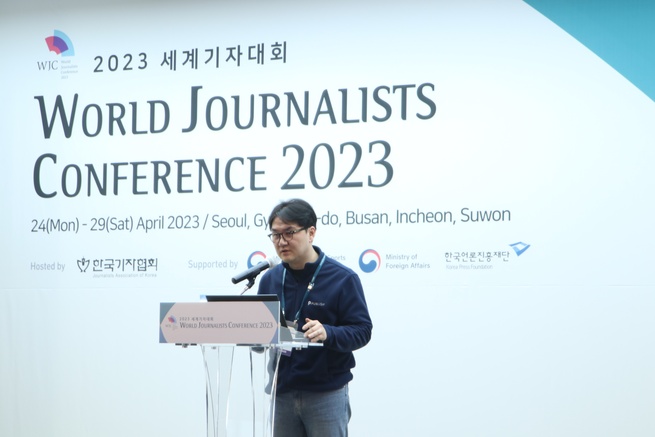
SEOUL, South Korea — In a keynote speech at the 11th annual World Journalists Conference in Seoul, Sonny Kwon, CEO of PUBLISH, shared his vision for the future of journalism, highlighting the potential of blockchain technology to transform the industry. Kwon proposed a new revenue model for media outlets that utilizes a token reward system and ecosystem to increase reader engagement, while also combatting fake news and promoting transparency.
Kwon emphasized the need to restructure the revenue structure of media outlets and highlighted the potential of blockchain technology to promote transparency and combat the spread of fake news. He introduced blockchain technology as a solution to the problems faced by news media and described the publishing protocol ecosystem as a potentially sustainable community and system.
The token reward system proposed by Kwon would reward readers for activities such as reading, sharing, and commenting, creating an environment where journalism could focus on journalistic pursuits rather than news production for traffic. This would reduce the distribution stage of advertisements to increase efficiency.
PUBLISH has collaborated with the Korea Journalist Association to build the world's first decentralized, contactless identity verification system for journalists. Kwon highlighted the limitations of plastic press cards issued by many journalist associations worldwide and proposed the DID press card issued by PUBLISH as a more stable and secure alternative.
Kwon also noted that media outlets can expect to improve their revenue through blockchain technology by creating non-fungible tokens (NFTs) as an additional source of income. News articles and photos can be converted into NFTs, proving ownership and originality and allowing for efficient transactions.
Finally, Kwon explained that the reward system for readers will not diminish the quality of journalism or the media industry but instead provide a way to approach readers more intimately and transform them from "simple consumers or spectators" into active "stakeholders" who can share value in various ways.
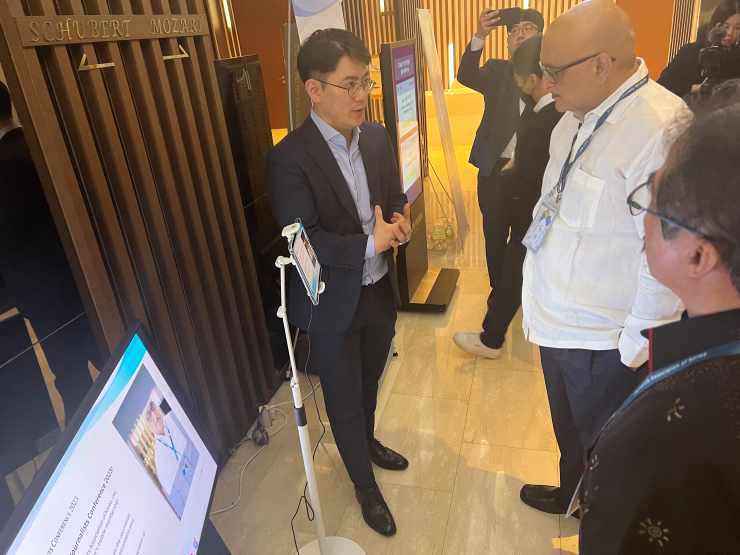 In the photo, a PUBLISH representative is demonstrating the Korea Journalist Association's decentralized identity verification (DID) press card to attendees.
The conference, which drew over 70 journalists from 50 countries, offered a platform for journalists from around the world to discuss pressing issues facing the journalism industry. The focus of this year's event was to explore the coexistence and development of local regions and journalism and to discuss the future of journalism in the digital age. Kwon's speech, entitled "Blockchain-Based News Ecosystem," showcased the potential of blockchain technology to transform the journalism industry, leaving attendees with much to consider.







