


 OpenAI Rejects Apple Trade Secret Theft Claims
  Nvidia Reportedly Eyes $13 Billion Hugging Face Acquisition
  Pinterest Stock Falls as CFO Julia Brau Donnelly Resigns
  Salesforce Shares Surge as AI Demand Powers Q2 Earnings Beat
  Faraday Future Delivers First Robots in Middle East, Plans September Launches
  MongoDB Stock Sinks 14% as Atlas Growth Misses Expectations
  SpaceX Mobile Network Could Cost Up to $130 Billion, Bernstein Says
  SoftBank Eyes $20 Billion Bond Sale to Refinance OpenAI Loan
  Nvidia Options Price in $280 Billion Earnings Swing
  Lenovo Shares Fall After Dropbox Security Breach Exposes ID Vulnerability
  U.S. Probes Apex Logistics Over Nvidia AI Chip Shipments to China
  Luxshare Shares Rise as First-Half Profit Jumps 18%
  Meta Agrees to $18 Billion Settlement, Tightens Teen Social Media Rules
  U.S. Disrupts China-Linked Hacking Campaign Targeting Government Agencies
  Apple’s Phil Schiller Steps Back as Leadership Shake-Up Accelerates
  BofA Names ASML Top Semiconductor Equipment Pick on Growth, Valuation
  HP Stock Drops 9% Despite Q3 Earnings Beat and Raised 2026 Outlook


 Add as a preferred source on Google
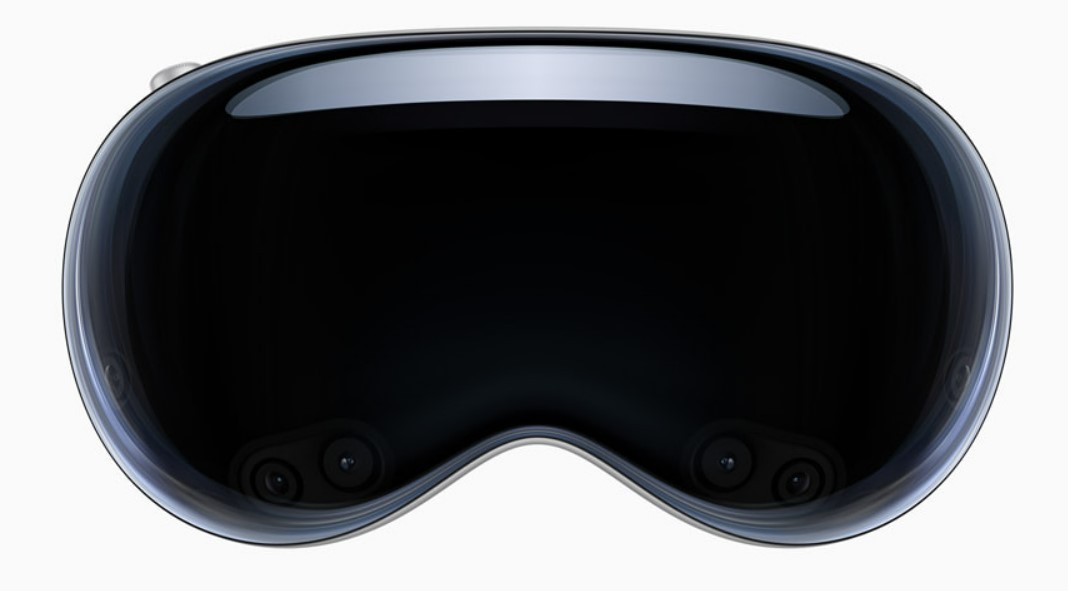


Apple’s new Vision Pro mixed reality headset has generated a significant amount of buzz. Announcing it at this year’s Worldwide Developers Conference, chief executive Tim Cook said the virtual and augmented reality headset will allow users to “see, hear and interact with digital content just like it’s in your physical space […] seamlessly blending the real and virtual worlds”.
The Vision Pro is the first new product category Apple has introduced since the Apple Watch in 2014. It marks the company’s foray into spatial computing. Analysts, markets and consumers have been quick to react – and not all positively.
On one hand, the headset has been lauded for its technical features. It’s less clunky than competitors’ offerings and has a range of advanced capabilities, including hand and eye tracking, and the seamless combination of virtual and augmented reality.
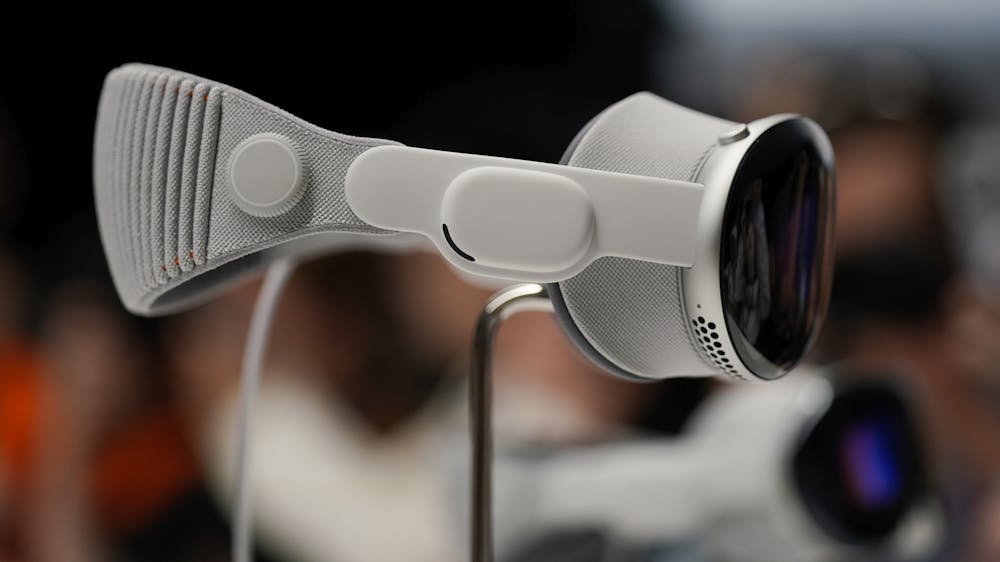
The mixed reality headset has had a mixed reception, although it has generally impressed on the technical front. Jeff Chiu/AP
However, others can’t help but point out the hefty price tag of US$3,500 – and the fact that the general public has simply not embraced mixed reality headsets.
Globally, the demand for these headsets has been slowing. Fewer than nine million units were shipped in 2022 (mostly by Meta, Apple’s biggest competitor in this category).
Meta sees spatial computing as a big part of the tech future, despite market analysts and critics calling for the metaverse to be abandoned. Last week it released the Quest 3 at a relatively low cost of US$499. With continued heavy spending on the metaverse, developers of Quest 3 Reality Labs recorded an operating loss of US$3.99 billion in the first quarter of 2023.
So if there is no demand, who is Apple targeting?
While Meta’s recent history might seem like a cautionary tale, timing and strategy are critical when it comes to technological innovation. And compared to Meta, Apple’s strategy seems prudent.
Apple is likely betting the app developer community will provide it with the use cases it needs to turn the Vision Pro (and subsequent iterations) into its next big income generator – and perhaps change how we interact with this technology forever.
Getting developers to build exciting complementary offerings, such as apps and device add-ons, would give Apple a springboard to convince users of the Vision Pro’s value. But this won’t work without developers’ buy-in, which leads us to believe the Vision Pro is (at least for now) aimed at Apple’s 34 million registered app developers, rather than the broader user market.
It’s expected many of the apps on the App Store will work on Vision OS, the Vision Pro’s operating system, by the time the product is launched. Apple is already supporting developers with programs and tools to redesign apps for compatibility with the Vision Pro, and create new ones.
Users are attracted to a product that provides more app variety, and their migration to it further piques developers’ interest. Typically, this becomes a self-reinforcing cycle. Such a multiplication of value for consumers, coupled with Apple’s manufacturing capabilities, could allow the Vision Pro to rise to dominance.
And this isn’t just speculation; Apple has used this approach before.
Leveraging an app-driven ecosystem
Apple has a history of leveraging its app-driven ecosystem business model to give its products the upper hand. One early example of this was the iPod and iTunes, wherein the Apple Music store, cloud connectivity and massive storage capacity (at the time) created an environment that locked users in.
More importantly, with the sophistication of the hardware and software, the ease of use and the novelty of the experience, users were happy to be locked in.
This approach has been repeated time and again with other Apple products, such as the Apple Watch. Once more, Apple drove innovation by linking the hardware to other devices and systems, introducing unique features and providing high-quality apps to generate interest.
Competition heats up
Ultimately, users will judge the value of the Vision Pro through a combination of objective and subjective information. According to initial reviews, the Vision Pro operates well, and Apple is using branding and marketing tactics to further create a perception of value.
All things considered, Apple’s entry into the mixed reality market represents a big threat to competitors. It has a track record of building hardware at scale and with progressively affordable prices. And let’s not forget its base of some two billion active devices to which the Vision Pro can link.
Apple’s massive ecosystem – built on devices, apps, developers and manufacturing partners – won’t be running dry anytime soon. And by the very fact of its existence, the Vision Pro has a shot at success.







