


 OCBC Q1 Profit Rises 5% on Strong Wealth Management and Non-Interest Income
  Lufthansa Q1 Loss Narrows as Strong Summer Travel Demand Boosts Outlook
  FBI Warns of China’s Expanding Hack-for-Hire Network Amid Extradition Case
  Supermicro Forecasts Strong Q4 Revenue Growth as AI Server Demand Surges
  TikTok Nears $400 Million Settlement With Trump Administration Over Child Privacy Lawsuit
  BMW Keeps 2026 Outlook Despite 25% Profit Drop Amid Tariff Pressure
  AWS Data Center Overheating Disrupts Cloud Services in Northern Virginia
  Taiwan Activates Backup Communications After Undersea Cable Break on Dongyin Island
  Philips Reaffirms 2026 Outlook After Strong Q1 Sales and Margin Beat
  Arm Stock Drops Despite Strong AI Chip Demand and Earnings Beat
  Anthropic’s $1.5B AI Venture with Wall Street Firms Targets Private Equity Market
  Trump Invites Top CEOs Including Nvidia, Apple, Boeing to China Summit With Xi Jinping
  Hua Hong Semiconductor Stock Surges to Multi-Year High Amid AI Boom
  Coinbase Q1 2026 Earnings Miss Sends COIN Stock Lower Amid Crypto Market Slump
  China Banks Halt New Loans to Sanctioned Refineries Amid U.S.-Iran Oil Crackdown
  Hantavirus Cruise Ship Outbreak Triggers Global Health Alert
  Shell Q1 Profit Surges to Two-Year High as Dividend Rises Despite War-Driven Debt Pressure


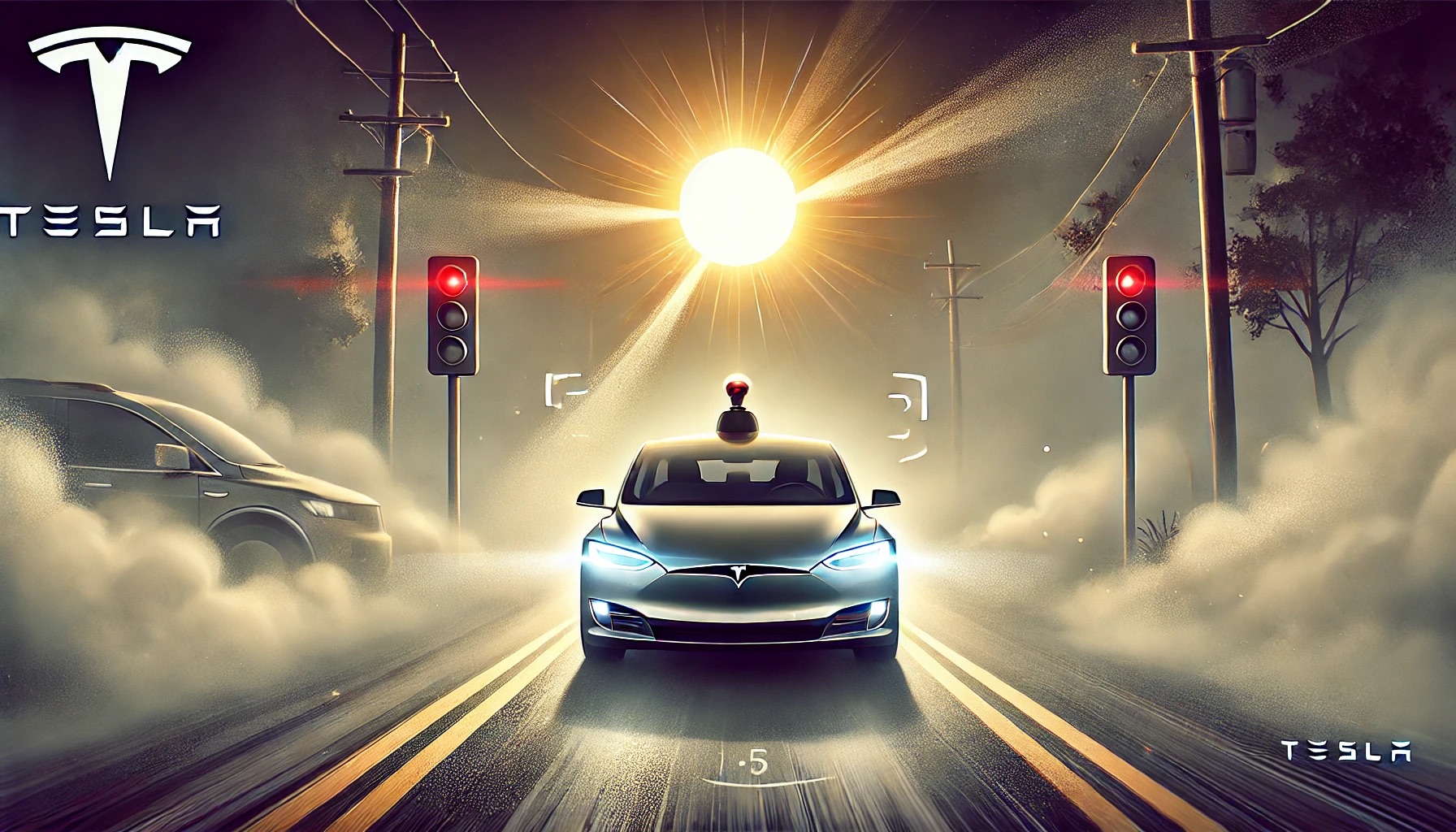
The National Highway Traffic Safety Administration has launched a new investigation into Tesla’s Full Self-Driving (FSD) system after multiple crashes were reported in reduced visibility conditions such as fog, sun glare, and airborne dust, including at least one fatal accident.
Tesla’s Vision-Only Approach Under Scrutiny
Regarding its vision-only strategy for autonomous driving, Tesla has maintained to face substantial skepticism.
Now, the NHTSA has begun a new inquiry into the purportedly impaired capability of Tesla's custom autonomy solution to traverse low-visibility situations, just as the electric vehicle behemoth is preparing to release an unsupervised FSD as early as next year.
NHTSA Investigates Low-Visibility Crashes
Specifically, the National Highway Traffic Safety Administration (NHTSA) has initiated an initial inquiry into multiple traffic accidents that happened in low-visibility situations when Tesla's FSD was turned on. Tragically, one of the four accidents under scrutiny resulted in death. Notated by the agency:
"In these crashes, the reduced roadway visibility arose from conditions such as sun glare, fog, or airborne dust."
Delays Could Impact Tesla's 2026 Cybercab Launch
Although this inquiry is still in its early stages, a negative outcome might significantly delay Tesla's plans to release its FSD with unsupervised capability next year, which would mean a postponement of the fully autonomous Cybercab debut in 2026.
As reported by WCCFTECH, it should be noted that Elon Musk had previously stated during the October 10th Cybercab reveal event that the "fully autonomous" unsupervised FSD for Models S, 3, X, and Y will begin to be distributed in 2019 in the states of Texas and California, and that the Cybercab will formally debut "before 2027."
FSD Still Lags Behind Waymo’s Disengagement Rates
Nevertheless, there are those who continue to doubt Tesla's intentions about autonomy, especially in light of the data that is currently available from the California DMV, which shows that Waymo averages a disengagement every 17,311 miles—far more than what the FSD is capable of.
LiDAR May Become a Necessity for Tesla
Although, if the NHTSA were to issue a negative verdict, Tesla might be compelled to add LiDAR sensors to its vision-only autonomous driving system.
However, with the unsupervised FSD being trained on a vision-only neural network, this conclusion will be quite costly and would significantly delay Tesla's autonomy-related objectives.







