


 Big Tech Signs White House Pledge to Fund Power for AI Data Centers
  Domino's Pizza UK Reports 15% Drop in Annual Profit Amid Weak Sales and Rising Costs
  Apple Bets Big on India: iPhone Production Hits 55 Million Units as China Reliance Fades
  Foxconn Sees Strong Growth Ahead Despite Limited Impact From U.S.–Israel–Iran Tensions
  Estée Lauder Sues Jo Malone Over Trademark Dispute Involving Zara
  Amazon Invests $535 Million in Brisbane Robotics Fulfillment Center
  Big Tech Turns to Debt Markets to Fund AI Infrastructure Boom
  US Lawmakers Raise Security Concerns Over Intel Testing ACM Research Chipmaking Tools
  Microsoft Backs Anthropic in Legal Fight Against Pentagon's AI Blacklist
  Trump Administration Proposes Tough AI Contract Rules as Anthropic Blacklisted by Pentagon
  Nintendo Stock Surges 10% as Pokémon Pokopia Breaks Sales Records
  Joby Aviation Reaches Major Milestone in FAA Certification for Electric Air Taxi
  Morgan Stanley Limits Withdrawals at Private Credit Fund Amid Market Turmoil
  Alphabet's GFiber Merges with Astound Broadband to Build Major U.S. Internet Provider
  Chinese AI Stocks Surge as Tencent, MiniMax, and Zhipu Launch Agentic AI Programs
  UBS Seeks Legal Protection Over Credit Suisse's Nazi-Era Banking Activities
  Yann LeCun's AI Startup AMI Raises $1 Billion at $3.5 Billion Valuation


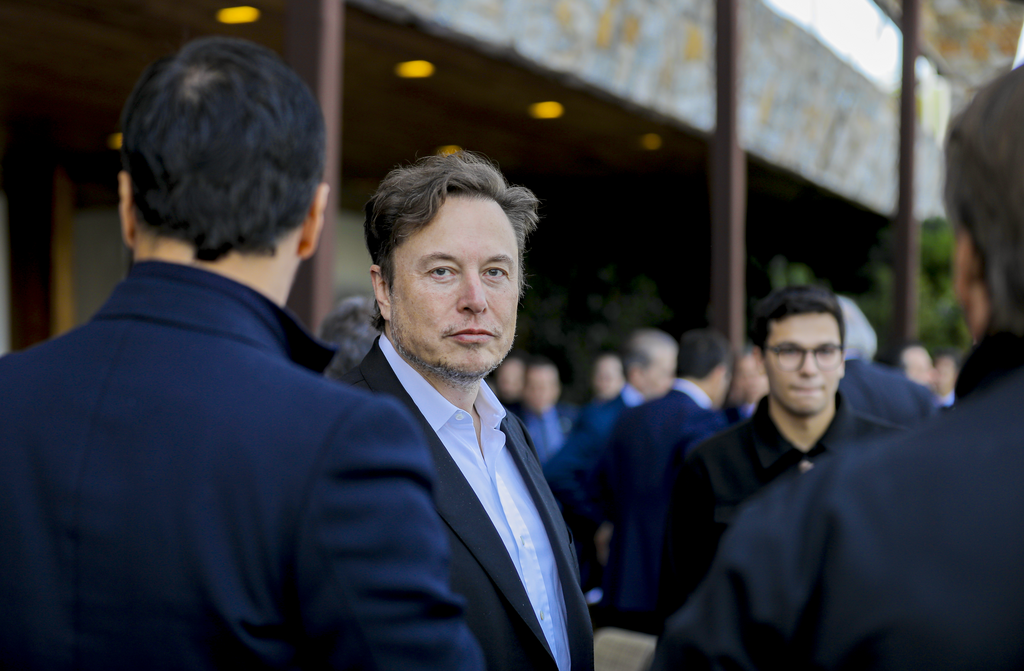
Tesla Inc (NASDAQ: TSLA) is set to restart development of its next-generation supercomputer, Dojo3, marking a renewed push into artificial intelligence infrastructure. Tesla CEO Elon Musk confirmed on Sunday that work on Dojo3 will resume now that the company’s AI5 chip design has reached a stable stage. Musk shared the update via social media, adding that Tesla is actively recruiting new talent to support the project.
The announcement comes just months after Tesla shut down the Dojo program and disbanded the team behind it. At the time, Musk described Dojo2 as an “evolutionary dead end,” signaling that the previous architecture failed to meet the company’s long-term AI and self-driving ambitions. The renewed effort suggests Tesla has reassessed its strategy and sees Dojo3 as a more viable path forward.
Dojo was first deployed in 2023 as a custom-built supercomputer designed to train Tesla’s artificial intelligence systems, including its Full Self-Driving (FSD) and driver assistance software. The system plays a critical role in processing massive volumes of video data collected from Tesla vehicles worldwide, enabling rapid improvements in machine learning models.
Musk’s latest comments indicate that Dojo3 may be built around Tesla’s in-house AI5 chip, which he has previously described as a significant leap over the company’s current hardware. While Tesla had earlier floated the idea of Dojo2 using Tesla-designed chips, the AI5 appears to be the cornerstone for the third-generation system.
Tesla currently operates several large-scale computing clusters and relies on a hybrid approach, using both its own chips and those supplied by NVIDIA Corporation (NASDAQ: NVDA). Musk has emphasized that Tesla does not plan to replace Nvidia’s data center GPUs entirely. Instead, the company aims to complement them with custom silicon optimized for its specific AI workloads.
The AI5 chip is expected to be manufactured in collaboration with leading semiconductor players, including TSMC (NYSE: TSM) and Samsung Electronics (KS: 005930). If successful, Dojo3 could strengthen Tesla’s vertical integration in AI, reduce long-term computing costs, and accelerate progress in autonomous driving technology, reinforcing the company’s competitive position in the rapidly evolving AI and electric vehicle landscape.













