


 Faraday Future Delivers First Robots in Middle East, Plans September Launches
  Pinterest Stock Falls as CFO Julia Brau Donnelly Resigns
  Nvidia Options Price in $280 Billion Earnings Swing
  Luxshare Shares Rise as First-Half Profit Jumps 18%
  OpenAI Data Center Chief Chris Malone Exits Ahead of Planned 2027 Listing
  Nvidia Pauses AI Cloud Financing Deals Amid Antitrust Concerns
  Salesforce Shares Surge as AI Demand Powers Q2 Earnings Beat
  Google Expands Gemini Enterprise With AI Tools for Legal Sector
  SK Hynix Shares Fall as Workers Reject Wage Deal
  Unitree Shares Plunge 45% After Blockbuster IPO, Raising China Tech Bubble Fears
  Countries Tighten Social Media Bans for Children
  Xiaomi Unveils Xring O3 Chip for Flagship Foldable Phone
  U.S. Disrupts China-Linked Hacking Campaign Targeting Government Agencies
  New Zealand Moves to Ban Social Media for Children Under 16
  SoftBank Plans Record $6.3 Billion Bond Sale to Fund OpenAI Investments
  Meta Agrees to $18 Billion Settlement, Tightens Teen Social Media Rules


 Add as a preferred source on Google
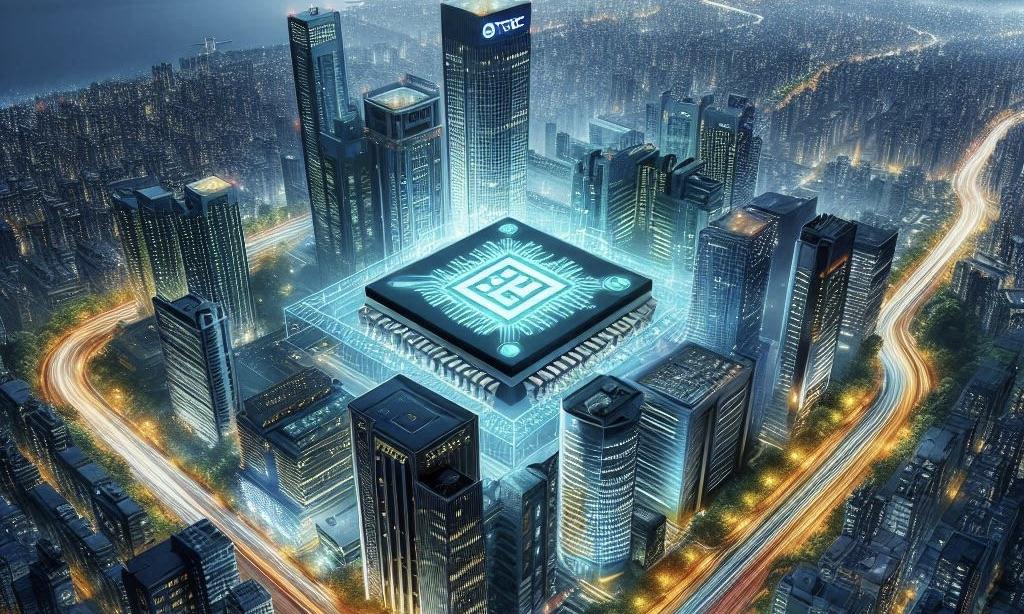
Taiwan's TSMC is maintaining a decade-long lead over China's semiconductor industry, according to Taiwan's National Science Council chairperson Cheng-Wen Wu. TSMC's upcoming 2-nanometer chips, set for mass production in 2025, reinforce Taiwan’s dominance despite China’s recent advancements in chip manufacturing.
TSMC Dismisses Claims of China Closing Chip Tech Gap, Cites 10-Year Lead with 2nm Advancements
According to Cheng-Wen Wu, the chairperson of Taiwan's National Science Council, Taiwan and TSMC are still a decade ahead of China in semiconductor fabrication. Wu made these statements during a briefing at the Taiwanese legislature in response to media reports that China had made significant progress in its chip manufacturing capabilities, notably in the wake of a teardown of Huawei's most recent smartphones. These reports suggested that China may close the distance with Taiwan's advanced chip technology.
Wu emphasized that TSMC's cutting-edge 2-nanometer semiconductor technology will begin mass production in 2025, implying that the gap between Taiwan and China should be at least ten years. This response was given in response to a question posed by Taiwanese legislator Wu Pei-Yi regarding whether China's recent technological advancements, as demonstrated in the teardown of Huawei's Pura 70 smartphone, which includes a 7-nanometer processor purportedly manufactured by the Semiconductor Manufacturing International Corporation (SMIC), indicated that China could be only three years behind TSMC in developing advanced chip production.
Wu, speaking on behalf of TSMC, expressed strong reservations about the suggestion that China's semiconductor capabilities had narrowed the gap to just three years behind Taiwan. He reiterated TSMC's position as the world's leading semiconductor manufacturer, set to roll out 2-nanometer chips next year, thereby reinforcing Taiwan's significant lead over China in this sector.
TSMC’s Advanced EUV Technology Strengthens Its Lead, While China Relies on Outdated Semiconductor Methods
TSMC introduced the 7-nanometer semiconductor manufacturing technology in 2018, followed by numerous technological advancements, such as the 5-nanometer process. Although TSMC has made substantial progress, the tempo of semiconductor evolution is sometimes linear, especially when manufacturers such as China need access to critical equipment
TSMC's leadership is significantly shaped by its adept use of sophisticated machinery, particularly the extreme ultraviolet (EUV) manufacturing techniques supplied by the Dutch company ASML. These EUV scanners, initially deployed in TSMC's 7-nanometer production, have since been expanded. The company's use of High NA EUV devices for more intricate, smaller chip designs underscores its technological prowess and its impact on the semiconductor industry.
Conversely, China's semiconductor production and automotive and industrial sectors depend heavily on outdated technologies. According to Wccftech, these legacy technologies are suitable for applications with lower performance requirements and are simpler to manufacture. China is investing significantly in these outdated technologies to establish a self-sufficient domestic supply chain that can satisfy most of its semiconductor requirements. However, it is still substantially disadvantaged compared to Taiwan's state-of-the-art innovations.







