


 Bangladesh Election 2026: A Turning Point After Years of Political Suppression
  Japan Election 2026: Sanae Takaichi Poised for Landslide Win Despite Record Snowfall
  China Overturns Death Sentence of Canadian Robert Schellenberg, Signaling Thaw in Canada-China Relations
  Jack Lang Resigns as Head of Arab World Institute Amid Epstein Controversy
  Trump Signs Executive Order Threatening 25% Tariffs on Countries Trading With Iran
  Trump Congratulates Japan’s First Female Prime Minister Sanae Takaichi After Historic Election Victory
  Antonio José Seguro Poised for Landslide Win in Portugal Presidential Runoff
  Trump Lifts 25% Tariff on Indian Goods in Strategic U.S.–India Trade and Energy Deal
  New York Legalizes Medical Aid in Dying for Terminally Ill Patients
  Sydney Braces for Pro-Palestine Protests During Israeli President Isaac Herzog’s Visit
  Trump’s Inflation Claims Clash With Voters’ Cost-of-Living Reality
  Taiwan Says Moving 40% of Semiconductor Production to the U.S. Is Impossible
  India–U.S. Interim Trade Pact Cuts Auto Tariffs but Leaves Tesla Out
  China Warns US Arms Sales to Taiwan Could Disrupt Trump’s Planned Visit
  Bosnian Serb Presidential Rerun Confirms Victory for Dodik Ally Amid Allegations of Irregularities
  Trump Administration Appeals Court Order to Release Hudson Tunnel Project Funding
  Trump Backs Nexstar–Tegna Merger Amid Shifting U.S. Media Landscape


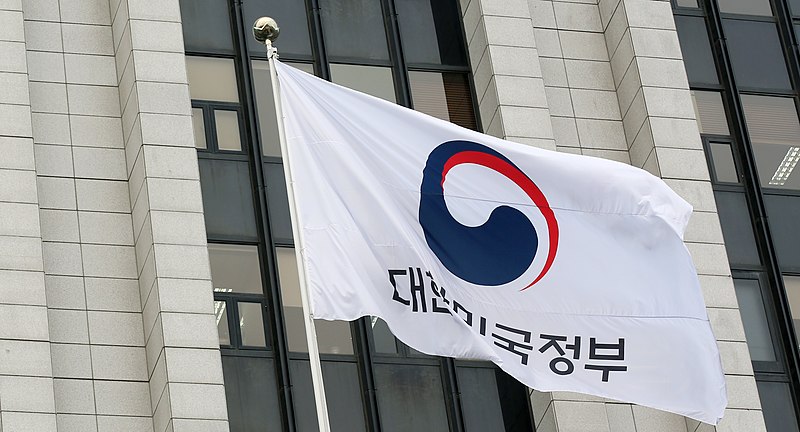
South Korea’s finance minister said the government plans to streamline public organizations. The move comes as concerns were raised regarding the efficiency following the expansion of operations under the previous administration.
In a statement after a meeting Friday last week, South Korean finance minister Choo Kyung-ho said that the government would be streamlining public organizations, citing efficiency concerns after the expansion of operations under the administration of Moon Jae-in.
The government will be cutting down the number of employees as well as the expenses of the organizations as a first step, according to Choo.
Choo said 350 public organizations are employing 449,000 people as of the end of May, with a combined liability amount of 583 trillion won or $449 billion at the end of 2021. This was an increase of 34 and 17 percent respectively in the last five years.
Choo also said that there were concerns among the public and experts regarding efficiency and profitability matching the scale of the expansion of operations in public organizations.
This comes as President Yoon Suk-yeol, who began his term in May, pledged to make reforms to the public sector. Yoon said early last month that his administration would be cutting expenditure and selling non-core assets at public enterprises. Yoon is also suffering from low approval ratings, going down to 28 percent from 32 percent last month, according to Gallup Korea.
Also, last week, Indonesia and South Korea expanded a cooperation agreement regarding the construction of a new Indonesian capital city in Borneo to replace Jakarta, allowing Korean companies to take part in building the digital infrastructure for the potential new capital.
Indonesia and South Korea signed an agreement back in 2019 to work together on the $32 billion project, where Indonesia will relocate its capital to Nusantara on Borneo island. Yoon and Indonesian President Joko Widodo made the revised agreement during the recent summit in Seoul.
Yoon told reporters in the joint news conference that the agreement would lay “the groundwork for our companies to actively contribute to building the new Indonesian capital’s infrastructure, electronic government, and smart city systems.”
Yoon added that South Korea could share its experience in building the administrative city of Sejong, which was launched in 2012.













