


 Trump Nears Decision on Permanent U.S. Intelligence Chief as FISA Renewal Faces Senate Resistance
  Judge Dismisses Trump Administration Lawsuit Against Boston Sanctuary City Policy
  Trump Signals Opposition to USMCA Renewal as U.S. Reviews Trade Relations with Canada and Mexico
  Florida Supreme Court Allows GOP Congressional Map to Stand Ahead of 2026 Midterm Elections
  Peru Election Results Remain Uncertain as Tight Presidential Race Heads Toward Legal Review
  FBI Faces Historic Security Challenge Ahead of 2026 FIFA World Cup
  LePage Wins GOP Nomination in Key Maine House Race Ahead of 2026 Election
  US Urges Europe to Impose Ebola Travel Restrictions Ahead of FIFA World Cup 2026
  US Appeals Court Keeps Trump’s 10% Global Tariff in Effect During Ongoing Legal Battle
  Trump Administration Defends Cuba Sanctions Amid UN Human Rights Criticism
  U.S. Reinstates Sanctions on U.N. Expert Francesca Albanese Amid Legal Battle
  U.S.-Iran Peace Talks Continue Despite Escalating Military Strikes
  Venezuela Deploys Troops to Crack Down on Illegal Gold Mining Amid Push for Foreign Investment
  Trump Says Iran Peace Deal Near as Markets Rally and Oil Prices Fall
  US Voters Prioritize Party Loyalty Over Candidate Controversies, Reuters/Ipsos Poll Finds
  DOJ Investigates Group Linked to Reid Hoffman Over E. Jean Carroll Lawsuit Funding


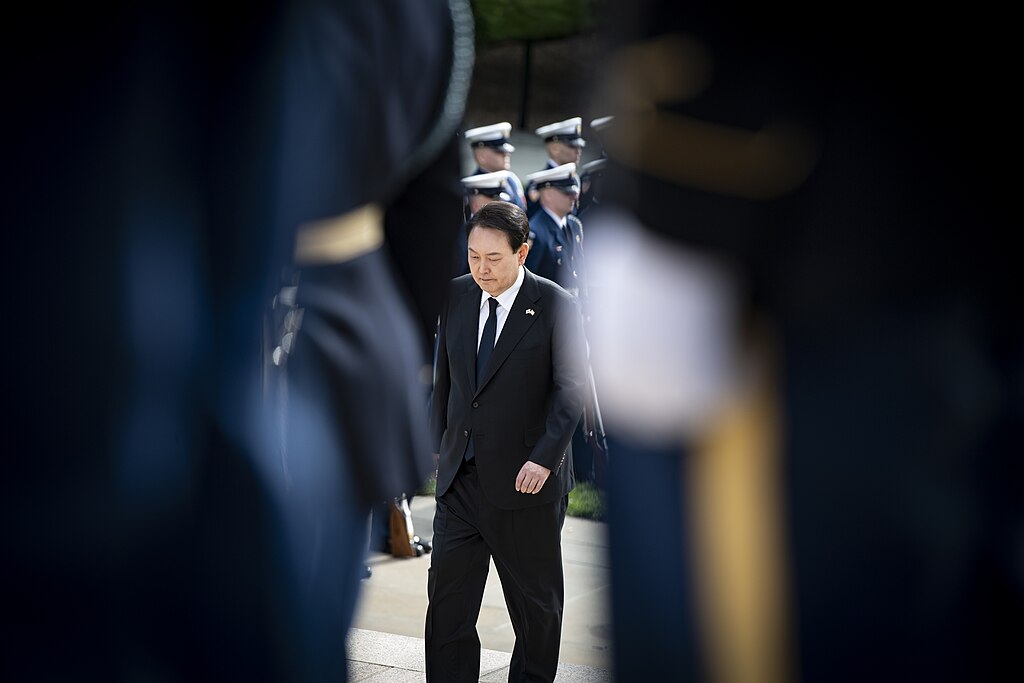
Former South Korean President Yoon Suk Yeol was sentenced to 30 years in prison on Friday after a Seoul court found him guilty in a high-profile case linked to his controversial 2024 martial law declaration. According to Yonhap News Agency, the court ruled that Yoon played a central role in a scheme involving military drones allegedly sent into North Korean airspace to create a justification for imposing martial law.
The case has become one of the most significant political scandals in South Korea’s recent history. Prosecutors argued that Yoon authorized military drones to fly over Pyongyang as part of an effort to heighten tensions with North Korea and manufacture a national security crisis. Investigators claimed the operation was designed to provide a pretext for declaring martial law, a move that ultimately failed and triggered widespread political backlash.
The court determined that the former president’s actions represented a serious abuse of power and posed a threat to South Korea’s democratic institutions. The ruling follows months of legal proceedings, during which prosecutors presented evidence and testimony linking Yoon to the alleged operation.
The verdict marks a dramatic fall for the former leader, who once held the nation’s highest office. Political analysts say the case is likely to have lasting implications for South Korean politics, civil-military relations, and public trust in government institutions. The sentence also highlights the judiciary’s willingness to hold senior political figures accountable for actions deemed harmful to the country’s constitutional order.
Yoon has denied wrongdoing throughout the investigation and trial. His legal team is expected to challenge the ruling through the appeals process. The case continues to attract significant domestic and international attention, given its connection to national security issues, North Korea relations, and concerns about democratic governance in South Korea.
The sentencing is expected to remain a major topic of discussion as the country assesses the political and legal consequences of one of its most controversial presidential scandals.







