


 Bangladesh Election 2026: A Turning Point After Years of Political Suppression
  Trump Allows Commercial Fishing in Protected New England Waters
  Japan’s Prime Minister Sanae Takaichi Secures Historic Election Win, Shaking Markets and Regional Politics
  Sydney Braces for Pro-Palestine Protests During Israeli President Isaac Herzog’s Visit
  US Pushes Ukraine-Russia Peace Talks Before Summer Amid Escalating Attacks
  Federal Judge Restores Funding for Gateway Rail Tunnel Project
  U.S. Lawmakers to Review Unredacted Jeffrey Epstein DOJ Files Starting Monday
  India–U.S. Interim Trade Pact Cuts Auto Tariffs but Leaves Tesla Out
  Ghislaine Maxwell to Invoke Fifth Amendment at House Oversight Committee Deposition
  Trump Backs Nexstar–Tegna Merger Amid Shifting U.S. Media Landscape
  Anutin’s Bhumjaithai Party Wins Thai Election, Signals Shift Toward Political Stability
  China Warns US Arms Sales to Taiwan Could Disrupt Trump’s Planned Visit
  Antonio José Seguro Poised for Landslide Win in Portugal Presidential Runoff
  Trump Administration Appeals Court Order to Release Hudson Tunnel Project Funding
  Nicaragua Ends Visa-Free Entry for Cubans, Disrupting Key Migration Route to the U.S.
  Trump Lifts 25% Tariff on Indian Goods in Strategic U.S.–India Trade and Energy Deal


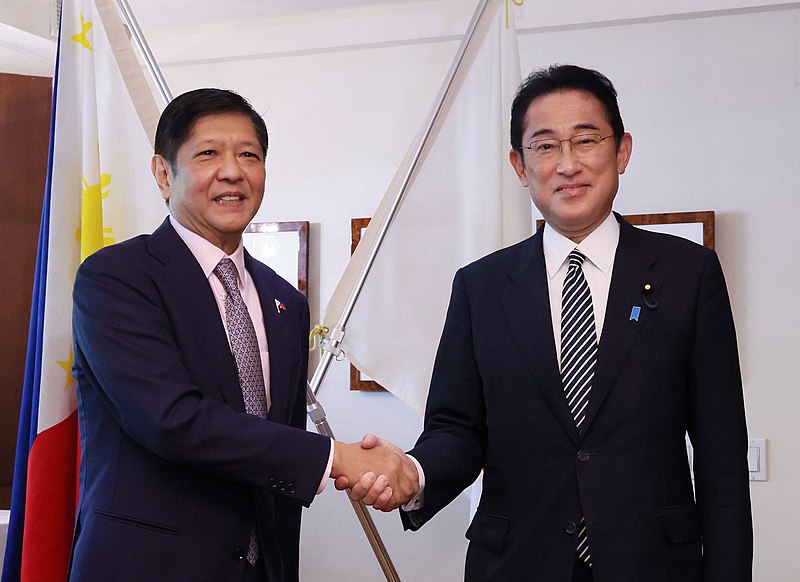
Japan and the Philippines pledged to strengthen security ties amid shared concerns regarding China and tensions in the region. Both countries also signed an agreement that would allow their armed forces to work together on disaster relief efforts.
On Thursday, Japanese Prime Minister Fumio Kishida and Philippine President Ferdinand Marcos Jr. had a bilateral meeting in Tokyo, where both leaders pledged closer security ties and signed an agreement allowing the armed forces of both countries to work together on disaster relief operations. The agreement is seen as a step towards a broader deal that would allow Japan and the Philippines to deploy each other’s respective forces on each other’s territories.
“In this year of complex international situations, Japan attaches great importance to cooperation with the Philippines,” said Kishida in his opening remarks during his meeting with Marcos. Both leaders later agreed on establishing a framework that would “strengthen and smooth the process of holding joint exercises.”
The most recent joint exercise Japan held with the Philippines was with the United States back in October. The disaster relief agreement is believed to be a possible prerequisite to establishing a visiting forces agreement that would allow Japan to deploy its forces to the Philippines easily. Tokyo already has such agreements with Australia and the United Kingdom.
A Japanese military presence in the Philippines would also help counter Chinese influence in the region, especially in the South China Sea, which Bejing claims control over the majority of the waters. China’s claims drew the ire of surrounding nations that have overlapping claims, including Manila.
“After our meeting, I can confidently say that our strategic partnership is stronger than ever as we navigate together the rough waters buffeting our region,” said Marcos, adding that he agreed to cooperate more closely with Japan on matters including defense cooperation and maritime security.
Earlier this week, the head of the Philippine coast guard said it has ramped up its presence in the waters by deploying more vessels while conducting more patrols to better protect the country’s maritime territory and its fishermen. PCG Commandant Admiral Artemio Abu said in an interview that the PCG acquisition of more advanced ships has allowed the coast guard to increase the number and duration of patrols in the South China Sea.













