


 NASA and SpaceX Target Crew-11 Undocking From ISS Amid Medical Concern
  Blue Origin New Glenn Explosion Could Delay Launch Operations Until 2028
  Trump Signs Executive Order to Boost AI Research in Childhood Cancer
  Tabletop particle accelerator could transform medicine and materials science
  NASA Artemis II: First Crewed Moon Mission Since Apollo Takes Four Astronauts on 10-Day Lunar Journey
  FDA Pilot Program Eases Rules for Nicotine Pouch Makers
  Is space worth the cost? Accounting experts say its value can’t be found in spreadsheets
  Cogent Biosciences Soars 120% on Breakthrough Phase 3 Results for Bezuclastinib in GIST Treatment
  Eli Lilly’s Inluriyo Gains FDA Approval for Advanced Breast Cancer Treatment
  Trump and Merck KGaA Partner to Slash IVF Drug Costs and Expand Fertility Coverage
  SpaceX Delays Starship V3 Launch Ahead of Potential Record IPO


 Add as a preferred source on Google
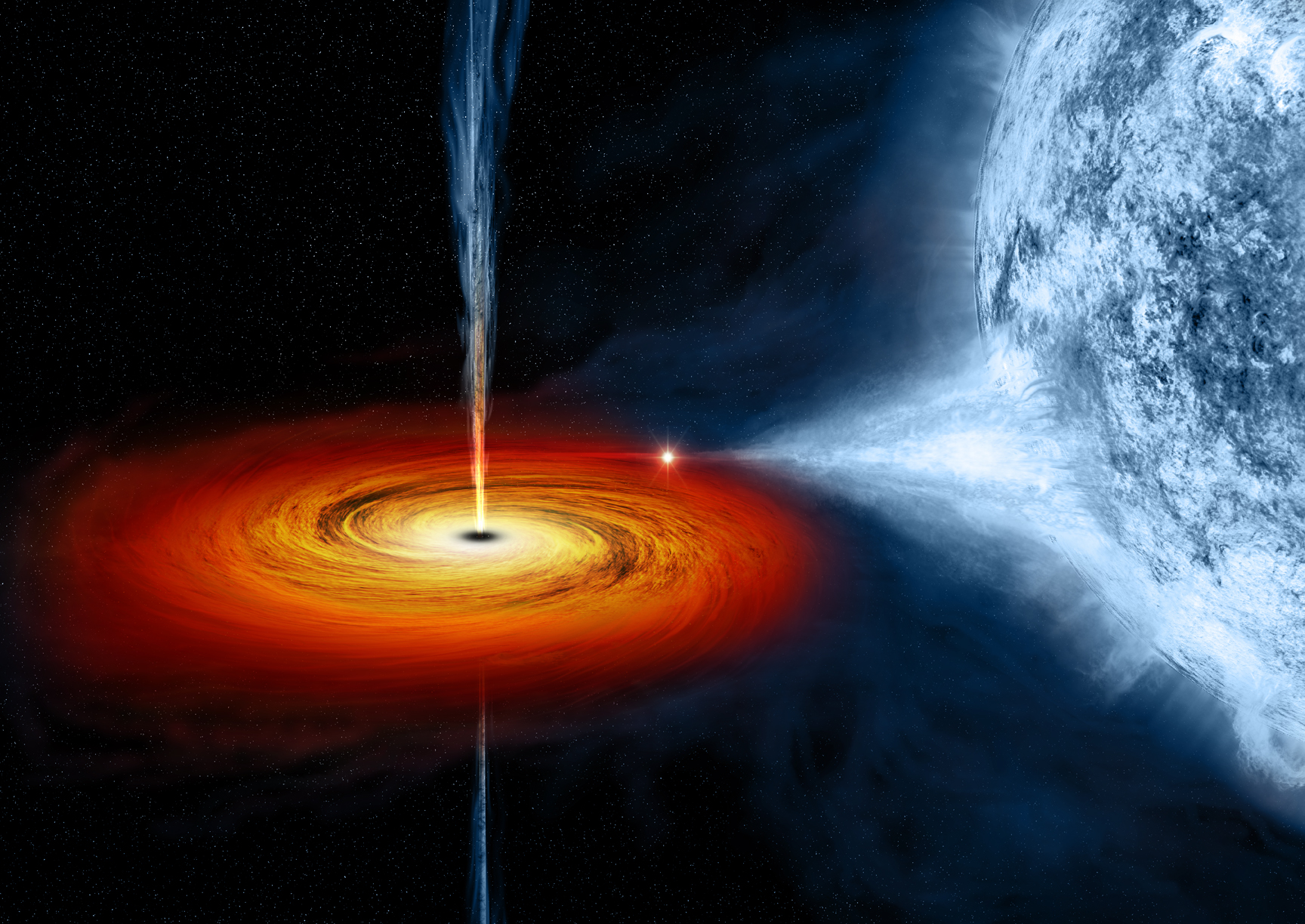
Black holes are some of the most terrifying subjects in the realm of science. Not only do they offer a glimpse into the raw power that is present in the universe, they also invoke undefinable terror in those who imagine themselves getting trapped by one. This is why the most recent black hole that scientists have discovered could be the stuff of nightmares based on just how fast it devours everything around it.
As taglines go, fastest-growing anything can already be one of the most terrifying prospects in the world, but when it is related to a black hole, it can be downright bloodcurdling. This is exactly what scientists at the Australian Nation University recently discovered. According to a press release, the black hole could fit 20 billion suns and it’s growing at one percent every one million years.
That might not seem like such a fast growth rate, but context is everything. Something this massive growing at that pace for that period of time is a threatening concept. Just to paint a picture of what this black hole is really like an astronomer from the university’s Research School of Astronomy and Astrophysics, Dr. Christian Wolf provided a scenario that anyone can understand.
"This black hole is growing so rapidly that it's shining thousands of times more brightly than an entire galaxy, due to all of the gases it sucks in daily that cause lots of friction and heat. If we had this monster sitting at the centre of our Milky Way galaxy, it would appear 10 times brighter than a full moon. It would appear as an incredibly bright pin-point star that would almost wash out all of the stars in the sky," Dr. Wolf explained.
Consequently, it would also make life untenable because of all the radiation it spits out. Fortunately, as Space.com points out, the black hole is so far away that it took an estimated 12 billion years for the astronomers to detect the light that it released.







