


 Toyota’s Surprise CEO Change Signals Strategic Shift Amid Global Auto Turmoil
  SpaceX Prioritizes Moon Mission Before Mars as Starship Development Accelerates
  SoftBank Shares Slide After Arm Earnings Miss Fuels Tech Stock Sell-Off
  Baidu Approves $5 Billion Share Buyback and Plans First-Ever Dividend in 2026
  AMD Shares Slide Despite Earnings Beat as Cautious Revenue Outlook Weighs on Stock
  Jensen Huang Urges Taiwan Suppliers to Boost AI Chip Production Amid Surging Demand
  Sony Q3 Profit Jumps on Gaming and Image Sensors, Full-Year Outlook Raised
  Global PC Makers Eye Chinese Memory Chip Suppliers Amid Ongoing Supply Crunch
  Alphabet’s Massive AI Spending Surge Signals Confidence in Google’s Growth Engine
  TrumpRx Website Launches to Offer Discounted Prescription Drugs for Cash-Paying Americans
  Anta Sports Expands Global Footprint With Strategic Puma Stake
  American Airlines CEO to Meet Pilots Union Amid Storm Response and Financial Concerns
  FDA Targets Hims & Hers Over $49 Weight-Loss Pill, Raising Legal and Safety Concerns
  Elon Musk’s Empire: SpaceX, Tesla, and xAI Merger Talks Spark Investor Debate
  SpaceX Reports $8 Billion Profit as IPO Plans and Starlink Growth Fuel Valuation Buzz
  Once Upon a Farm Raises Nearly $198 Million in IPO, Valued at Over $724 Million


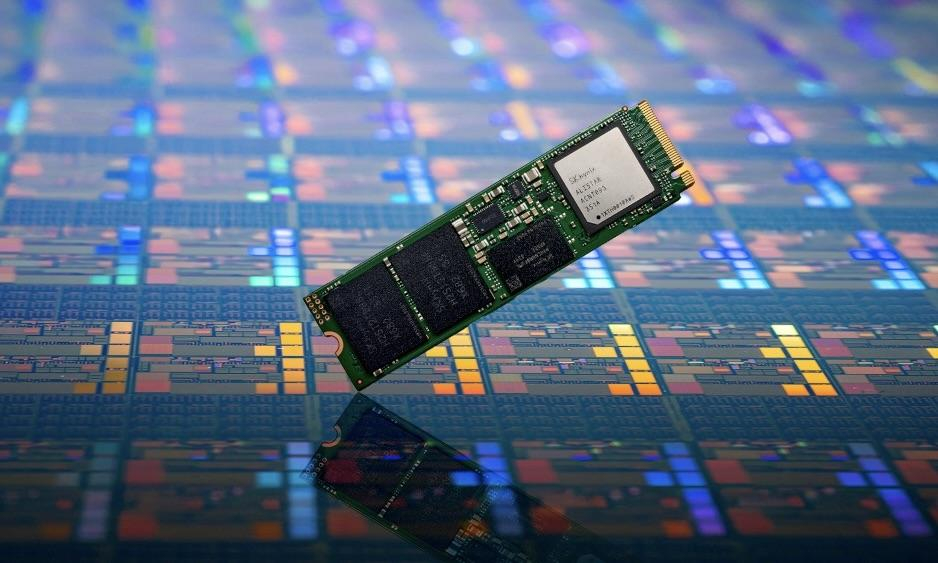
SK hynix has developed the world’s first 10-nanometer 16-gigabyte DDR5 DRAM chip, a significant breakthrough in memory process technology that promises enhanced performance and efficiency for high-demand applications.
SK hynix Develops World's First 10-nm DRAM Chip
The first 16-gigabyte DDR5 chip was produced utilizing SK hynix's 1c node, the sixth iteration of the 10-nanometer process technology. The company, which is the second-largest in the world for memory chips, announced the development of memory chips (via Reuters) on Thursday.
In memory process technology, this breakthrough, according to SK hynix, heralds the start of extreme scaling to a level closer to 10 nm.
Thanks to its groundbreaking technology for the 1b, the fifth generation of the 10-nm process, SK hynix has surpassed technological restrictions by increasing the level of design completion, making it the first in the industry to do so.
1c DRAM Developed from 1b Platform
The Korea Herald reports that the corporation developed the 1c by expanding the platform of the 1b DRAM in an effort to minimize potential mistakes caused by the process of progressing the process and to transfer the benefits of the 1b, which is generally considered the best-performing DRAM, as effectively as possible.
Thanks to design innovations in technology, the new chip is more cost-effective than its predecessor and boasts a productivity boost of over 30%.
Product Aimed at High-Performance Data Centers
The product's operational speed has increased by 11% and is aimed at high-performance data centers. As the AI era progresses, power consumption increases; nevertheless, SK hynix anticipates that data centers will be able to cut their electricity bills by as much as 30 percent with the help of these chips, thanks to their 9 percent improvement in power efficiency.
In order to begin shipping in large quantities next year, the memory chip manufacturer has stated that the new product will be prepared for mass manufacturing within the year.
"We are committed to providing differentiated values to customers by applying the 1c technology -- equipped with the best performance and cost competitiveness -- to our major next-generation products," stated Kim Jong-hwan, head of SK hynix's DRAM development. This technology will be applied to their big next-generation goods.
SK hynix to Lead DRAM Market
"We will continue to work towards maintaining the leadership in the DRAM space and position as the most trusted AI memory solution provider," he continued.
Despite SK hynix's achievement in creating the first sixth-generation DRAM chip, rivalry in the ultra-fine process industry for worldwide dominance seems to be intensifying.
Memory chip industry leader Samsung Electronics has said that by year's end, widespread manufacturing of the 10-nm process's sixth generation will have begun. At March's MemCon in California, the news was announced. This comes before Thursday's announcement of SK hynix's mass production plan.
Industry insiders say that Samsung has also assembled a team to speed up the creation of the seventh generation of 10-nm chip manufacturing technology.
Despite being the pioneering company behind the fourth generation of 10-nm class memory chips, US-based Micron Technology appears to be slipping behind two Korean memory chip producers, SK hynix and Samsung Electronics, in the battle for the sixth and seventh generations of 10-nm process technology.
Up until the 1b process, Micron was able to produce DRAM without resorting to UV light. On the other hand, Samsung intends to use EUV beginning with the 1c process as part of a catch-up effort, having obtained DRAM manufacturing technology that uses EUV.
Samsung, Micron Compete in Ultra-Fine Process Industry
Global chip makers are expected to maintain severe rivalry for the foreseeable future, according to the semiconductor industry. This is because ultra-fine processing is still a crucial measure of technological prowess.
On the other hand, others think that competition will move towards hybrid bonding, a way to maximize chip integration since predictions indicate that microprocessing advancements may be reaching their limits.













