


 Bosnian Serb Presidential Rerun Confirms Victory for Dodik Ally Amid Allegations of Irregularities
  TrumpRx.gov Highlights GLP-1 Drug Discounts but Offers Limited Savings for Most Americans
  Federal Judge Restores Funding for Gateway Rail Tunnel Project
  Trump Allows Commercial Fishing in Protected New England Waters
  Antonio José Seguro Poised for Landslide Win in Portugal Presidential Runoff
  U.S. Lawmakers to Review Unredacted Jeffrey Epstein DOJ Files Starting Monday
  U.S. to Begin Paying UN Dues as Financial Crisis Spurs Push for Reforms
  Pentagon Ends Military Education Programs With Harvard University
  Ohio Man Indicted for Alleged Threat Against Vice President JD Vance, Faces Additional Federal Charges
  Trump’s Inflation Claims Clash With Voters’ Cost-of-Living Reality
  Missouri Judge Dismisses Lawsuit Challenging Starbucks’ Diversity and Inclusion Policies
  Jack Lang Resigns as Head of Arab World Institute Amid Epstein Controversy
  Trump Signs Executive Order Threatening 25% Tariffs on Countries Trading With Iran
  China Warns US Arms Sales to Taiwan Could Disrupt Trump’s Planned Visit
  Japan Election 2026: Sanae Takaichi Poised for Landslide Win Despite Record Snowfall
  Trump Says “Very Good Talks” Underway on Russia-Ukraine War as Peace Efforts Continue


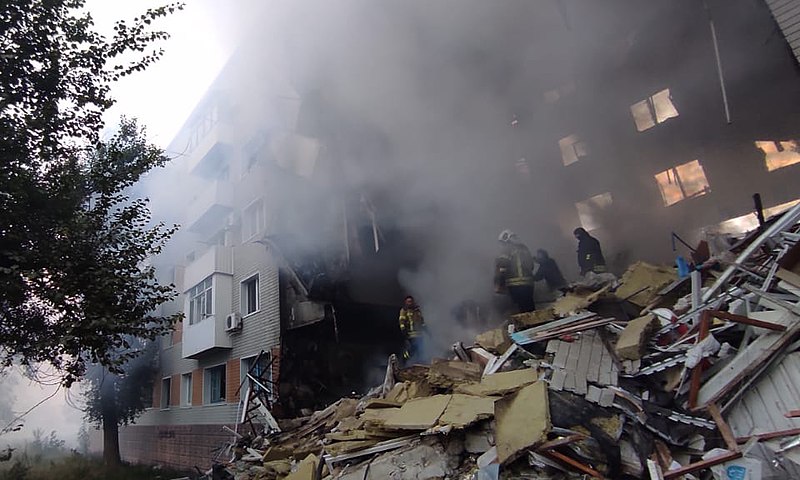
The heaviest fighting in the war in Ukraine has been taking place in the key city of Bakhmut. A senior Ukrainian commander said Russian forces have been using “scorched earth” tactics in reducing buildings in the city to rubble.
On Monday, Ukrainian Colonel General Oleksandr Syrskyi, who leads Ukraine’s ground forces, said that Russian forces are using Syria’s “scorched earth” tactics to destroy Bakhmut’s buildings and positions in Bakhmut with air strikes and artillery. Syrskyi added that Ukrainian forces are still holding onto their defensive positions.
“The enemy switched to so-called scorched earth tactics from Syria. It is destroying buildings and positions with air strikes and artillery fire,” said Syrskyi, who visited the front line areas in Bakhmut on Sunday, according to Ukraine’s Military Media Center.
“The situation is difficult but uncontrollable,” said Syrskyi.
Syrskyi also said that Moscow was bringing in special forces and airborne assault units to continue their onslaught of the city as members of the Russian Wagner mercenary group were “exhausted.” The Wagner paramilitary members have been leading the assaults on Bakhmut.
Ukrainian forces have held the defenses in Bakhmut, where fighting has been taking place for months. Kyiv has since accused Russia of using the same tactics in capturing the Ukrainian city of Severodonetsk in the eastern Luhansk region. Ukrainian forces were forced to withdraw back in July.
Ukraine said its defense of Bakhmut is an effort to buy time for its forces to prepare for an upcoming counterattack that would inflict more losses on the Russian side. Despite holding the defenses, Russian forces have been making gains in Bakhmut. A potential capture of Bakhmut by Russia would mark the first territorial gain by Moscow in months.
Last week, Russian media reported that there was a transfer of multiple launch rocket systems to Russian airborne forces, also known as VDV, according to the intelligence bulletin of the British defense ministry on Tuesday. The multiple-launch rocket system, the TOS-1A model in particular, is described by Moscow as a “heavy flamethrower” and is usually operated by a unit that specializes in Chemical, Biological, and Radiological Protection.
“The transfer likely indicates a future role for the VDV in offensive operations in Ukraine. It is likely part of efforts to reconstitute the VDV after it suffered heavy casualties in the first nine months of the war,” said the ministry.













