


 Sydney Braces for Pro-Palestine Protests During Israeli President Isaac Herzog’s Visit
  Trump Backs Nexstar–Tegna Merger Amid Shifting U.S. Media Landscape
  Jack Lang Resigns as Head of Arab World Institute Amid Epstein Controversy
  Trump Signs Executive Order Threatening 25% Tariffs on Countries Trading With Iran
  US Pushes Ukraine-Russia Peace Talks Before Summer Amid Escalating Attacks
  Federal Judge Restores Funding for Gateway Rail Tunnel Project
  Israel Approves West Bank Measures Expanding Settler Land Access
  U.S. Lawmakers to Review Unredacted Jeffrey Epstein DOJ Files Starting Monday
  Anutin’s Bhumjaithai Party Wins Thai Election, Signals Shift Toward Political Stability
  Japan’s Prime Minister Sanae Takaichi Secures Historic Election Win, Shaking Markets and Regional Politics
  New York Legalizes Medical Aid in Dying for Terminally Ill Patients
  Bangladesh Election 2026: A Turning Point After Years of Political Suppression
  Bosnian Serb Presidential Rerun Confirms Victory for Dodik Ally Amid Allegations of Irregularities
  Trump Lifts 25% Tariff on Indian Goods in Strategic U.S.–India Trade and Energy Deal
  Trump Congratulates Japan’s First Female Prime Minister Sanae Takaichi After Historic Election Victory
  India–U.S. Interim Trade Pact Cuts Auto Tariffs but Leaves Tesla Out
  U.S.-India Trade Framework Signals Major Shift in Tariffs, Energy, and Supply Chains


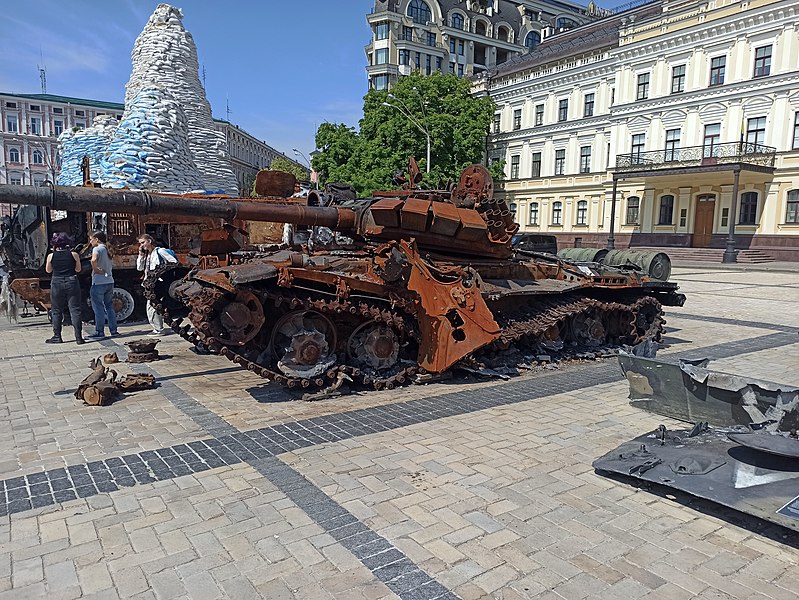
This week, Ukraine is set to commemorate its 31st year of independence from Soviet rule as well as defend itself in the sixth consecutive month of the ongoing war Russia has waged on the nation. Kyiv announced that independence day celebrations and rallies are not allowed in light of a potential Russian attack.
Kyiv this week banned independence day celebrations, citing a warning of US officials that Russia may plan an attack on the same day. Ukrainian President Volodymyr Zelenskyy has recently warned that Russia may attempt to do “something particularly ugly” in the midst of Ukraine’s celebrations of independence from the Soviet Union.
A US official also told Reuters this week that Russia was planning on increasing its offensive to target civilian infrastructure and government establishments in the coming days, based on obtained intelligence.
This led officials in the capital to ban public events related to Ukraine’s independence day from Monday to Thursday.
While Kyiv is far from the front lines where Russian forces have been bombarding Ukraine’s southern and eastern regions, it is rarely hit by Russian missiles when Ukraine launched a counteroffensive to Russia’s attempt on the ground to seize the capital back in March.
Other parts of Ukraine have also restricted public gatherings related to independence day. In the Russian-occupied Kharkiv, Mayor Ihor Terekhov announced an extended overnight curfew to be effective from Tuesday to Thursday.
In Mykolaiv in southern Ukraine, regional governor Vitaliy Kim said officials planned a precautionary order for residents to work from home on Tuesday and Wednesday and urged residents not to gather in large groups.
Meanwhile, Japanese Prime Minister Fumio Kishida told his cabinet ministers to continue with their diplomatic responses against Russia, including sanctions, while continuing to support Ukraine, in coordination with the G7 countries, according to Japanese finance minister Shunichi Suzuki Tuesday.
“We will continue to work closely with G7 and international community following the prime minister’s instructions and respond appropriately,” said Suzuki, who added that the ministers did not discuss any new sanctions to be imposed on Russia in line with the sanctions already imposed by the West.













