


 U.S. Appeals Court Strikes Down FTC Order Against TurboTax "Free" Advertising
  Merck's $6 Billion Bid for Terns Pharma Signals Bold Oncology Push
  Air Canada Express Crash at LaGuardia: Controller Distracted by Prior Emergency
  Nanya Technology Shares Surge 10% After $2.5 Billion Private Placement from Sandisk and Cisco
  Delivery Hero Sells Taiwan Foodpanda to Grab for $600 Million in Debt-Reduction Push
  Valero Port Arthur Refinery Explosion Prompts $1M Lawsuit Over Worker Safety Negligence
  Henkel in Advanced Talks to Acquire Olaplex at $2 Per Share
  Elon Musk Announces Terafab: SpaceX and Tesla to Build Dual AI Chip Factories in Austin, Texas
  Finnair Orders 18 Embraer E195-E2 Jets in Landmark Fleet Overhaul
  Nintendo Switch 2 Production Cut as Holiday Sales Miss Targets
  Golden Dome Missile Defense: Anduril and Palantir Join Forces on Trump's $185B Space Shield
  CK Hutchison's Panama Ports Dispute Escalates as Arbitration Claims Surpass $2 Billion
  Berkshire Hathaway and Tokio Marine Form Major Strategic Insurance Partnership
  Rio Tinto's Resolution Copper Mine: U.S. Smelting Challenges and Global Operations Update
  Goldman Sachs Raises ECB Rate Hike Forecast Amid Persistent Energy-Driven Inflation
  NVIDIA's Feynman AI Chip May Face Redesign Amid TSMC Capacity Crunch


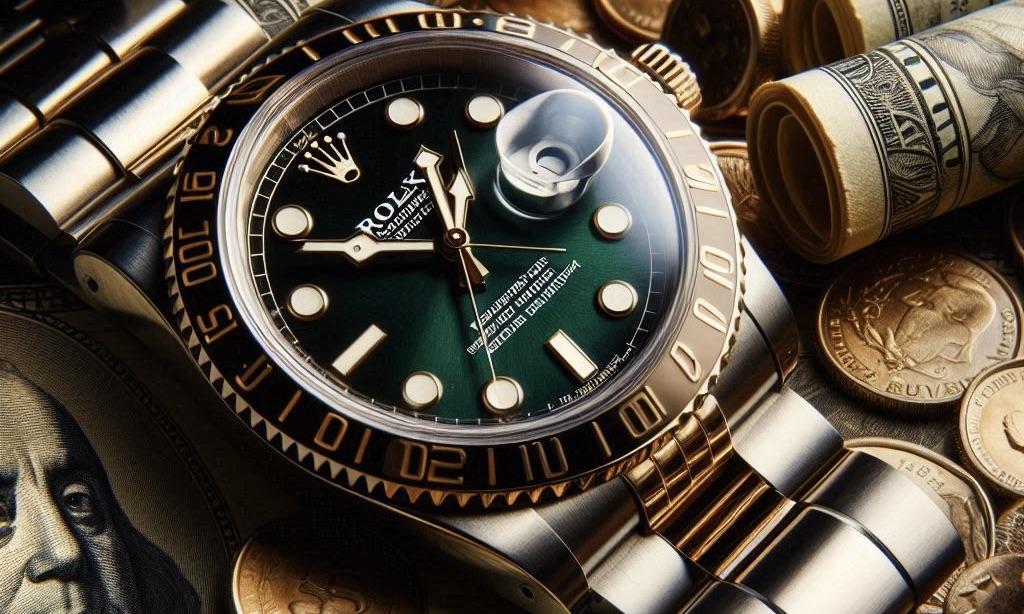
New data reveals a continued decline in secondhand Rolex watch prices and increased supply. This trend is advantageous for consumers facing lengthy waitlists and shortages but poses concerns for investors in high-end timepieces.
Rolex Prices Plummet in Secondhand Market, Offering Relief for Consumers Amid Rising Supply
Recent data suggest that investors in Swiss watch brands and all high-end timepieces should be concerned about the ongoing price declines in the secondhand, or used, market.
This is particularly advantageous for consumers of Rolex watches, which have been notorious for their lengthy waitlists and severe supply shortages.
The WatchCharts Overall Market Index, which monitors a basket of 60 luxury Swiss watches across ten brands in the secondhand market, experienced its ninth consecutive quarterly decline in the second quarter ending June 30, according to a recent note from Morgan Stanley to clients.
According to Yahoo Finance, prices have decreased since the pandemic's apex in the first quarter of 2022. In the second quarter, current prices declined by 2.1% sequentially and by 1.2% year over year compared to the first quarter.
“The secondary market decline remains broad-based, with few brands seeing positive performance in the second quarter,” Morgan Stanley analysts wrote in the report.
Morgan Stanley anticipates the downward pressure on prices will persist for the year.
Only five brands experienced price increases year over year in the secondary market. Montblanc and Hamilton were among the fortunate few to experience a 2.4% and 2.2% increase, respectively. High-end brands such as A. Lange & Söhne (-5.3%), Breitling (-5.9%), Omega (-6.8%), Rolex (-7.2%), and Audemars Piguet (-12.5%) were among the worst performers.
Secondhand prices are significant beyond their function as a value metric for particular timepieces. In the primary market, where new watches are sold by authorized vendors (ADs), they can influence the prices paid.
Rolex Faces Declining Prices and Increased Supply, Challenging Market for Resellers and Flippers
Rolex, the sole brand that appeared impervious to price and sales constraints, is beginning to experience the consequences. This is potentially the most intriguing trend to emerge from the report.
Rolex watch "flippers," merchants who purchase new watches and resell them in a higher-price market, are encountering challenges. Morgan Stanley predicts this will increase the supply of new Rolex watches to consumers at the primary, or AD, level.
Morgan Stanley used the size of the "gray market," defined as current-production watches listed on the secondary market in brand-new condition, and the wait periods for specific Rolex watches at ADs to determine whether speculation in Rolex watches was on the decline.
The analysis revealed that the quantity of Rolex watches in the gray market has decreased. The bank attributed the decrease in gray market supply to the increasing retail prices of Rolex watches and the reduced prices paid for gray market watches, which rendered the flipping watches less profitable.
As a second step, Morgan Stanley and WatchCharts examined the wait times for prominent Rolex models. WatchCharts utilized data from the Rolex community on a subreddit to calculate wait times, as wait times are difficult to tabulate and scarce.
Rolex Sports Watches See Shorter Wait Times as Supply Increases and Speculation Decreases
The analysis discovered that certain Rolex sports watches experienced improved wait times, except the Rolex Daytona clock, which was excluded due to its tiny sample size. "The analysis results suggest that the Submariner, GMT-Master II, and Explorer collections have all experienced a decrease in waiting times this year in comparison to 2023." The report also indicated that the GMTMaster II and Explorer waiting periods have decreased since 2022. The graph above illustrates the wait periods for those models.
In summary, speculation in Rolex sports watches is decreasing due to improved wait periods for popular models and reduced gray market supply on the secondary market. Additionally, this announcement may prove advantageous for the primary market. It also implies that the demand from Rolex enthusiasts may decrease due to the years of insufficient supply that have resulted in purchasers being denied access.
"We think there is generally greater [Rolex] availability on the primary market, and that primary market demand is waning as a result of both decreased speculative purchasing and decreased organic demand,"WatchCharts founder and CEO Charles Tian said to Yahoo Finance.
This implies that more Rolex watches are available at the AD level for regular consumers. Finally, it may be feasible for Rolex enthusiasts who are not resellers to acquire the 2024 Rolex Submariner shortly.













