


 Ukraine Agrees to Protect Kazakhstan Oil Exports via Black Sea
  New Mexico Sues DOJ Over Unredacted Jeffrey Epstein Files Amid Ongoing Investigation
  US Continues Ukraine Patriot Missile Production Talks Despite Trump Doubts
  Zelensky Urges Faster NATO Action on Air Defense Missiles
  US Expands Social Media Vetting to Foreign Journalists Seeking Visas
  Abdul El-Sayed Wins Michigan Democratic Senate Primary, Sets Up Key Midterm Showdown
  Trump Unveils $3 Billion U.S. Critical Minerals Push
  Trump Administration Weighs Executive Order on Vaccines and Autism Research
  Taiwan President Lai Oversees Coastal Strike Drills in Han Kuang War Games
  North Korea May Deploy 120 Missiles to Russia
  Trump Orders Probe Into Pentagon Munitions Stockpile Leaks After Iran Conflict
  Russian Strikes Kill Six in Eastern and Northern Ukraine, Dozens Injured
  Trump Says U.S.-Iran Talks Progressing as Hopes Rise for Strait of Hormuz Reopening
  US Continues Ukraine Patriot Missile Production Talks Despite Trump’s Concerns
  U.S. Unseals Charges Against Five Alleged CJNG Leaders, Raises Reward for New Cartel Chief
  Canada, US Hold Constructive Trade Talks as Tariff Negotiations Continue
  Andy Burnham’s Social Media Strategy Boosts Labour Against Reform UK


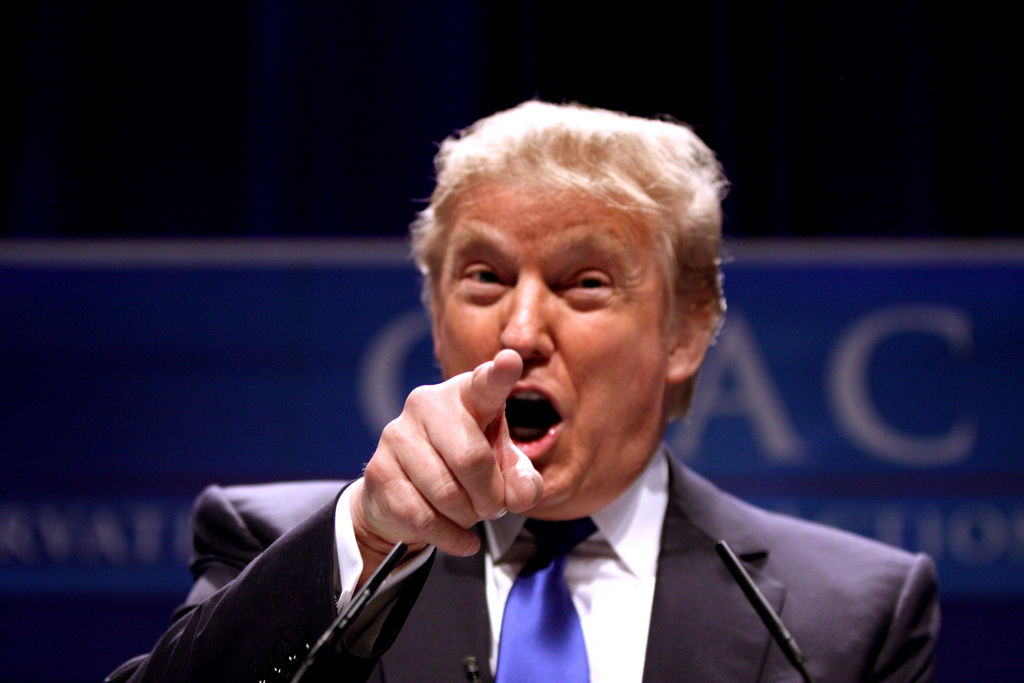

One thing Malcolm Turnbull didn’t talk about on his recent visit to the US was the possibility of Donald Trump becoming president. Perhaps he thinks of it as too unlikely to worry about. The conventional wisdom is that despite being the most popular candidate, Trump won’t be the Republican nominee. Even if he is, Hillary Clinton will trounce him in the only poll that matters.
I’m far from being the only person hoping the pundits are right. A number of world leaders, like UK Prime Minister David Cameron, have taken the unusual step of interfering in the electoral contest to criticise Trump. Many others must be praying that America’s grumpy old white men and xenophobes don’t carry the day. But what if they do?
No-one quite knows what goes on in other people’s heads in the privacy of the voting booth, so we can’t be certain of the outcome. Extremism is making a comeback around the world. In some places it never entirely disappeared, and that’s part of the problem.
The question in Australia is whether our policymakers, particularly in defence and national security, have actually thought about the unthinkable – the ascendancy of president Trump.
Given that our national security is ostensibly guaranteed by the US, the possible advent of a Trump presidency is especially consequential for Australians. If anyone doubts just how much of a difference an individual president can actually make, we need only recall the disastrous administration of George W. Bush.
Not only did the Bush era fundamentally undermine the US’s own security position – in both its conventional military and, equally importantly, economic forms – but it also led to a number of its allies embarking on monumentally misguided and, in Australia’s case, unnecessary military adventures.
The point to emphasise is that any country that relies too heavily on another for its security is potentially hostage to its protector’s policies – no matter how ill-conceived, dangerous or inappropriate they may be. That possibility was realised in entirely predictable and disastrous fashion when Bush was president. A Trump administration threatens to be even more catastrophic on a number of levels.
We may hope that much of Trump’s rhetoric is bluster and simply playing to the prejudices of his core supporters. But threatening to use America’s still formidable and decisive military might to “solve” problems in the Middle East has the potential to make the conflicts in Iraq look like a relatively minor precursor to the main event.
Given Australian policymakers’ track record of always supporting the US in whatever conflict it may find itself involved, no matter how remote geographically or distant from vital Australian interests it may have been, one wonders if a similar blank cheque will be offered to a potential Trump regime.
If a Trump administration threatened to use the ANZUS alliance and its supposedly vital security benefits as a bargaining chip, would any Australian government feel compelled to support the US no matter what the policy was or its possible consequences?
Given that Trump thinks that standing up to China economically and militarily is vital for America’s national interests, any administration he led might hasten the proverbial nightmare scenario in which Australia is forced to make a painful choice between its principal strategic and economic partners.
Such a dilemma might have been avoided altogether if Australia had a more independent, non-aligned foreign policy in the first place. Supporters of the alliance, who bang on endlessly about the supposed cost-saving and intelligence advantages it provides, conveniently overlook the amount of treasure and – more significantly – blood that’s actually been expended in its maintenance.
Equally significant is the idea that Australia enjoys the proverbial “special relationship” with the US, in which its wise counsel is actively sought and taken into account in the formulation of American foreign policies, would be put to a searching examination in any Trump administration. It’s difficult to imagine Trump listening to advice from within the US, let alone some peripheral vassal state.
Hopefully, it won’t come to this. Surely our American cousins aren’t that misguided and irresponsible, are they? Probably not.
But, at a time when the stability and effectiveness of America’s democracy is increasing called into question and even held up to ridicule, the possibility of a Trump presidency can’t be entirely discounted. If it does happen, the policy implications for friend and foe alike will be profound. We must hope such a possibility is at least being considered in Canberra, even if history suggests that the outcome of such conjectures is all too predictable.
An earlier version of this article appeared in The Strategist.
 Mark Beeson, Professor of International Politics, University of Western Australia
This article was originally published on The Conversation. Read the original article.







