


 Dollar Hits Two-Month High as Fed Rate Hike Bets Rise
  Vietnam, US Trade Deal Could Be Signed Soon, To Lam Says
  Oil Prices Surge as U.S.-Iran Diplomacy Hopes Fade
  Oil Prices Ease as Iran Tensions Clash With Diplomacy Hopes
  Asian Stocks Fall as Bond Yields Surge Ahead of Trump-Xi Summit
  US Dollar Hits Two-Month High as Fed Rate Hike Bets Rise
  Asian Currencies Muted as Dollar Firms Ahead of Trump-Xi Summit
  China’s ‘Lipstick King’ Says AI Won’t Replace Livestream Hosts
  US Stock Futures Rise as Meta Muse Fuels AI Rally
  Gold Prices Rise as Oil Slide Eases Fed Rate Hike Fears
  Australia Unemployment Hits Five-Year High Despite Strong Jobs Growth
  U.S. 10-Year Treasury Yield Hits 2007 High as Fed Rate Hike Bets Rise
  Oil Prices Rise as U.S.-Iran Talks Fuel Diplomacy Hopes


 Add as a preferred source on Google
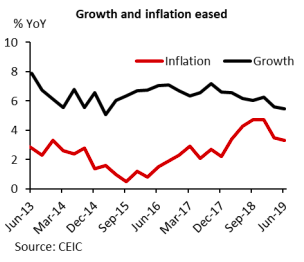
Philippines’ inflation is expected to remain at bay further this year, supporting private consumption, having stabilized from the peak in September-October to 1.7 percent in August this year, according to the latest report from DBS Group Research.
Soft domestic demand and high base effect from last year are likely to keep inflation around 2 percent until YE19. There are several risks to this outlook.
First, the government plan to increase the anti-dumping duties on rice planned for October might inflationary but is unlikely to push inflation above 2.2 percent for the rest of the years (rice weight in CPI is 9.6 percent).
Moreover, the substitution effect between pork and other types of protein should soften the impact to overall CPI. External headwinds to trade have caused growth to slow. Growth disappointed in 2Q recording 5.5 percent from consensus estimate of 5.9 percent, the weakest in 17 quarters, the report added.
Budget impasse earlier this year was the main cause of the growth slowdown alongside with higher global headwinds. In addition to the backloading of expenditure due to budget impasse, overall government infrastructure spending this year was cut by PHP95.3 billion.
This will negatively impact growth given that government infrastructure was the main driver of growth in the last three years. Moreover, despite significantly lower inflation this year, consumption has slowed in Q2. This slow down tallies with retail 1H earning results which recorded a double-digit contraction. Industrial production growth is still in negative territory.
"On a positive note, we think that growth might rebound in H2 although it is unlikely to rise above 6 percent," DBS further commented in the report.
Image Courtesy: DBS Group Research







