


 Qualcomm Gains on $60B Amazon AI Chip Deal
  DOJ Will Investigate AI-Related Crimes, Attorney General Blanche Says
  SoftBank Launches $11 Billion Bond Sale to Fund OpenAI Investment
  Hyundai CEO Warns Chinese Automakers Could Disrupt US Market
  Cathie Wood Backs AI Slowdown as Safety Concerns Grow
  US Federal Register Drops Alibaba Qwen AI Search Tool
  Big AI wants to slow down AI research. Is it a safety pause or a strategic retreat?
  Meta Partners With Shopify to Bring Shop Pay Checkout to Muse AI
  Guterres Urges Stronger Global AI Safeguards Ahead of UN Assembly
  Physicists zoom into the birth of cosmic rainstorms with new CERN study
  Rosenblatt Starts Nokia at Buy on AI Networking Growth
  Databricks to Invest $350 Million in Singapore AI Expansion
  Japan, U.S. Discuss $19 Billion GlobalFoundries Chip Plant
  Telix to Acquire Germany’s ITM in $1.65 Billion Radiopharma Deal
  FCC Approves Foreign Investment in $110B Paramount-Warner Bros. Deal
  Apple Pay Set for India Launch With Axis Bank
  US Northeast Airports Resume Operations After Telecom Outage Disrupts Thousands of Flights


 Add as a preferred source on Google
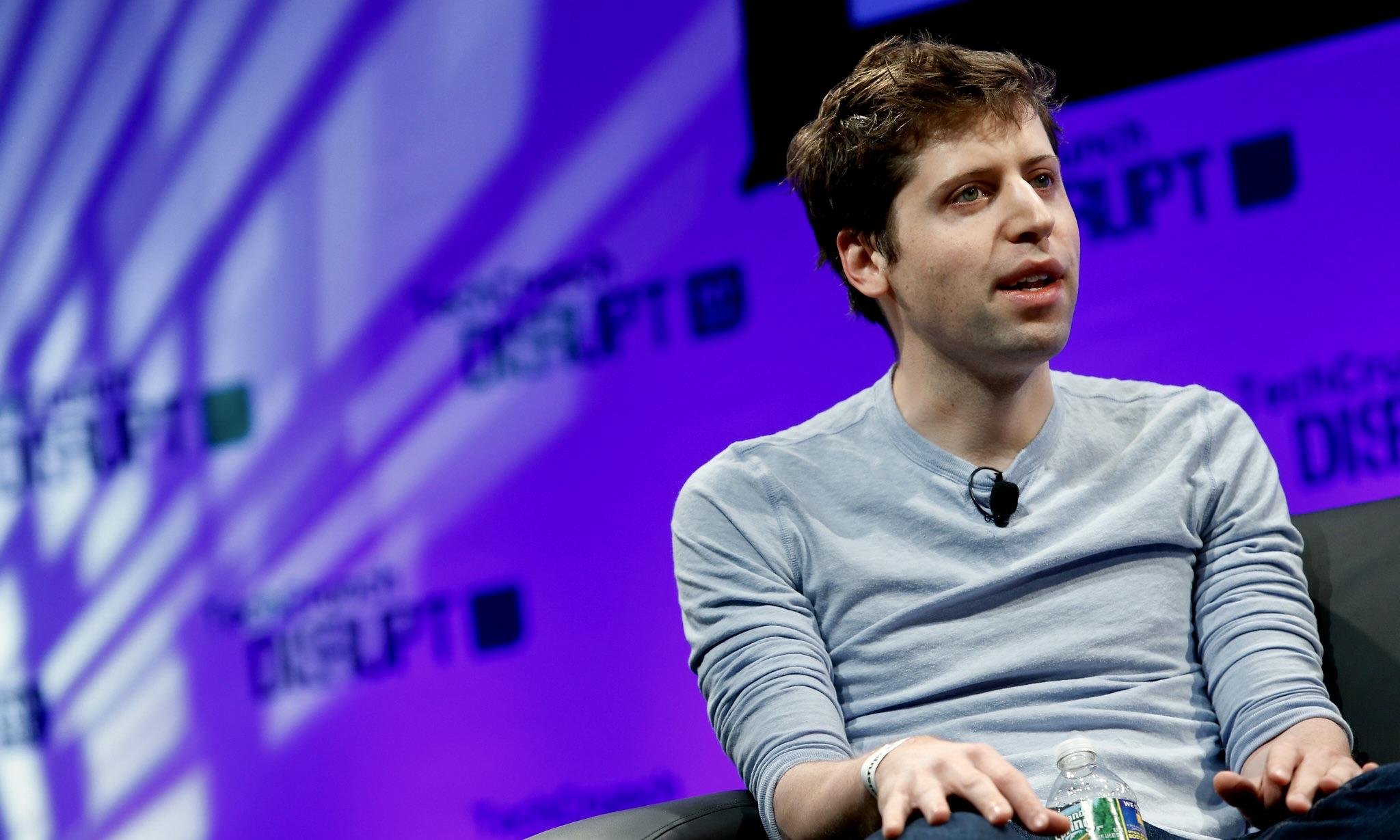
At a recent podcast appearance, OpenAI's CEO Sam Altman discussed "universal basic compute," a radical idea that aims to change how we interact with AI technology.
UBI to Universal Basic Compute: Altman's New Proposal
In a recent episode of the All-In podcast, OpenAI CEO Sam Altman discussed "universal basic compute," a new and advanced concept to address financial challenges. Altman suggests a future where individuals receive access to a portion of GPT -7's compute, enabling them to utilize, sell, or donate it for various purposes, such as cancer research.
How GPT-7 Could Transform Economic Models and Job Markets
Ownership of a colossal language model unit such as GPT-7 is supposed to become more valuable than money as AI advances and gets more integrated into our daily lives. "You own like part of the productivity," he stated.
For some time now, Altman has advocated for implementing a universal basic income, which would be a fixed monthly payment to all individuals in a given population, irrespective of their financial situation or job status. Like many in the tech sector, Altman believes workers would benefit from a universal basic income since AI will eventually replace many occupations, Business Insider reports.
Evaluating the Success of Basic Income Experiments
In 2016, Altman embarked on his own UBI experiment, a precursor to his current "universal basic compute" proposal. He shared on the show that the results of this experiment would be made public soon. As per Fortune, the initiative provided more than 3,000 participants with payouts ranging from $50 to $1,000 monthly.
A type called "guaranteed basic income" has been tried in cities and states across the US. These programs give cash payments to people based on their proven need or social and societal status instead of to the whole community.
Most of these programs have been successful, but conservatives are becoming more against what they see as a form of welfare that could make people not want to work. The Texas Supreme Court recently stopped a program in the Houston area from giving $500 a month to low-income people.
Although Altman didn't explain how his "universal basic compute" would function, it's sure to cause some controversy.
Photo: TechCrunch/Flickr(CC BY 4.0)







