


 Judge Delays SEC Settlement With Elon Musk Over Twitter Stock Disclosure Case
  Samsung Appoints New TV Business Head Amid Rising Competition from Chinese Rivals
  Anthropic Secures $1.5B AI Venture Backed by Wall Street Giants, Shaking Software Sector
  Anthropic’s $1.5B AI Venture with Wall Street Firms Targets Private Equity Market
  Infineon Raises 2026 Outlook as AI Data Center Chip Demand Surges
  TikTok Nears $400 Million Settlement With Trump Administration Over Child Privacy Lawsuit
  Philips Reaffirms 2026 Outlook After Strong Q1 Sales and Margin Beat
  AWS Data Center Overheating Disrupts Cloud Services in Northern Virginia
  Dell Stock Hits Record High After Trump Endorsement, AI Server Demand Fuels Rally
  Orsted Q1 EBITDA Beats Expectations Despite U.S. Impairments
  Armani Group Eyes Strategic Stake Sale to Luxury Giants
  China Banks Halt New Loans to Sanctioned Refineries Amid U.S.-Iran Oil Crackdown
  UOB Q1 Profit Meets Expectations as Loan Growth Offsets Lower Interest Rates
  Hua Hong Semiconductor Stock Surges to Multi-Year High Amid AI Boom
  Apple Explores Intel and Samsung Partnerships to Diversify Chip Supply Chain
  Japan Tech Stocks Surge as AI Optimism Lifts SoftBank, Chipmakers


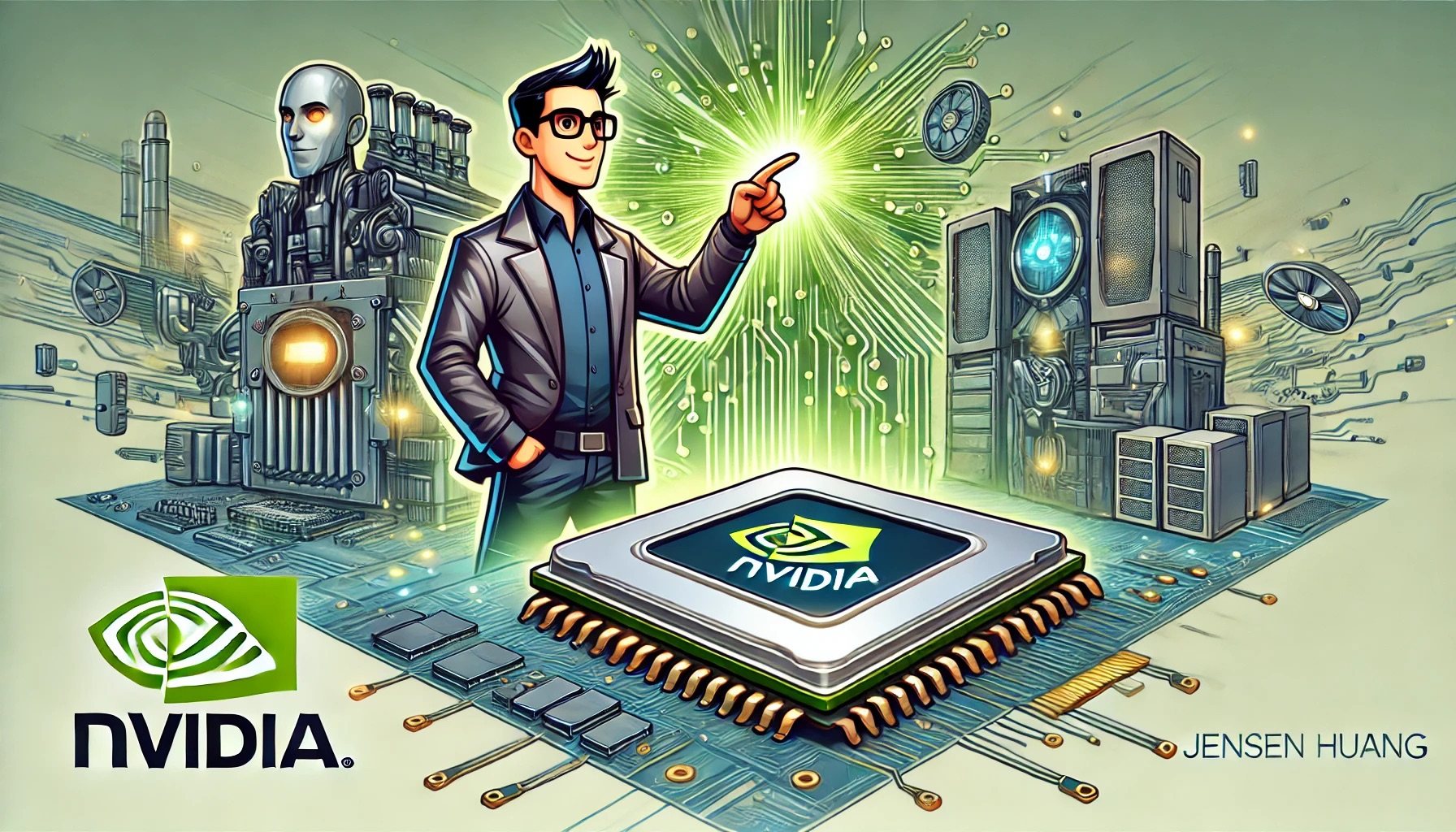
Speaking at Gartner's IT Symposium, Nvidia CEO Jensen Huang warned business technology leaders that embracing AI is crucial for survival, emphasizing its transformative impact on chip design, software, and supply chain operations.
AI-Powered Organizations: The Future of Business
In order to be ready for what he terms a "new industrial revolution," Nvidia CEO Jensen Huang warned thousands of business technology leaders that their companies must transform into AI-powered organizations.
At Tuesday's IT Symposium/Xpo event in Orlando, held by market research and consulting firm Gartner, Huang made the argument that all CEOs and CIOs need to do is start using AI, and everything else will fall into place.
Nvidia's AI Strategy: From Chip Design to Supply Chain
According to Huang, the Santa Clara, California-based semiconductor behemoth has already implemented this mentality, using AI for tasks like chip design, software development, and supply chain management.
At the event, Huang told The Wall Street Journal that chief information officers should look for something their company is already doing well and see if artificial intelligence can improve it. He spoke about how those three categories "move the needle most profoundly" for Nvidia. "When it’s our most impactful work, it’s easiest to get energy around it."
The Creation of Nvidia's "AI Brain"
Gartner fellow, distinguished VP, and chief of research Daryl Plummer conducted the live interview with Huang.
Nvidia is developing its own "AI brain," as Huang puts it, for the distant future. What this means is that businesses should gather information about their operations, consumer interactions, and business processes and then give it to AI. One day, CEOs and CIOs "can just talk to" AIs built from this data, according to Huang.
According to Huang, "everybody should do that" after learning that Nvidia has begun transforming all of its private data into an AI.
Overcoming AI's Data Challenges
According to Huang, the company is launching a solution to help AI better interpret and process PDF files in order to achieve this goal. Conventional AI has generally struggled to parse "unstructured data" such as PDFs and emails.
Huang added that this will eventually lead to "large populations of digital workers," or AI agents, working side by side with humans in departments like sales, marketing, engineering, and supply chain. Getting there will need everyone to master the art of AI instruction, even company tech executives.
Nvidia's Partnerships in the AI Space
According to Huang, Nvidia is collaborating with SAP and ServiceNow to "put agents into their system," and the company has also collaborated with Accenture to develop an agent platform suitable for usage in private data centers.
"You’re still going to be doing programming," he stressed. "But you will be programming some kind of a structured way of communicating with AIs."
AI-Assisted Chip and Software Development
Nvidia currently employs AIs to assist in chip design and software development. These individuals are "basically AI chip designers" and "AI software engineers," according to Huang's interview with the Journal.
Adding, "Nowhere in the foreseeable future do we expect AI to be able to do what our employees can," Huang continued.
Expanding Nvidia's AI Chips Beyond Cloud Platforms
Huang announced onstage that the company's chips are available in data centers and private cloud platforms, not only cloud platforms offered by other vendors. This is good news for chief information officers (CIOs), who are currently responsible for managing expectations around the commercial value of artificial intelligence (AI) while still pushing its limitations.
According to Huang, "Today's computing is done everywhere" during the interview with the Journal. "Accelerated computing will be everywhere, AI will be everywhere."







