


 TikTok Nears $400 Million Settlement With Trump Administration Over Child Privacy Lawsuit
  U.S. Cybersecurity Pushes Faster Patch Deadlines Amid Rising AI-Driven Threats
  Infineon Raises 2026 Outlook as AI Data Center Chip Demand Surges
  Anthropic’s $1.5B AI Venture with Wall Street Firms Targets Private Equity Market
  Apple Explores Intel and Samsung Partnerships to Diversify Chip Supply Chain
  Morgan Stanley Bets on Optical Component Stocks in Greater China Tech Sector
  Meta Plans $13B AI Data Center Financing in Texas Amid Surging Big Tech Investment
  Hantavirus Cruise Ship Outbreak Triggers Global Health Alert
  Broadcom Eyes $35 Billion AI Chip Financing Deal With Apollo and Blackstone
  Armani Group Eyes Strategic Stake Sale to Luxury Giants
  Philips Reaffirms 2026 Outlook After Strong Q1 Sales and Margin Beat
  Samsung Surpasses $1 Trillion Market Cap Amid AI Chip Boom and Apple Partnership Talks
  AWS Data Center Overheating Disrupts Cloud Services in Northern Virginia
  Novo Nordisk Raises 2026 Outlook on Strong Wegovy Demand
  Sony Forecasts Lower 2027 Profit Despite Strong Music and Sensor Growth
  Trump Invites Top CEOs Including Nvidia, Apple, Boeing to China Summit With Xi Jinping


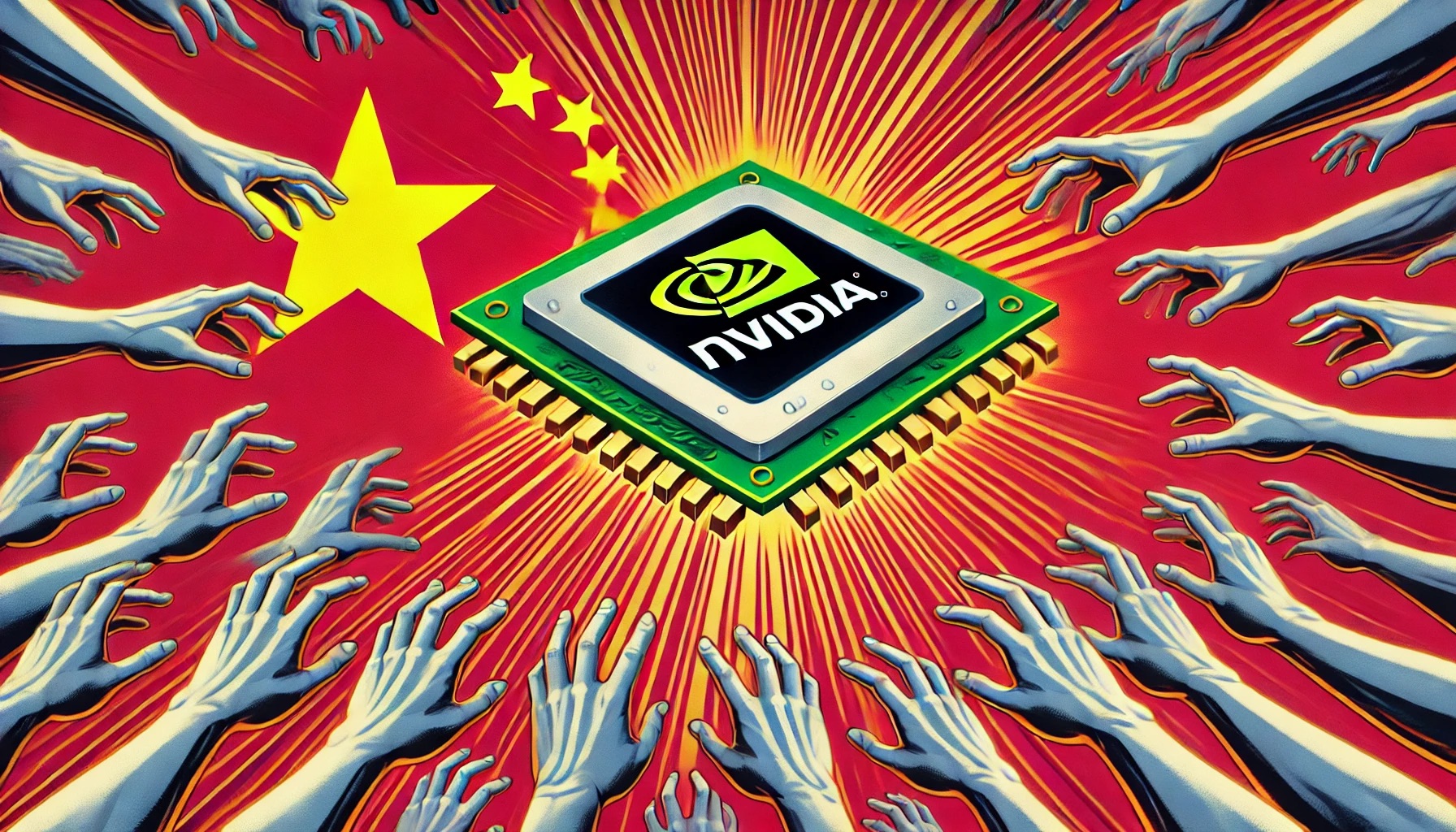
China’s AI sector faces a dilemma between relying on NVIDIA’s powerful chips or transitioning to domestic alternatives. A new report highlights the limitations of China’s AI hardware and suggests sticking with NVIDIA for optimal performance amid increasing US sanctions.
NVIDIA’s Dominance in China’s AI Market
The future of China's artificial intelligence (AI) processing capacity is a hotly contested topic, with many pointing out that the country's AI companies can no longer depend on hardware from companies like NVIDIA due to the increasing impact of US sanctions.
While Huawei's domestic solutions have helped alleviate some of the problems, a recent study from the China Academy of Information and Communications Technology (CAICT) argues that Chinese data centers shouldn't rely solely on domestic products because of their limitations.
Domestic AI Solutions Face Limitations
A report on China's growing computing power released on Sunday by the China Academy of Information and Communications Technology (via SCMP) said, "If the conditions allow, [data centres] can choose [Nvidia’s] A100 and H100 high-performance computing units, if the need for computing power is limited, they can also choose H20 or alternative domestic solutions."
NVIDIA’s Continued Success in China Despite Sanctions
According to WCCFTECH, NVIDIA has found success in China, a market hit hard by US trade restrictions; the country accounts for over 10% of the company's year-over-year revenue.
Team Green's hardware is crucial for Chinese AI companies like ByteDance and Tencent. Their enormous consumer base means they need a lot of AI computing capacity. An indication of China's enormous demand for AI hardware, CAICT revealed that GPU-based processing power for AI training and inference experienced a YoY rise of 70% in the region.
Chinese AI Chipmakers Struggle Against NVIDIA
Companies such as BirenTech and Huawei have introduced their own artificial intelligence chips to compete with NVIDIA's market dominance; Huawei's Ascend 910B AI GPU has been particularly successful in driving sales for the Chinese tech giant.
According to rumors, the company will also unveil the more powerful Ascend 910C. However, the CAICT thinks it's not worth the hassle to adapt existing LLMs developed on NVIDIA's compute stack and implement domestic solutions for code porting.







