


 The Realist’s Case: Lukas Kerrebijn of RD Dubai on the Narrative Dubai’s Agents Won’t Question
  Trump Buys SpaceX Shares After Record IPO
  Google Changes EU Spam Policy Amid Antitrust Scrutiny
  U.S. Probes Apex Logistics Over Nvidia AI Chip Shipments to China
  SoftBank Plans Record $6.3 Billion Bond Sale to Fund OpenAI Investments
  HP Stock Drops 9% Despite Q3 Earnings Beat and Raised 2026 Outlook
  Samsung Shares Tumble 8% as $79 Billion Return Plan Disappoints
  SK Biopharmaceuticals Secures Global Rights to Biohaven Epilepsy Drug Opakalim
  Nvidia Reportedly Eyes $13 Billion Hugging Face Acquisition
  Xiaomi Unveils Xring O3 Chip for Flagship Foldable Phone
  Amazon Secures 200 MW Wind Power Deals in Sweden
  Salesforce Shares Surge as AI Demand Powers Q2 Earnings Beat
  Itochu Offers $1.56 Billion to Privatize Dentsu Soken
  BNP Paribas, KB Kookmin Eye $2 Billion Techcombank Stake
  SK Hynix Shares Fall as Workers Reject Wage Deal
  Luxshare Shares Rise as First-Half Profit Jumps 18%
  Meta Agrees to $18 Billion Settlement, Tightens Teen Social Media Rules


 Add as a preferred source on Google
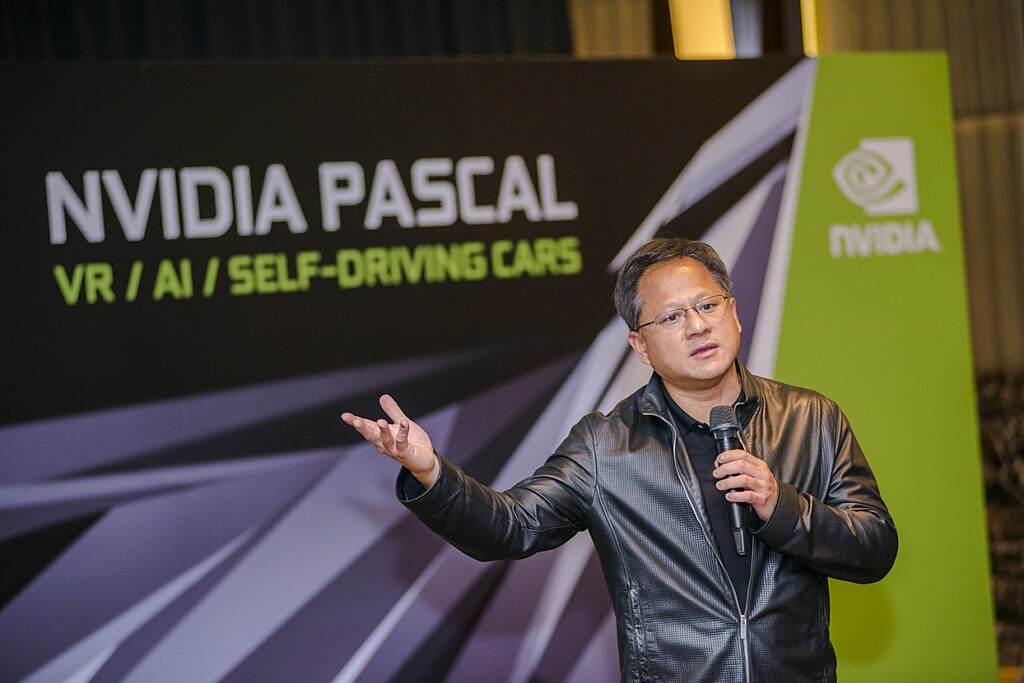
NVIDIA Corporation (NASDAQ: NVDA) used the CES 2026 convention in Las Vegas to reaffirm its leadership in artificial intelligence infrastructure, announcing that its next-generation Rubin data center platform is now in full production and on track for release later this year. The move highlights Nvidia’s accelerated release cycle as competition intensifies from rivals such as Advanced Micro Devices (NASDAQ: AMD) and custom silicon developed by major cloud providers.
During his keynote address, CEO Jensen Huang revealed that all six chips in the Rubin platform have successfully returned from manufacturing partners and passed initial milestone tests. This puts the new AI accelerator systems on schedule for customer deployments in the second half of 2026. By unveiling Rubin early, Nvidia is signaling confidence in its roadmap while keeping enterprises closely aligned with its hardware ecosystem.
The Rubin GPU is designed to meet the growing demands of agentic AI models, which rely on multistep reasoning rather than simple pattern recognition. According to Nvidia, Rubin delivers 3.5 times faster AI training performance and up to 5 times higher inference performance compared to the current Blackwell architecture. The platform also introduces the new Vera CPU, featuring 88 custom cores and offering double the performance of its predecessor. Nvidia says Rubin-based systems can achieve the same results as Blackwell while using far fewer components, reducing cost per token by as much as tenfold.
Positioned as a modular “AI factory” or “supercomputer in a box,” the Rubin platform integrates the BlueField-4 DPU, which manages AI-native storage and long-term context memory. This design improves power efficiency by up to five times, a critical factor for hyperscale data centers. Early adopters include Microsoft (NASDAQ: MSFT), Amazon AWS (NASDAQ: AMZN), Google Cloud (NASDAQ: GOOGL), and Oracle Cloud Infrastructure (NYSE: ORCL).
Beyond data centers, Nvidia also highlighted major advances in robotics and autonomous vehicles, calling the current period a “ChatGPT moment” for physical AI. New offerings such as Alpamayo AI models for self-driving systems and the Jetson T4000 robotics module further underscore Nvidia’s bet that reasoning-based AI will drive a massive, trillion-dollar infrastructure upgrade across industries.







