


 PayPal Shares Sink as $50 Billion Takeover Bid Collapses
  Trian Drops Wendy’s Take-Private Bid Plans, Shares Plunge 14%
  GM Plans C$1.1 Billion Canada Investment Amid U.S. Tariff Pressure
  BofA Names ASML Top Semiconductor Equipment Pick on Growth, Valuation
  Meta, U.S. States Discuss Settlement in Teen Addiction Trial
  Salesforce Shares Surge as AI Demand Powers Q2 Earnings Beat
  Trump Buys SpaceX Shares After Record IPO
  Nvidia Revenue Soars 106% as AI Demand Hits ‘Inflection Point’
  SK Biopharmaceuticals Secures Global Rights to Biohaven Epilepsy Drug Opakalim
  Google Changes EU Spam Policy Amid Antitrust Scrutiny
  Nvidia Pauses AI Cloud Financing Deals Amid Antitrust Concerns
  Countries Tighten Social Media Bans for Children
  Shein Hong Kong IPO to Raise $1.7 Billion at $26.5 Billion Valuation
  SK Hynix Shares Fall as Workers Reject Wage Deal
  BNP Paribas, KB Kookmin Eye $2 Billion Techcombank Stake
  Luxshare Shares Rise as First-Half Profit Jumps 18%
  HP Stock Drops 9% Despite Q3 Earnings Beat and Raised 2026 Outlook


 Add as a preferred source on Google
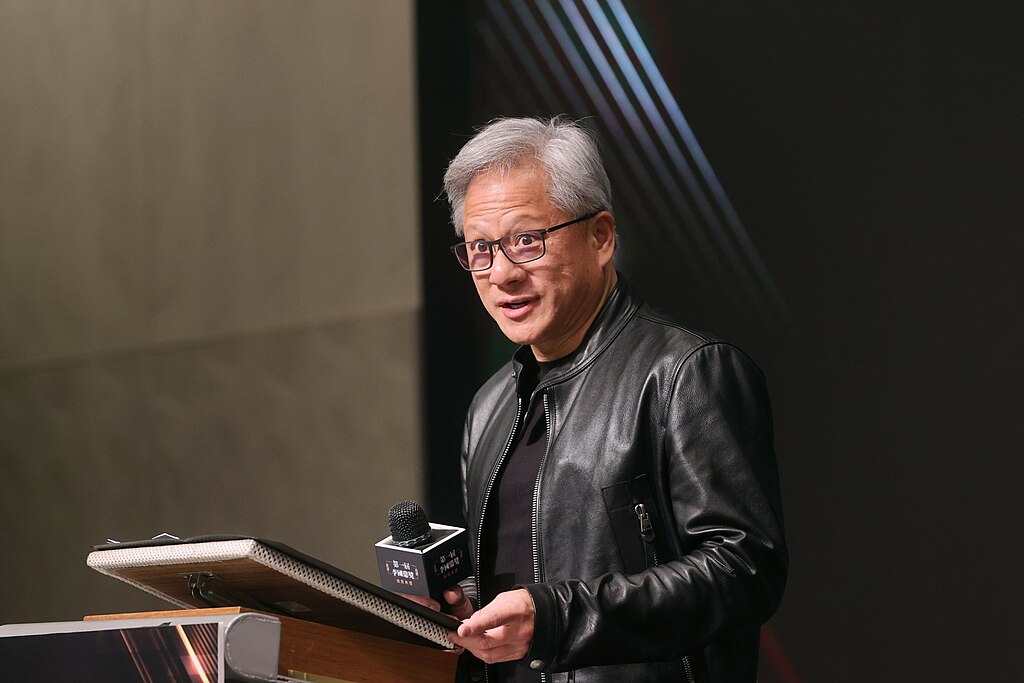
Nvidia CEO Jensen Huang criticized the U.S. government’s export controls on AI chips to China, calling the policy “a failure.” Speaking at Computex 2025 in Taipei, Huang said, “The fundamental assumptions that led to the AI diffusion rule have been proven fundamentally flawed.”
The U.S. restrictions, aimed at curbing China’s access to cutting-edge artificial intelligence chips, have backfired, according to Huang. Rather than stalling progress, the export ban pushed Chinese firms to turn to domestic semiconductor designers like Huawei. The move also accelerated China’s efforts to build a self-reliant chip supply chain, reducing dependence on U.S.-made components.
Huang revealed that Nvidia’s market share in China has plummeted to 50%, down from 95% when President Joe Biden took office. The shift underscores the significant impact of U.S. policies on global chip competition and supply chains.
His comments followed China’s sharp response earlier this week to the latest U.S. guidance warning companies not to use advanced Chinese AI chips, including Huawei’s Ascend processors. Beijing urged Washington to “correct its wrongdoings” and end what it described as “discriminatory” practices, warning of firm countermeasures if U.S. actions continue to harm Chinese interests.
The escalating chip tensions also threaten to undermine recent efforts to stabilize U.S.-China trade relations. A statement from China’s commerce ministry noted that the latest U.S. move violated the spirit of high-level negotiations held in Geneva.
As global tech firms navigate shifting geopolitical dynamics, Huang’s remarks spotlight the unintended consequences of protectionist trade policies, especially in the high-stakes AI and semiconductor sectors. Nvidia remains a leading player in AI chips, but faces growing headwinds in key international markets due to regulatory friction.







