


 Nvidia Pauses AI Cloud Financing Deals Amid Antitrust Concerns
  Trump Administration Plans New Drug Pricing Deals With Biotech Firms
  BofA Names ASML Top Semiconductor Equipment Pick on Growth, Valuation
  Meta Agrees to $18 Billion Settlement, Tightens Teen Social Media Rules
  The Realist’s Case: Lukas Kerrebijn of RD Dubai on the Narrative Dubai’s Agents Won’t Question
  Nvidia Revenue Soars 106% as AI Demand Hits ‘Inflection Point’
  PayPal Shares Sink as $50 Billion Takeover Bid Collapses
  GM Plans C$1.1 Billion Canada Investment Amid U.S. Tariff Pressure
  U.S. Disrupts China-Linked Hacking Campaign Targeting Government Agencies
  SK Biopharmaceuticals Secures Global Rights to Biohaven Epilepsy Drug Opakalim
  Countries Tighten Social Media Bans for Children
  Nvidia Reportedly Eyes $13 Billion Hugging Face Acquisition
  Luxshare Shares Rise as First-Half Profit Jumps 18%
  Amazon Secures 200 MW Wind Power Deals in Sweden
  Honda, Nissan Eye Shared Vehicle Software Platform by 2029
  SK Hynix Shares Fall as Workers Reject Wage Deal
  SoftBank Eyes $20 Billion Bond Sale to Refinance OpenAI Loan


 Add as a preferred source on Google
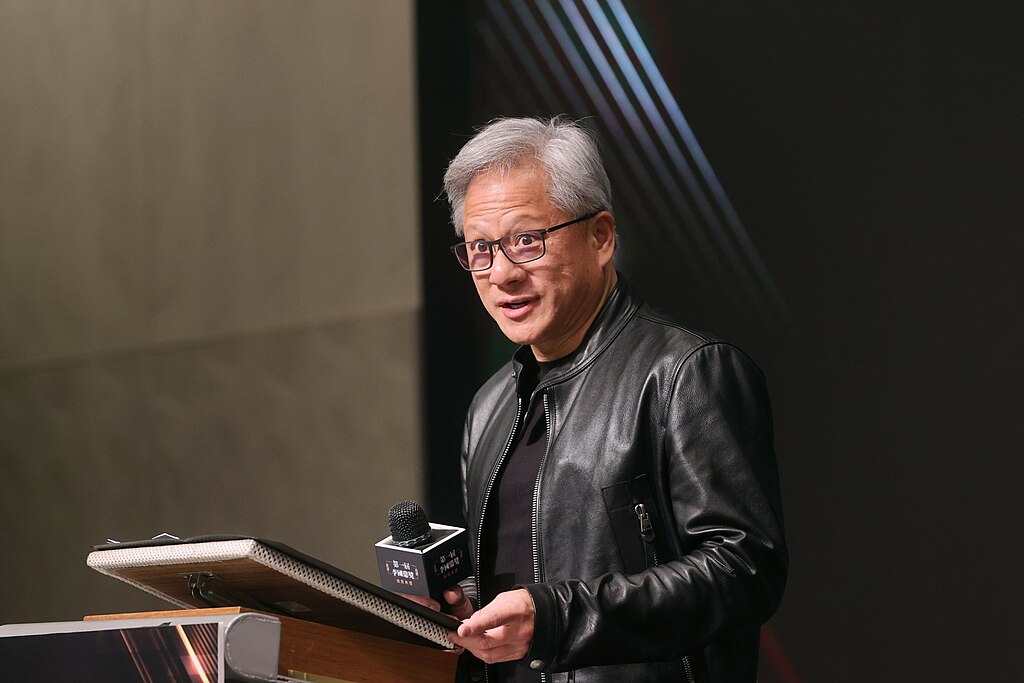
Nvidia CEO Jensen Huang has issued a strong warning that China is poised to surpass the United States in the global artificial intelligence (AI) race. Speaking at the Financial Times’ Future of AI Summit, Huang emphasized that China’s lower energy costs and relaxed regulatory framework are giving it a growing competitive edge.
“China is going to win the AI race,” Huang stated, underscoring that U.S. restrictions on Nvidia’s chip exports to Beijing could backfire. The Trump administration recently reaffirmed curbs preventing Nvidia from selling its most advanced AI chips to China, even after renewed diplomatic talks between President Donald Trump and Chinese President Xi Jinping.
Huang criticized what he called “cynicism” in Western countries like the U.S. and the U.K., urging leaders to adopt a more forward-thinking and optimistic approach toward AI development. He warned that “50 new regulations” emerging across U.S. states could stifle innovation and slow AI progress, while China continues to move rapidly.
Highlighting China’s strategic advantage, Huang pointed to government energy subsidies that drastically reduce operating costs for major data centers. Tech giants including ByteDance, Alibaba, and Tencent have benefited from these incentives, which were expanded after domestic chipmakers such as Huawei and Cambricon faced criticism for their lower energy efficiency compared to Nvidia’s processors. “Power is free,” Huang remarked, describing how subsidized electricity helps Chinese firms run massive AI workloads more affordably.
Huang has repeatedly cautioned that the U.S. lead in AI is narrowing. He believes that restricting chip exports could erode America’s influence in global AI markets. To maintain leadership, he urges policymakers to foster open competition and support innovation rather than rely on trade barriers.







