


 Samsung, Union Edge Closer to Deal as Strike Threat Looms
  Nvidia’s China AI Chip Sales Remain Frozen Despite U.S. Approval
  Anthropic to Brief Financial Stability Board on AI-Driven Cyber Risks
  TSMC Stake Sale Sends Vanguard Semiconductor Shares Lower
  OpenAI Wins Elon Musk Lawsuit as Jury Rejects Claims Over AI Mission
  Analog Devices Nears $1.5B Acquisition of AI Chip Firm Empower Semiconductor
  Nvidia CEO Jensen Huang to Join Trump’s China Visit Amid AI Chip Tensions
  SpaceX IPO Faces Backlash Over Elon Musk’s Control and Governance Structure


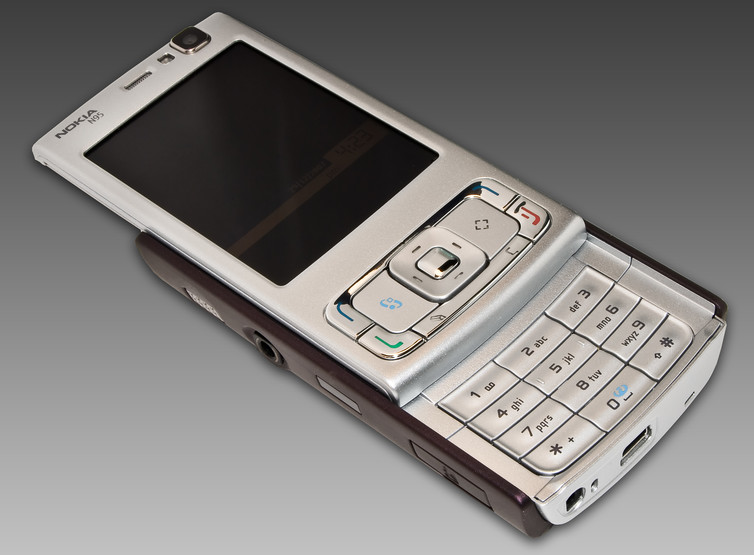

Ten years ago, anyone who wanted the latest and best smartphone was excited about the Nokia N95. Launched at the Nokia Open Studio in September 2006, it was trumpeted as the all-in-one multimedia computer and went on to achieve sales of a million handsets within the UK in its first year.
On paper, it had everything a gadget-lover could desire, including a 2.6-inch LCD screen, a 5-megapixel camera with Carl Zeiss optics and video recorder, up to 8GB of storage, 3G and WiFi connectivity, and a built-in GPS receiver with navigation software. The N95 showed the world’s number one mobile phone manufacturer, Nokia, at the top of its game. Yet, as we now know, all of that was about to change dramatically when, on Jan 9 2007, Steve Jobs announced that Apple was entering the mobile phone business with the launch of the iPhone.
At a technical level, the iPhone was significantly inferior to the N95. To start with, it was a 2G device not a 3G one. Its camera was only 2 megapixels and it didn’t support GPS. Yet, what it did offer was a totally new concept in smartphone design.
Until Apple’s entry into the mobile world, handsets had been designed by companies who viewed the device as a phone first and a computer second. That’s not too surprising given its history and evolution, starting out as a basic telephone and slowly but surely acquiring more computing features. But a new entrant can turn thinking on its head, and that’s precisely what Apple did by viewing the handset as primarily a computer that just happened to include a phone capability.
This was clearly reflected in its appearance, where the physical keyboard was eliminated and replaced by a single button and large touch screen. In contrast, the Nokia N95 had a range of buttons and a slide feature that revealed a conventional phone keypad.
Even more important were the key differences between the software that controlled the two phones. Nokia was locked into the cumbersome Symbian operating system and its complex user interface, whereas Apple iOS was centred on the touch screen with gesture controls and had a fully functioning web browser and, of course, apps.
Several reviewers at the time were rather lukewarm towards the iPhone, concerned about its technical inadequacies and especially its lack of 3G. But Time magazine still named it Invention of the Year for 2007.
Disruptive technology
The Apple iphone is a classic example of disruptive technology. It arrived from seemingly nowhere, it turned thinking on its head and it demonstrated how design can triumph over raw technology. Whatever you happen to think of Apple as a company –- it seemingly has as many detractors as evangelist supporters -– there is no question that it revolutionised smartphone design. If you look at smartphones leading up to 2006, they all share similarities in style, appearance and features with the Nokia N95. Whereas, post Apple’s launch, smartphones started to emulate the iPhone and its sleek, black simplicity.
As for Nokia, the iPhone effectively killed the company. It first clung on to its Symbian operating system while Apple forged ahead and then switched to Microsoft when the rest of the industry moved to Android. In 2011, Apple took Nokia’s number one slot for smartphone sales. After this, the company’s fall was dramatic and the mobile industry’s focus moved away from Europe.
Today’s smartphone sales are dominated by Samsung, followed by Apple and then Chinese firm Huawei, but with Android as the most popular operating system. That said, you’ll struggle to find a smartphone today that doesn’t share several similarities in appearance with the iPhone. Not bad for an “inferior” bit of technology.
 Nigel Linge has received funding from the UK and EU funding councils.
This article was originally published on The Conversation. Read the original article.







