


 Japan Economy Minister Downplays Inflation Risks Despite BOJ Warning
  Japan Trade Deficit Widens as Imports Surge on Energy and AI Demand
  South Korea Producer Prices Fall 0.4% in July
  US Plans ‘Toughest Sanctions in History’ on Iran, Bessent Says
  Oil Prices Ease as US-Iran Tensions Keep Brent on Track for Weekly Gain
  Chile Central Bank Holds Interest Rate at 4.5% as Inflation and Global Risks Persist


 Add as a preferred source on Google
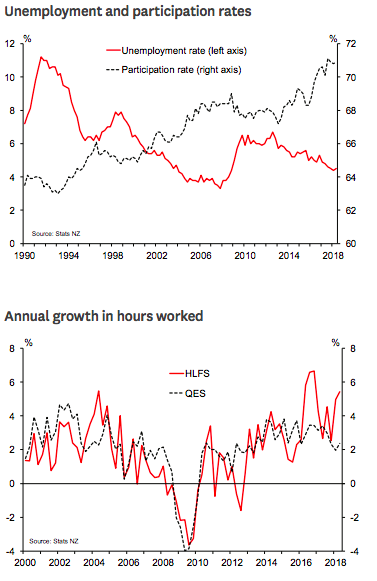
Labour market conditions were generally firmer in the June quarter. Jobs growth was robust, though the unemployment rate ticked up slightly. With the economy moving closer to full capacity, the first signs of a stirring in wage growth are finally emerging.
While the results were stronger than what was expected, they were largely in line with the Reserve Bank of New Zealand’s (RBNZ) forecasts in its May Monetary Policy Statement. The only aspect that fell short was the rise in the unemployment rate, and that was well within the margin of error for this survey.
"We think the RBNZ will be satisfied with both its contribution to “supporting maximum sustainable employment” – as specified in its new dual mandate – and with the evidence that inflation pressures are gradually picking up as intended," Westpac Research commented in its latest report.
Meanwhile, the labour market figures are perhaps best seen as a corrective to the pessimism seen in recent business confidence surveys. Growth in activity has slowed from its peak, but businesses have remained open to hiring. And while wage growth has picked up, it’s not spiralling higher in the way that businesses seem to fear.







