


 Amazon Eyes $8 Billion Nvidia Chip Spinoff to Fund AI Expansion
  Anthropic Targets $2 Trillion Valuation in Planned IPO
  Vitalik Buterin Says Hegota Could Be Ethereum’s Last Conventional Fork
  US Stocks Slip as Treasury Yields Ease, AI Trade Rebounds
  Apple iPhone 18 Pro Sales Jump 12% in China
  CSL Partners With AWS to Bring AI Into Drug Research
  Yen Strengthens on Tokyo Inflation as Dollar Awaits US Jobs Data
  Tencent Signs $7 Billion Oracle AI Chip Lease Deal
  Gold Steady as Softer U.S. Inflation Eases Fed Rate Hike Bets
  Asian Stocks Rise as Bond Yields Ease Ahead of U.S. Inflation Data
  TSMC Accelerates 2nm Expansion as AI Chip Demand Surges
  South Korea Exports Surge 83.5% on AI Chip Boom
  Australia Trade Surplus Shrinks Sharply as Imports Surge
  WordPress Malware Uses Ethereum to Evade Removal
  Samsung Invests $1 Billion in KKR’s Helix AI Infrastructure
  Dollar Eases Near Two-Month High as Yen Rebounds
  Japan Factory Output Unexpectedly Falls 1.7% in August


 Add as a preferred source on Google
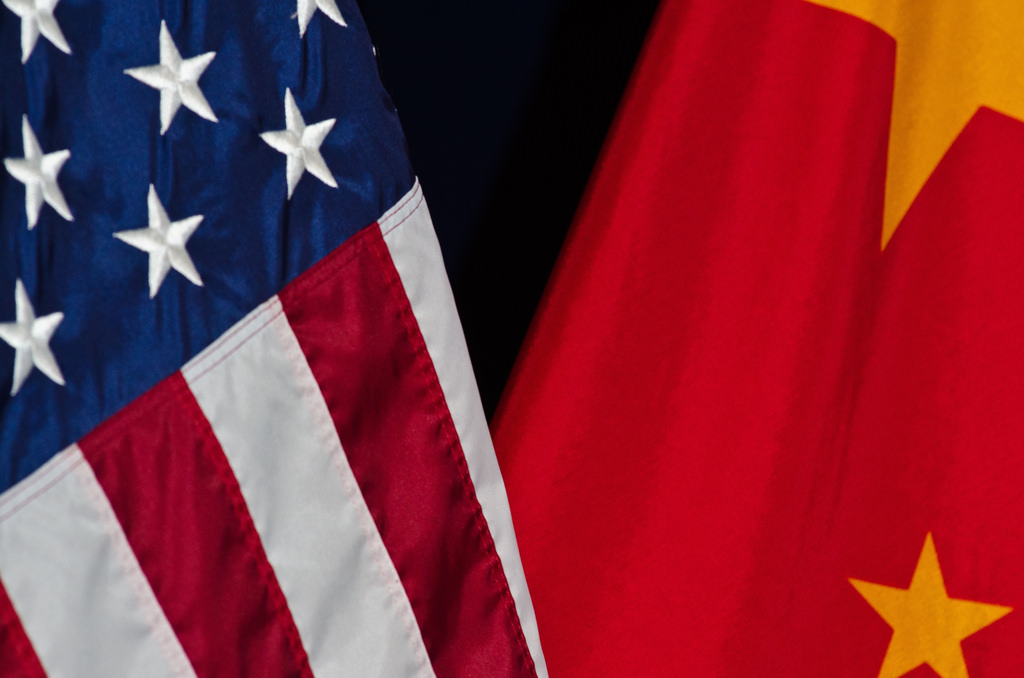
The global competition for artificial intelligence dominance is no longer driven solely by computing power and advanced chips. A new Alpine Macro report released on May 12, 2026, argues that industrial scale, manufacturing capacity, and robotics deployment are becoming equally important factors in the AI race between China and the United States.
While the United States continues to dominate the AI “brain layer” through cutting-edge semiconductors, software systems, and frontier AI models, China has taken a commanding lead in the “body layer” by controlling manufacturing infrastructure, robotics supply chains, and large-scale deployment networks. This growing divide is reshaping the future of AI-powered robotics and industrial automation.
According to the report, China’s state-backed industrial strategy has created a massive advantage in physical AI development. Under Beijing’s 15th Five-Year Plan, “embodied intelligence” has become a national priority, supported by billions of dollars in government funding and specialized economic programs. Alpine Macro Chief Geopolitical Strategist Dan Alamariu stated that “state capitalism is needed to win at AI,” emphasizing the importance of heavy government intervention in achieving AI leadership.
China currently installs more industrial robots annually than any other country. Data from the International Federation of Robotics shows China deployed over 295,000 industrial robots in a single year, compared to just 34,200 units in the United States. This large-scale deployment generates valuable real-world operational data that accelerates AI learning and robotics training.
Chinese companies are also rapidly reducing production costs. Robotics manufacturer Unitree increased humanoid robot sales from only five units in 2023 to 3,551 units during the first nine months of 2025. During that period, average prices dropped dramatically from RMB 593,000 to RMB 168,000, making humanoid robots more commercially viable.
Meanwhile, U.S. firms are focusing on advanced AI chips and synthetic training systems. Companies like NVIDIA are developing sophisticated simulation environments and world models to improve robot intelligence without relying entirely on physical data collection. However, the United States remains heavily dependent on Asian manufacturing and Chinese component supply chains.
China currently controls between 80% and 90% of critical robotics hardware components globally. The country also dominates 93% of the permanent magnet market and nearly 99% of heavy rare earth processing, both essential for high-performance robotic motors and actuators.
The report suggests the future AI battle may ultimately depend not only on who builds the smartest algorithms, but also on who controls the factories, materials, and robotics infrastructure powering the next generation of intelligent machines.







