


 Currency Markets Show Caution Amid U.S.-Iran Negotiations
  Asian Stocks Gain Amid Iran Conflict Uncertainty
  Federal Reserve Balance Sheet Reduction: Brookings Research Outlines Possible Path Forward
  UK Consumer Confidence Weakens Amid Middle East Conflict and Rising Living Costs
  U.S. Futures Slide as Iran Denies Nuclear Talks with Washington
  Australia-EU Free Trade Deal Signed After Years of Negotiations
  Japan's Private Sector Growth Slows in March Amid Rising Costs and Middle East Uncertainty
  Trump Tariffs Show Minimal Economic Impact but Boost Federal Revenue, Study Finds
  Asian Currencies Weaken as Dollar Rebounds Amid Middle East Uncertainty and Japan Inflation Data
  Middle East War Rattles Global Markets as Oil Tops $100 and Dollar Surges
  ECB Eyes Rate Hike Amid Iran Conflict-Driven Energy Price Surge
  Australia's Inflation Eases in February but Core Pressures Persist
  Iran-Israel Missile Strikes Continue Amid Mixed Signals on U.S.-Iran Diplomacy
  Suspicious Oil Market Trades Precede Trump's Iran Peace Post by 15 Minutes
  Bank of Japan Unveils New Inflation Gauge to Support Case for Future Rate Hikes
  Japan Eyes Oil Futures Intervention to Stabilize Yen Amid Middle East Crisis
  Bank of Japan Officials Signal Continued Interest Rate Hikes Amid Inflation Concerns


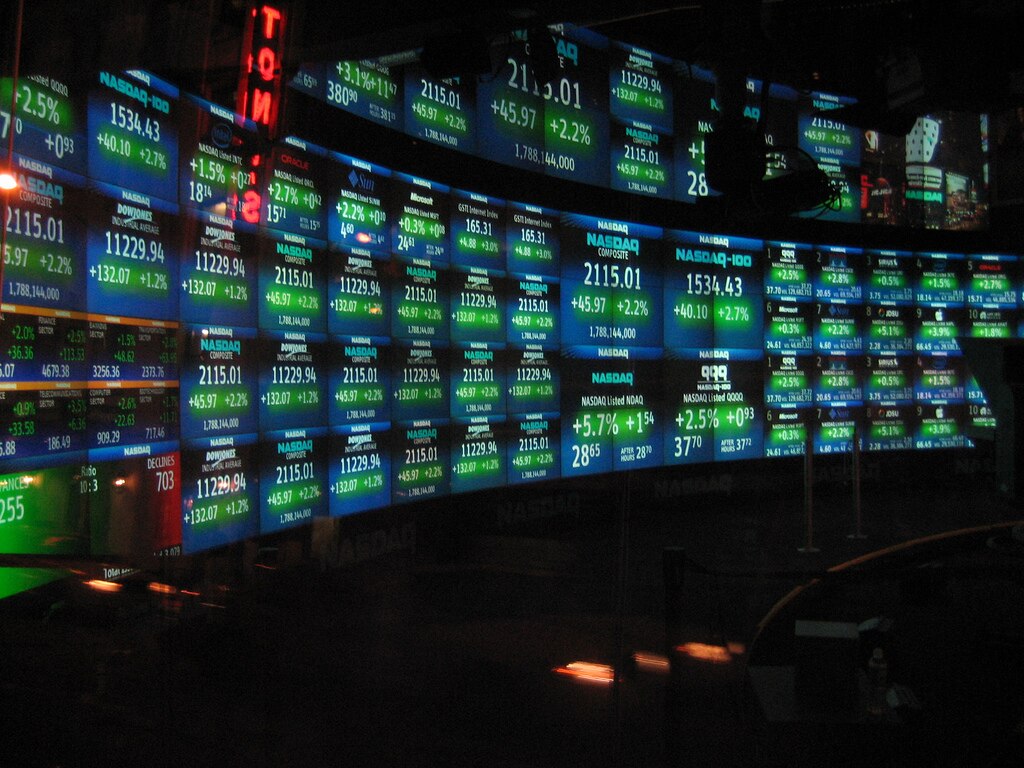
The Nasdaq closed slightly lower on Friday, capping its steepest weekly decline since early April as investors reassessed the rapid gains in artificial intelligence (AI) and technology shares. The index dropped about 3% for the week, while chip and tech-related stocks were the biggest losers. Despite this setback, the Nasdaq remains up more than 50% since April, driven by optimism around AI following President Donald Trump’s sweeping tariff announcements.
Market sentiment cooled after The Financial Times reported Nvidia CEO Jensen Huang’s warning that China may surpass the U.S. in the AI race. “We’re seeing this AI selloff continue after those comments,” said Michael O’Rourke, chief market strategist at JonesTrading. “It’s a recalibration of valuations, along with some profit-taking after a strong rally this year.”
All three major U.S. stock indexes opened sharply lower but pared losses later in the day. The Dow Jones Industrial Average rose 74.80 points, or 0.16%, to 46,987.10; the S&P 500 gained 8.49 points, or 0.13%, to 6,728.81; while the Nasdaq Composite slipped 49.45 points, or 0.21%, to 23,004.54. Global markets also softened, with MSCI’s world stock index down 0.07% and Europe’s STOXX 600 off 0.55%.
Meanwhile, weaker China trade data highlighted the impact of U.S. tariffs. China’s exports fell 1.1% in October, their worst drop since February. U.S. Treasury yields edged down as consumer sentiment hit its lowest level since mid-2022 amid the ongoing government shutdown. The 10-year Treasury yield slipped to 4.091%.
The U.S. dollar weakened slightly, with the dollar index down 0.11% to 99.57, while oil and gold prices edged higher. U.S. crude settled at $59.75 per barrel, and Brent rose to $63.63, supported by hopes of energy cooperation between the U.S. and Hungary.













