


 Wall Street Futures Rise Ahead of Trump-Xi Summit as Tech Stocks Lead Market Rally
  EQT Launches $3.76 Billion Take-Private Deal for Kakaku.com as Shares Surge
  US, Japan Reaffirm Strong Currency Coordination Amid Yen Volatility
  Warren Buffett and Stephen Curry Charity Dinner Auction Raises $27 Million for Nonprofits
  U.S. Urges China to Help Curb Iran’s Actions in Gulf, Rubio Says
  Asian Currencies Slide as Indian Rupee Hits Record Low Amid Iran Tensions
  Australia Housing Tax Reform Sparks Debate Over Property Investor Tax Breaks
  SpaceX IPO Faces Backlash Over Elon Musk’s Control and Governance Structure
  SK Hynix Nears $1 Trillion Market Value Amid South Korea’s AI-Driven Stock Market Surge
  Honda Annual Loss Deepens as U.S. Tariffs and EV Costs Weigh on Earnings
  BlackRock-Led GCC Infrastructure Partnership Targets $30 Billion Investment
  Kuaishou Stock Jumps on Kling AI IPO Plans and $20 Billion Valuation
  US-China Trade Talks Sideline Chip Export Controls as Nvidia China Sales Draw Attention
  Japan Considers Extra Budget Aid Amid Rising Fuel and Utility Costs
  SoftBank Shares Slide Despite Record Q4 Profit Fueled by OpenAI Investment
  Trump, Xi Begin High-Stakes China Summit Focused on Trade, Taiwan and Global Tensions


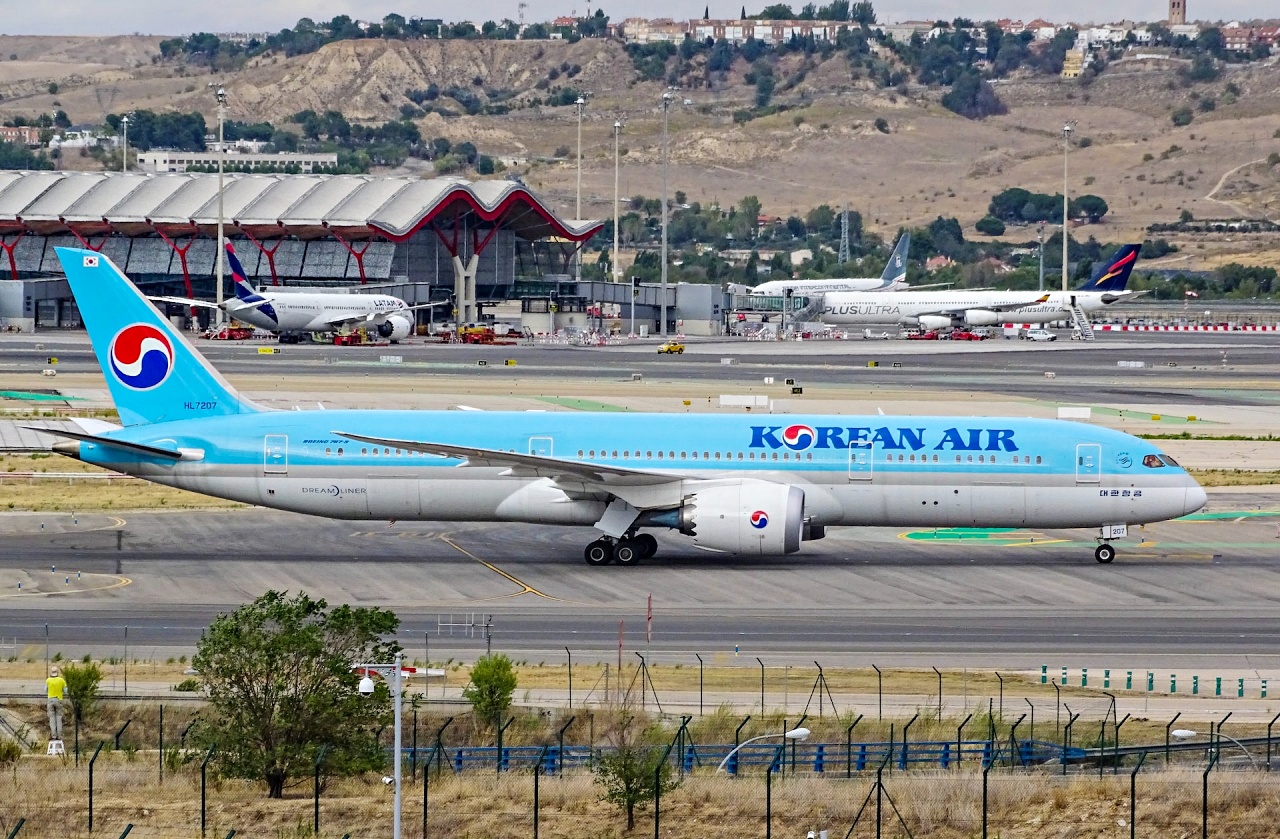
Korean Air is in the process of acquiring Asiana Airlines, and the procedure requires approval from several countries’ competition boards. The flag carrier of South Korea is one of the top 10 largest airlines in the world, and it first proposed to buy the latter in November 2020.
Now Korean Air is making big progress towards securing the “go ahead” signal from the United States and European regulators, which are the regions that have yet to approve the acquisition. The Korean air carrier is seeking clearances from competition authorities in several countries, and this is the most important step to finalizing and completing the deal.
It has already received clearance from South Korea, Vietnam, Turkey, Taiwan, Malaysia, and Singapore. Australia is the latest country to hand over its approval. On Sept. 1, Korean Air announced that the Australian Competition and Consumer Commission (ACCC) decided to approve its acquisition of Asiana Airlines.
The decision was made after the conduction of market consultation on the Korean Air-Asiana Airlines merger with interested parties. ACCC’s chairman, Gina Cass-Gottlieb, said about the clearance they issued to Korean Air, “We consider that the Qantas Group offering flights on the Sydney to Seoul route with both its full-service and low-cost carriers means that there is likely to be effective competition.”
The Korean airline is hoping that the Australian competition regulator’s clearance will advance and speed up the remaining approval processes. The U.S. and the U.K. are two of the remaining countries that have yet to approve, but with the latest Aussie “go” signal, they are predicted to follow suit soon.
As per The Korea Times, the officials believe that the U.K. and U.S.’ clearance for the proposed operations under the Korean Air-Asiana Airlines merger deal will come as early as November. If they approve, it will be easier to get clearance from Japan, China, and the European Union.
Currently, the anti-trust regulators of the remaining nations are carefully reviewing the merger of Korean Air with Asiana airlines. It has already been approved by nine countries so far, with Seoul granting its conditional approval to the acquisition in February, Yonhap News Agency reported.







