


 Trump Votes by Mail Despite Calling It "Cheating" as Democrat Wins Mar-a-Lago District
  U.S. Deploys Elite 82nd Airborne Troops to Middle East Amid Iran Tensions
  Iran-U.S. Negotiations: Tehran Reviews American Peace Proposal Amid Ongoing Gulf Conflict
  WTO Reform Talks Begin in Cameroon Amid Global Trade Tensions
  US-Iran Ceasefire Talks Underway: What You Need to Know
  Denmark Election 2025: Social Democrats Suffer Historic Losses Amid Migration and Cost-of-Living Tensions
  Trump Backs Down on Iran Strikes After Gulf Allies Sound the Alarm
  G7 Foreign Ministers Gather in France Amid Global Tensions and U.S. Policy Uncertainty
  Denmark Election 2026: Frederiksen Eyes Third Term Amid Trump-Greenland Tensions
  Iran Demands Lebanon Be Part of Any Ceasefire Deal With Israel and the U.S.
  Pakistan's Diplomatic Rise: Mediating U.S.-Iran Peace Talks
  Russia Strikes Kharkiv and Izmail as Cross-Border Drone War Escalates
  Maduro Faces Rare Narcoterrorism Charges in U.S. Court
  Taiwan Arms Deal on Track Despite U.S.-China Summit Uncertainty
  Bachelet Pushes Forward With UN Secretary-General Bid Despite Chile's Withdrawal
  U.S.-Iran Peace Talks Gain Momentum Amid Ongoing Conflict
  Kristi Noem Ends Western Hemisphere Tour in Diminished Role After DHS Firing


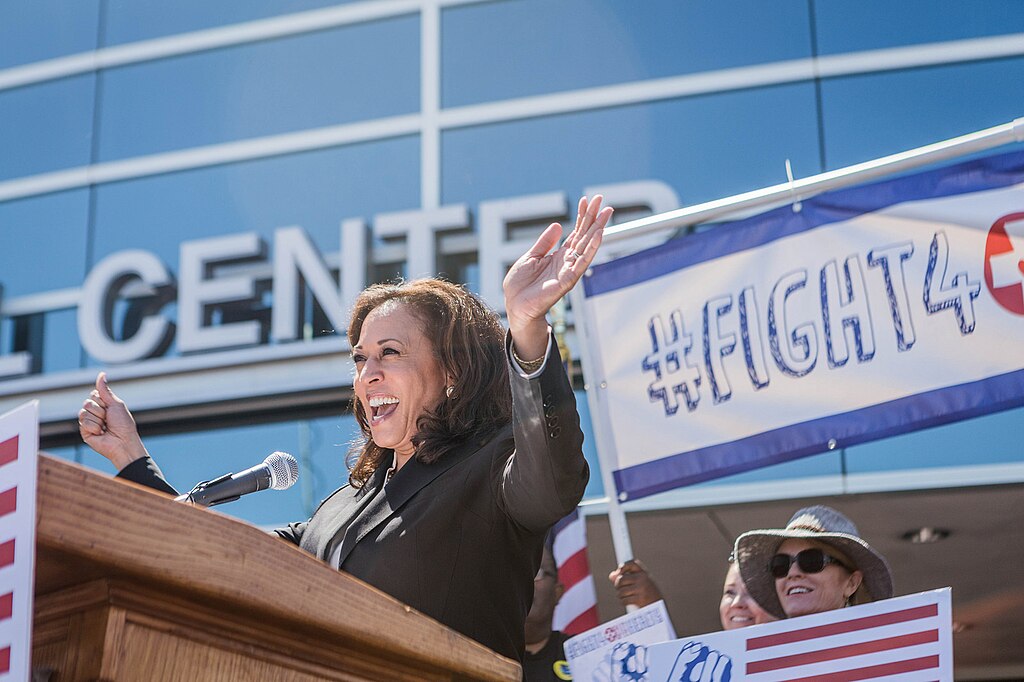
A prominent Republican group has invoked one of the most infamous Supreme Court decisions in U.S. history to argue that Vice President Kamala Harris is ineligible to run for president. The National Federation of Republican Assemblies (NFRA), a 90-year-old organization with deep ties to the GOP, cited the 1857 Dred Scott v. Sandford decision in its case against Harris’s eligibility, claiming that the ruling supports their interpretation of the Constitution’s requirements for presidential candidates.
The NFRA’s resolution, outlined on page 37 of its platform document, argues that Harris should be disqualified from holding the office of president based on several "precedent-setting U.S. Supreme Court cases." Among these cases is the Dred Scott decision, widely condemned as one of the most unjust rulings in American legal history. The NFRA's resolution claims that Harris, along with other candidates like Nikki Haley and Vivek Ramaswamy, does not meet the constitutional standard of being a "natural-born citizen" because her parents were not U.S. citizens at the time of her birth.
The group’s argument hinges on its interpretation of Article II, Section 1, Paragraph 5 of the Constitution, which states that only natural-born U.S. citizens are eligible to serve as president. According to the NFRA, a "natural-born citizen" must be born on American soil to parents who are both U.S. citizens. This narrow interpretation, however, has been widely criticized and challenged by legal scholars and historians.
Critics have pointed out that the NFRA’s interpretation would have rendered several early U.S. presidents, including George Washington, John Adams, and Thomas Jefferson, ineligible for office, as their parents were born when the American colonies were under British rule. Santiago Reich, a Dallas-based attorney, highlighted the flawed reasoning by noting that these historical figures would not meet the NFRA’s criteria for natural-born citizenship.
Further undermining the NFRA’s position, the group also cited the 1939 Perkins v. Elg decision, which states that a child born in the U.S. to alien parents becomes a U.S. citizen. Legal experts have pointed out that this ruling directly contradicts the NFRA’s core argument. Critics on social media have labeled the NFRA’s stance as legally unsound, noting that key amendments to the Constitution, such as the 13th, 14th, and 19th Amendments, have long since invalidated the Dred Scott decision and similar rulings.
The Dred Scott case, which denied citizenship rights to African Americans, is particularly controversial. The Supreme Court’s decision, written by Chief Justice Roger Taney, declared that descendants of slaves could never be U.S. citizens. This ruling was later overturned by the 14th Amendment, which granted citizenship to all persons born or naturalized in the United States.
The NFRA’s use of the Dred Scott decision to challenge Harris’s eligibility has drawn widespread criticism, with many arguing that the group is clinging to outdated and discredited legal precedents. The controversy highlights the ongoing debates over constitutional interpretation and the qualifications for the highest office in the land, as well as the enduring impact of America’s troubled racial history on contemporary politics.







