


 Judge Orders Release of Family After Longest ICE Detention Under Trump Administration
  OECD Sees Bank of Japan Raising Interest Rates to 2% by 2027
  US Stock Futures Slip as Iran Tensions and Hot Inflation Data Pressure Wall Street
  Sinaloa Governor Ruben Rocha Denies U.S. Cartel Allegations, Calls Charges Political
  YouTube and Snap Settle School District Mental Health Lawsuit Ahead of Major Social Media Trial
  U.S. Army Soldier Charged in $400K Insider Betting Scheme on Maduro Capture
  Japan Considers Extra Budget Aid Amid Rising Fuel and Utility Costs
  Argentina Court Upholds Cristina Kirchner Asset Seizure in Corruption Case
  Trump, Xi Begin High-Stakes China Summit Focused on Trade, Taiwan and Global Tensions
  Judge Rules DOGE Humanities Grant Cuts Unconstitutional
  DOJ Ends Probe Into Fed Chair Jerome Powell, Boosting Kevin Warsh Confirmation Prospects
  Federal Appeals Court Allows Texas SB4 Immigration Law Enforcement to Proceed
  Asian Currencies Slide as Indian Rupee Hits Record Low Amid Iran Tensions
  Florida Investigates OpenAI and ChatGPT Over Alleged Role in FSU Shooting
  Taiwan Court Fines Tokyo Electron Unit $4.78M in Major TSMC Trade Secrets Case
  Oil Prices Slip as Strait of Hormuz Disruptions and U.S. Inventory Data Keep Markets on Edge
  Trump and Xi Temple of Heaven Visit Highlights Trade and Diplomacy Goals


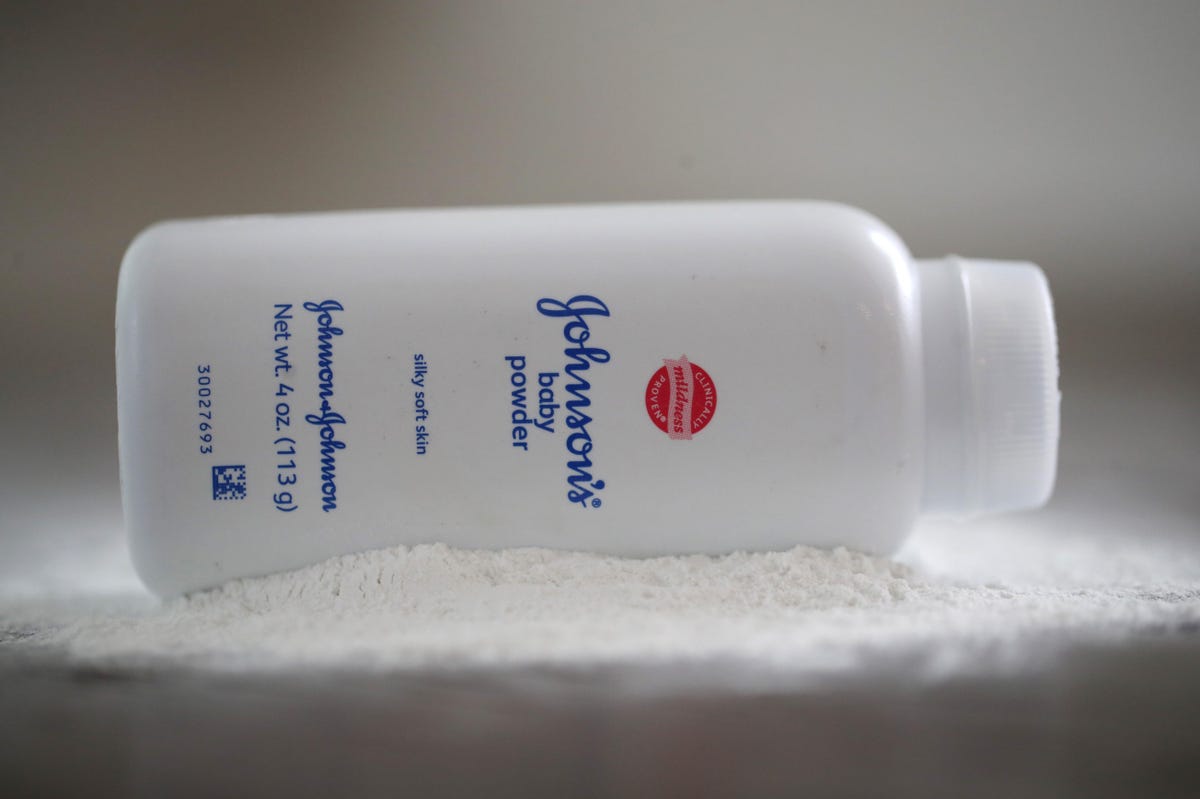
U.S. Bankruptcy Judge Michael Kaplan ruled that a Johnson & Johnson subsidiary can remain in bankruptcy, preventing plaintiffs from pursuing 38,000 lawsuits against it based on allegations that its products cause cancer.
J&J insists its talc is safe and is attempting to resolve the lawsuits by putting a recently formed subsidiary, LTL Management, into bankruptcy.
The legal maneuver is known as the "Texas two-step" that J&J employed allowed it to separate important assets from liabilities in a so-called divisive merger. LTL was formed in October 2021 by healthcare conglomerate J&J, which has a market value of more than $400 billion, filed for bankruptcy days later.
Plaintiffs argued that J&J's move was an abuse of the Chapter 11 system.
Kaplan rejected the plaintiffs' argument, saying that J&J’s approach was "unquestionably" proper and that bankruptcy offers a faster and more fair alternative to decades of litigation in other courts.
Jon Ruckdeschel, an attorney representing the plaintiffs in the talc lawsuits, said the ruling would be appealed, saying the bankruptcy code was never intended to be abused by massively profitable corporations as a means to delay or prevent cancer victims from having their day in court.
Talc plaintiffs and some critics had warned that the strategy could "open the floodgates" for other companies facing mass litigation risk.
The talc claimants and others had predicted that the approach would "raise the floodgates" for other corporations at risk of multiple litigations.
J&J faces claims from plaintiffs that its talc-based products caused ovarian cancer and mesothelioma, a form of cancer linked to asbestos exposure.
Before their filing, the business had already incurred costs of more than $3.5 billion in judgments and settlements, including one for more than $2 billion awarded against 22 women, according to bankruptcy court records.
Despite Johnson & Johnson setting aside $2 billion to settle talc claims, LTL executives characterized this as a "starting point" rather than a "cap" during court hearings last week.
LTL argued that bankruptcy was the only viable option to address the large number of lawsuits filed against J&J.
Last year, Johnson & Johnson began "Project Plato" to shift liability for its pending talc lawsuits to a newly established subsidiary that would subsequently be put into bankruptcy.







