


 Trump Signs “America First Arms Transfer Strategy” to Prioritize U.S. Weapons Sales
  Trump Administration Appeals Court Order to Release Hudson Tunnel Project Funding
  TrumpRx.gov Highlights GLP-1 Drug Discounts but Offers Limited Savings for Most Americans
  Trump Backs Nexstar–Tegna Merger Amid Shifting U.S. Media Landscape
  U.S. Lawmakers to Review Unredacted Jeffrey Epstein DOJ Files Starting Monday
  Japan Election 2026: Sanae Takaichi Poised for Landslide Win Despite Record Snowfall
  Trump Congratulates Japan’s First Female Prime Minister Sanae Takaichi After Historic Election Victory
  Japan’s Prime Minister Sanae Takaichi Secures Historic Election Win, Shaking Markets and Regional Politics
  New York Legalizes Medical Aid in Dying for Terminally Ill Patients
  Federal Judge Restores Funding for Gateway Rail Tunnel Project
  U.S. to Begin Paying UN Dues as Financial Crisis Spurs Push for Reforms
  China Warns US Arms Sales to Taiwan Could Disrupt Trump’s Planned Visit
  Trump Signs Executive Order Threatening 25% Tariffs on Countries Trading With Iran
  U.S.-India Trade Framework Signals Major Shift in Tariffs, Energy, and Supply Chains
  Nicaragua Ends Visa-Free Entry for Cubans, Disrupting Key Migration Route to the U.S.
  Jack Lang Resigns as Head of Arab World Institute Amid Epstein Controversy
  Bosnian Serb Presidential Rerun Confirms Victory for Dodik Ally Amid Allegations of Irregularities


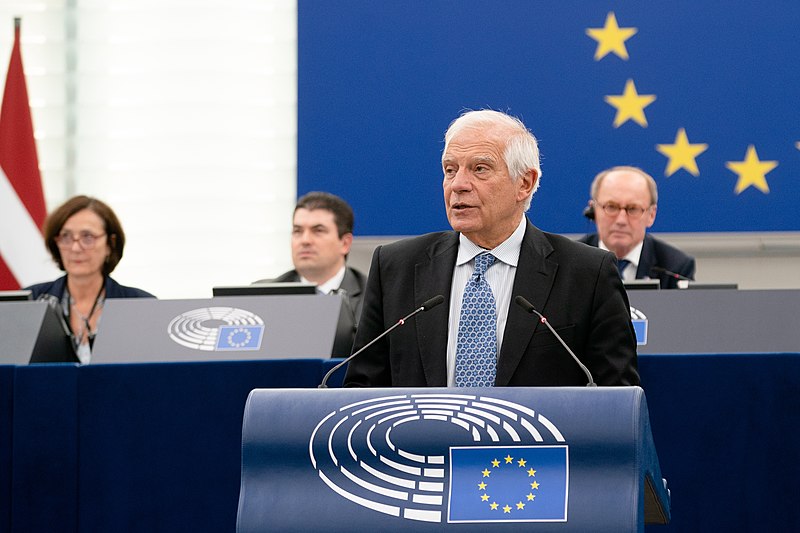
The European Union has imposed sanctions on an additional 30 individuals and entities in Iran. The new sanctions were in response to Tehran’s crackdown on the ongoing protests along with other human rights abuses.
On Monday, the bloc agreed to impose sanctions on over 30 Iranian officials and organizations over the crackdown on the protests and human rights abuses. Some of those targeted were units of Iran’s Islamic Revolutionary Guard Corps along with its senior officials. The United States has also announced new sanctions on Iran, further indicating the deteriorating ties between Tehran and the West.
The new sanctions were agreed upon by the foreign ministers of the 27 EU countries during a meeting in Brussels. The sanctions would bar those targeted – 18 people and 19 entities – from travelling to the EU and freeze any assets the individuals or entities may hold in the EU.
Despite calls by some EU governments and the European Parliament to designate the IRGC as a terrorist organization, the bloc’s foreign policy chief Josep Borrell said an EU court must determine whether the IRGC can be designated as such.
Relations between the EU and Iran have since deteriorated in light of the stalled talks to revive the 2015 nuclear deal, with Iran detaining several European nationals. The EU has also increasingly criticized Iran’s continued crackdown on the protesters in the country, including executions and the supply of Iranian drones to Russia.
Sweden, who is currently the EU president, said the latest sanctions targeted “those driving the repression.”
“The EU strongly condemns the brutal and disproportionate use of force by the Iranian authorities on peaceful protesters,” said Swedish foreign minister Tobias Billstrom in a post on Twitter by the EU diplomatic mission.
The United Kingdom has also joined in imposing new sanctions on Iranian officials, especially following Tehran’s execution of a British-Iranian dual national, Alireza Akbari. The sanctions, this time, targeted Iranian deputy prosecutor general Ahmad Fazelian, who the British Foreign Office said was responsible for the country’s unfair judicial system that imposed the death penalty for political purposes.
Aside from Fazelian, the UK has also sanctioned Iran ground forces commander Kiyumars Heidari, IRGC deputy commander Hossein Nejat, the Tehran-backed Basij paramilitary forces and the group’s deputy commander Salar Abnoush.













