


 Middle East Oil Exports Recover as Tanker Costs Surge
  Gold Prices Slip as High Treasury Yields Weigh on Bullion
  South Korea Exports Surge 83.5% on AI Chip Boom
  Asian Stocks Mixed as Markets Await U.S. Jobs Data
  Best Gold Stocks to Buy Now: AABB, GOLD, GDX
  Australia Inflation Accelerates to 4% After RBA Rate Hike
  Gold Steady as Softer U.S. Inflation Eases Fed Rate Hike Bets
  Dollar Eases Near Two-Month High as Yen Rebounds
  Gold Prices Fall Amid Rate Jitters; Copper Steady as China Stimulus Eyed


 Add as a preferred source on Google
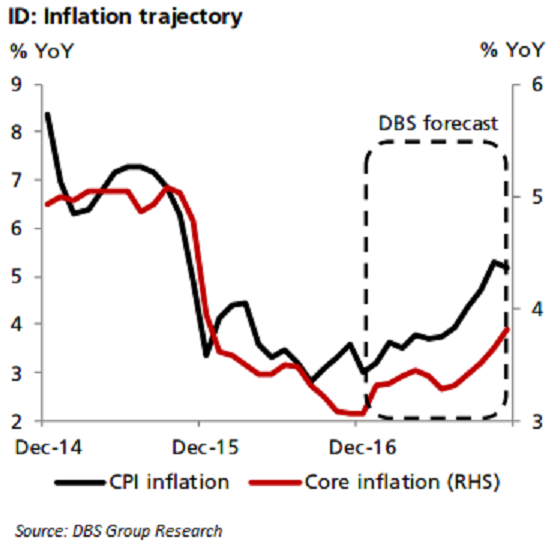
Indonesia’s consumer price inflation ended 2016 on a weak note, hitting lowest since December 2009. Indeed, throughout 2016, inflation pressure has been relatively benign. Low oil price and a relatively resilient rupiah helped to anchor price expectations.
Indonesian CPI came in at 3.0 percent y/y during the month of December. Core inflation was generally tame, averaging 3.4 percent in 2016, compared to 4.9 percent in 2015. Looking ahead, however, CPI inflation is expected to inch up gradually. CPI inflation is likely to average 4.5 percent this year, partly due to the low base effects, DBS reported.
Some upside risks are also present in the food component of the CPI while there is always reason to remain cautious about the rupiah, given the anticipated volatility in global financial markets. Also, transport inflation can be expected to return to 2 percent, following lower global crude oil prices.
Given that last year’s rather aggressive rate cuts were done on the back of the low inflation environment, expect BI to be more cautious this year. Inflation in the housing / utilities component of the CPI may return to an average of about 4 percent this year. While this is well above the 1.8 percent recorded in 2016, it is still slightly lower than the 5-year average of 4.5 percent.
"We expect some upward inflationary pressure from the anticipated gradual increase in household electricity tariffs; we reckon that Bank Indonesia (BI) may raise its key policy rate by 25bps in 2H17," the report said.







