


 Goldman Sachs, ANZ Cut Oil Forecasts Amid U.S.-Iran Ceasefire Hopes
  LG Electronics Posts Record Q1 Revenue Amid Strong Demand and Cost Improvements
  Pershing Square Bids €30.40 Per Share to Acquire Universal Music Group in $9.4B Deal
  Ford Issues Major Recall on Over 422,000 Vehicles Due to Windshield Wiper Defect
  FedEx Pilots and Union Reach Tentative Agreement on 40% Pay Increase
  Kia Cuts EV Sales Target for 2030 Amid Slowing Demand and U.S. Policy Shifts
  Deere & Company Agrees to $99 Million Settlement Over Right-to-Repair Dispute
  Abbott Laboratories Ordered to Pay $53 Million in Premature Infant Formula Lawsuit
  Anthropic Fights Pentagon Blacklisting in Dual Federal Court Battles
  Apple's Foldable iPhone Faces Engineering Setbacks, Mass Production Timeline at Risk
  TSMC Posts Strong Q1 2025 Revenue, Riding AI Chip Demand Wave
  Pilots Fear Retaliation for Refusing Middle East Flights Amid Ongoing Conflict
  Bank of America Identifies Top Asia-Pacific Semiconductor Stocks Poised for AI-Driven Growth
  SpaceX IPO: Retail Investors to Play Historic Role in Record-Breaking Public Offering
  Samsung Electronics Posts Eightfold Profit Surge Driven by AI Chip Demand
  China's AI Stocks Surge as Zhipu and MiniMax Hit Record Highs


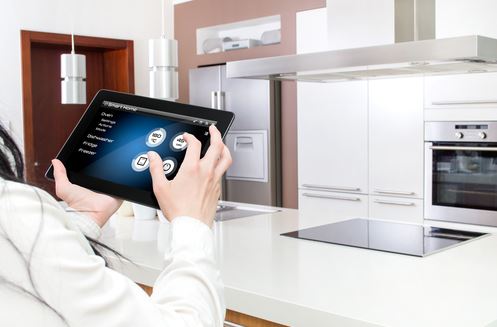
The rise of smart homes has naturally been accompanied by a rise in smart appliances. Revenue from smart home hardware and services will increase from $83 billion in 2017 to $195 billion by 2021, projects Juniper Research. Furthermore, one of the fastest-growing segments of the market will be smart appliances, projected to increase from 17 million in 2016 to 202 million by 2021. Refrigerators will form the hub of the smart kitchen, becoming a mechanism for ordering food online as well as food storage. But for many consumers, cost is still a barrier to smart home adoption and, if you just bought a new refrigerator, you might shudder at the cost of buying another one. Fortunately, it’s possible to update some existing appliances without the expense of buying a whole new refrigerator, dishwasher, washing machine and dryer. Here are a few smart ways to upgrade to smart appliances.
Install Smart Sensors
It's possible to turn standard appliances into smart ones by installing smart sensors. Electronics manufacturer LG has taken a leading role in developing this type of technology, unveiling the Smart ThinQ Sensor in late 2015. This small, thin, round sensor can be attached to compatible home appliances to turn them into smart appliances. Once attached, the sensor sends signals to your smartphone via an app. By using the app, you can use a mobile device such as an LG G5 smartphone to manage your smart appliances from anywhere.
For instance, if you attach a Smart ThinQ Sensor to your refrigerator, it can tell you when food is about to expire, letting you update your grocery list remotely, perhaps while you're still at the store. Or, the sensor can sense vibration and temperature from your washing machine, letting you know when your clothes are done no matter where you are. You can also use Smart ThinQ to control your oven, letting you preheat it on your smartphone before you leave work, for example.
Connect Your Appliances to a Smart Hub
The Smart ThinQ Sensor can attach to refrigerators and washing machines and can work in coordination with LG’s Smart Lightweight Oven and Smart Air Conditioner. Multiple smart devices can be arrayed around the Smart ThinQ Hub, a small cylinder that can use Bluetooth, Z-Wave and Zigbee to communicate with connected devices. SmartThinQ is compatible with recent LG appliances as well as a range of appliances from other manufacturers that use the AllJoyn Alliance open framework.
Think in Terms of Long-term Savings
While using this upgrade method can help you avoid the cost of purchasing a new appliance, it’s good to bear in mind that, in some cases, you may actually save more in the long term by purchasing a new item. This is especially true in the case of your refrigerator, which runs constantly and consumes more energy than any other appliance. Replacing a refrigerator from the 1980s with a new smart model can save you $100 a year in energy costs, while replacing one from the 1970s can save you $200 a year, says HGTV contributor Karin Beuerlein. Over a period of years, these savings can add up, making purchasing a new smart appliance potentially more cost-effective than continuing to run your old one. Think in terms of long-term savings when making a decision of whether or not to upgrade your existing home appliance equipment.







