


 Lufthansa Q1 Loss Narrows as Strong Summer Travel Demand Boosts Outlook
  Hua Hong Semiconductor Stock Surges to Multi-Year High Amid AI Boom
  Sony Forecasts Lower 2027 Profit Despite Strong Music and Sensor Growth
  Infineon Raises 2026 Outlook as AI Data Center Chip Demand Surges
  Novo Nordisk Raises 2026 Outlook on Strong Wegovy Demand
  Judge Delays SEC Settlement With Elon Musk Over Twitter Stock Disclosure Case
  Aker BP Q1 Profit Jumps on Higher Oil Prices and Asset Reversal
  Coinbase Q1 2026 Earnings Miss Sends COIN Stock Lower Amid Crypto Market Slump
  BHP Attracts AI-Focused Investors as Copper Demand Surges
  Arm Stock Drops Despite Strong AI Chip Demand and Earnings Beat
  Broadcom Eyes $35 Billion AI Chip Financing Deal With Apollo and Blackstone
  AI-Driven Inflation Raises U.S. Consumer Prices, Goldman Sachs Says
  Meta Plans $13B AI Data Center Financing in Texas Amid Surging Big Tech Investment
  Continental AG Shares Jump After Q1 Profit Beats Expectations
  Anthropic’s $1.5B AI Venture with Wall Street Firms Targets Private Equity Market
  Nike Tariff Refund Lawsuit Sparks Consumer Backlash Over Price Increases
  Armani Group Eyes Strategic Stake Sale to Luxury Giants


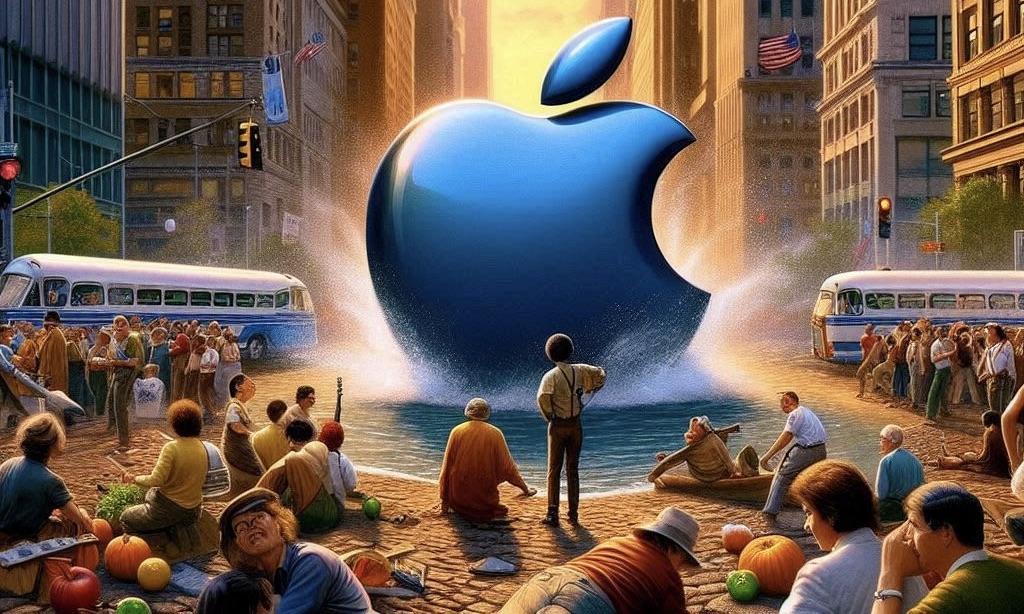
In August 1997, Microsoft invested $150 million in Apple, aiding the company in avoiding bankruptcy and fostering a critical partnership that ultimately benefitted both tech giants.
Microsoft Invested $150M in Struggling Apple, Sparking a Transformative Partnership in 1997
In the mid-1990s, Apple encountered significant financial losses and was on the brink of bankruptcy due to its inability to remain competitive. In a recent report by Wccftech, the California-based company experienced a substantial loss of $1 billion by 1997 due to its failure to provide a meaningful response to Microsoft and IBM. Apple tried to rectify the situation; however, Newton, a handheld device, needed to be received better, and the System 7 operating system required revision compared to Windows 95.
In summary, the executives of the technology firm were likely contemplating lucrative opportunities elsewhere. However, Microsoft, the most unlikely of entities, entered the scene and invested $150 million in the now trillion-dollar colossus on August 6, 1997, 27 years ago. The injection of funds into Apple may have been beneficial in preventing a bankruptcy episode, according to specific industry observers. However, others have expressed that it could have significantly improved the situation. Nevertheless, we reflect on the past and examine the circumstances that led Microsoft to invest in a company that investors would be inclined to steer clear of.
Steve Jobs announced the partnership between Microsoft and Apple at the 1997 MacWorld Expo, asserting that the investment would contribute to the overall expansion of the Mac software market. Bill Gates, the co-founder of Microsoft, also attended the event via satellite connection to reinforce the public's belief that Apple and Microsoft would establish a mutually beneficial business partnership. In addition, the software conglomerate consented to maintain the development of productivity-oriented applications, including Microsoft Office for the Mac, for a minimum of five years.
Microsoft's $150M Investment in Apple: A Strategic Move Amid Antitrust Concerns and Financial Gain
In terms of investment, $150 million was allocated to acquiring non-voting Apple stock, which accounted for only a small portion of Microsoft's total market capitalization. Nevertheless, thousands are likely contemplating the rationale behind a competitor's decision to provide a financial reprieve. Would it not have been simpler for Apple to dissipate into obscurity following its bankruptcy declaration? Microsoft did not make this decision out of altruism, and its interests motivated its investment.
For example, as previously mentioned, Microsoft consented to create Office applications for the Mac, which increased its revenue each time Apple sold one of these devices. Microsoft would be compelled to eliminate a revenue stream from its list if the latter had declared bankruptcy, as no more Macs would be available for purchase. An additional explanation is that Microsoft was simultaneously contending with an antitrust litigation. If regulators perceived that Microsoft was compelling Apple to discontinue its operations, they would increase their scrutiny of the company.
Additionally, Microsoft may have considered the $150 million a mere drop in the pail; however, it could potentially receive a return on its investment if Apple were to recover from its current downward trajectory. In the end, that is precisely what transpired. According to various reports, Microsoft converted the invested sum into common stock in 2001, acquiring 18.1 million Apple shares.
Microsoft received a handsome $550 million in compensation when it was time to sell, which is more than a three-fold increase. Regardless of whether individuals contend that the investment did not benefit Apple, the company's current performance is most important. It is reasonable to assume that the company's future is secure, as the California-based titan currently has a $3.17 trillion market capitalization.







