


 Neuren Pharmaceuticals Surges on U.S. Patent Win for Rare Disorder Drug
  Neuralink Expands Brain Implant Trials with 12 Global Patients
  Anthropic Eyes $350 Billion Valuation as AI Funding and Share Sale Accelerate
  Elon Musk’s SpaceX Acquires xAI in Historic Deal Uniting Space and Artificial Intelligence
  NASA Faces Major Workforce Reduction as 20% of Employees Prepare to Leave
  Palantir Stock Jumps After Strong Q4 Earnings Beat and Upbeat 2026 Revenue Forecast
  Nvidia Nears $20 Billion OpenAI Investment as AI Funding Race Intensifies
  SpaceX Pivots Toward Moon City as Musk Reframes Long-Term Space Vision
  OpenAI Expands Enterprise AI Strategy With Major Hiring Push Ahead of New Business Offering
  Tabletop particle accelerator could transform medicine and materials science
  Nvidia, ByteDance, and the U.S.-China AI Chip Standoff Over H200 Exports
  Cogent Biosciences Soars 120% on Breakthrough Phase 3 Results for Bezuclastinib in GIST Treatment
  Blue Origin’s New Glenn Achieves Breakthrough Success With First NASA Mission
  Is space worth the cost? Accounting experts say its value can’t be found in spreadsheets
  Eli Lilly’s Inluriyo Gains FDA Approval for Advanced Breast Cancer Treatment
  Amazon Stock Rebounds After Earnings as $200B Capex Plan Sparks AI Spending Debate


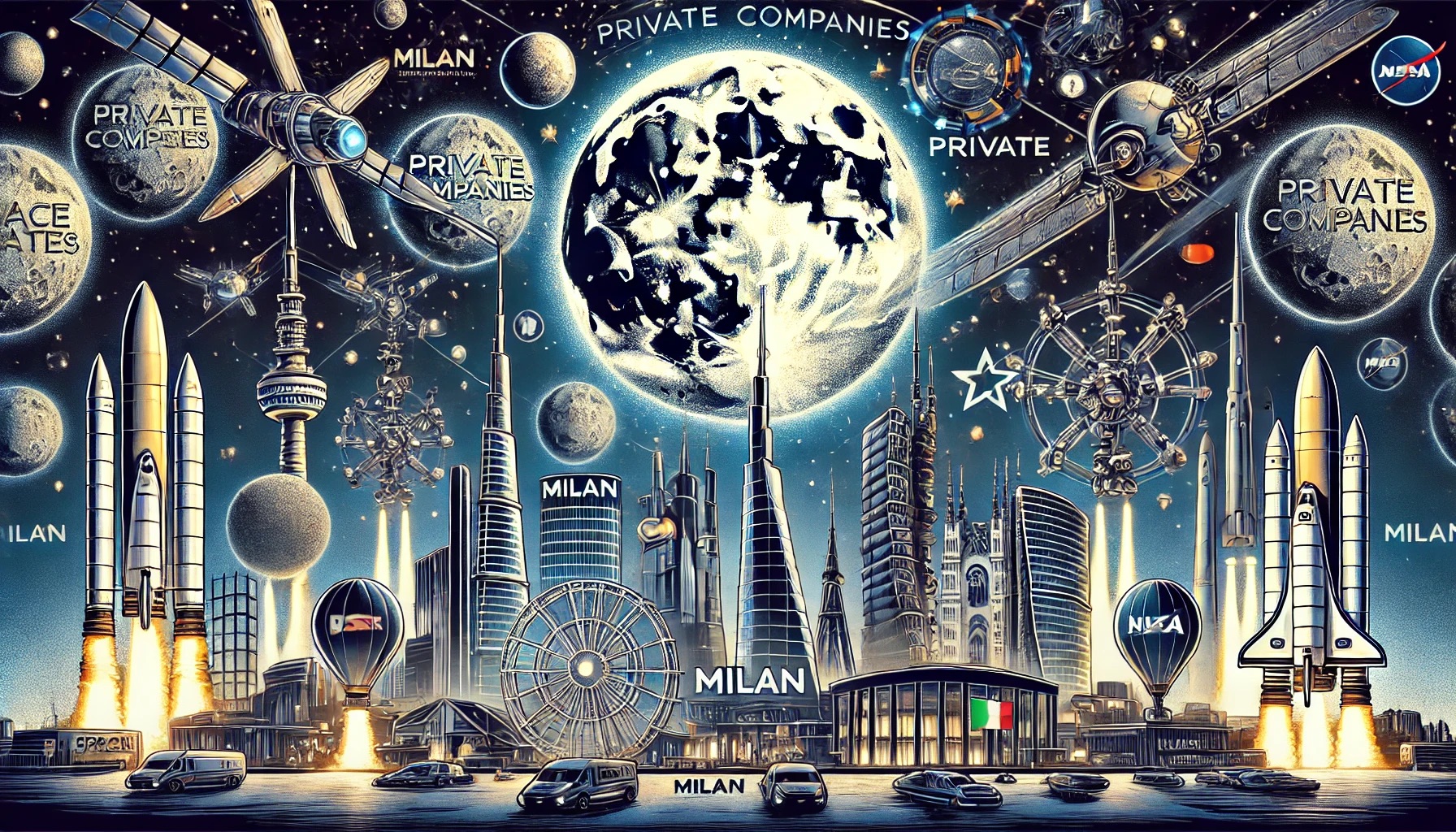
This week, the world’s space agencies convene in Milan, with private companies like SpaceX vying for a share in the new global space race. Discussions focus on lunar exploration, NASA's Artemis program, and Europe’s efforts to secure sovereign access to space amid rising geopolitical competition.
U.S. and China Rivalry Takes Center Stage at IAC as Global Space Powers Discuss Lunar Exploration
Since 1950, the International Astronautical Congress (IAC) has served as a forum for spacefaring nations' scientists, engineers, corporations, and political leaders to discuss collaboration, even during periods of elevated tensions among world powers.
The space minds of two major rivals - the United States and China - will be convened under one roof at this year's conference. However, the absence of an official representation by Russia's space agency, Roscosmos, a renowned power estranged from the West following Moscow's 2022 invasion of Ukraine, underscores the most recent fractures in space cooperation.
However, nearly all 77 member countries of the International Astronautical Federation (IAF), the non-profit organization that organizes IAC, have attended the talks. Attendees anticipate that the discussions will focus on lunar exploration, NASA's expanding coalition of countries under its Artemis moon program, and Europe's urgent need for more sovereign access to space.
According to IAF President Clay Mowry, a record 7,197 technical abstracts were submitted for this congress, and students and young professionals will deliver 37% of the papers.
"This is the most exciting time in space since the Apollo era in the 1960s," he told Reuters.
NASA administrator Bill Nelson is anticipated to gather support at IAC for the agency's strategy to engage private companies to supplant the aging International Space Station following its retirement in 2030. Despite conflicts on Earth, the orbiting science laboratory, which has been in operation for over two decades, has served as a symbol of space diplomacy, primarily headed by the United States and Russia.
In investing billions of dollars in its flagship Artemis moon program, NASA has been eager to maintain a presence in low-Earth orbit to contend with China's Tiangong space station, which has been housing Chinese astronauts for three years.
The United States and China are also competing to place the first humans on the moon this decade since the final American Apollo mission in 1972. By aggressively courting partner countries and relying on private companies for their moon programs, the two space powers are influencing the objectives of lesser space agencies.
Italy Approves First Space Legislation as Europe Reassesses Priorities Amid Rising Private Competition
IAC is being introduced at the same time as Italy's parliament commences approving the nation's inaugural legislative framework for the space industry. This framework also establishes regulations and obligations for private investments in the sector.
"These rules gives the national ecosystem guidance on how to reach our objectives and grant the use of space in a sustainable and useful way," Italy's Industry Minister Adolfo Urso said on October 13.
Italy, one of the most significant contributors to the European Space Agency, recently committed 7.3 billion euros ($7.98 billion) to funding national and European initiatives through 2026.
Europe has been compelled to reevaluate its priorities for launchers and satellites due to the emergence of disruptive space technologies, private competition, and geopolitical tensions, which SpaceX has primarily driven.
The Western world heavily relies on Musk's SpaceX and its workhorse Falcon 9 for space access. This has prompted countries, including the United States, to promote new space startups that can provide more affordable launchers. SpaceX has become the world's largest satellite operator due to the expansion of its Starlink internet network.
In July, Europe resumed uncrewed access to orbit following a year-long hiatus with the successful test flight of its Ariane 6 launcher. However, capacity is still restricted due to the dissolution of relations with Russia, which was instrumental in the continent's development before the Ukraine conflict and its Soyuz spacecraft.
The European satellite manufacturing industry is also experiencing increasing pressures due to intense competition from constellations in low Earth orbit, such as SpaceX's Starlink, which have impacted the once-thriving market for its large, bespoke geostationary satellites.
Leonardo, an Italian company that sponsors the week-long event, has advocated for a new space sector strategy that includes its French joint venture partner, Thales, and its primary competitor in satellite manufacturing, Airbus.
According to industry sources, the three companies are engaged in preliminary discussions regarding consolidating their satellite operations. However, the stance of the new European Commission, which has previously obstructed previous endeavors to establish a single entity, will be a significant factor.
European strategists contend that space is a global market, and requiring European companies to maintain their choice within the same region fails to consider the broader context of international competition.
NASA's initiative to establish privately constructed alternatives to the International Space Station (ISS) results in transatlantic partnerships. For instance, Airbus and Voyager, a U.S. space operations company, established a joint venture this year to satisfy European demand for low-Earth orbit research and operations.













