


 Nighttime Shelling Causes Serious Damage in Russia’s Belgorod Region Near Ukraine Border
  South Korea Assures U.S. on Trade Deal Commitments Amid Tariff Concerns
  Trump Signs Executive Order Threatening 25% Tariffs on Countries Trading With Iran
  Federal Judge Restores Funding for Gateway Rail Tunnel Project
  Trump Signs “America First Arms Transfer Strategy” to Prioritize U.S. Weapons Sales
  India–U.S. Interim Trade Pact Cuts Auto Tariffs but Leaves Tesla Out
  Japan Election 2026: Sanae Takaichi Poised for Landslide Win Despite Record Snowfall
  Trump Backs Nexstar–Tegna Merger Amid Shifting U.S. Media Landscape
  US Pushes Ukraine-Russia Peace Talks Before Summer Amid Escalating Attacks
  U.S.-India Trade Framework Signals Major Shift in Tariffs, Energy, and Supply Chains
  TrumpRx.gov Highlights GLP-1 Drug Discounts but Offers Limited Savings for Most Americans
  U.S. Lawmakers to Review Unredacted Jeffrey Epstein DOJ Files Starting Monday
  Pentagon Ends Military Education Programs With Harvard University
  Netanyahu to Meet Trump in Washington as Iran Nuclear Talks Intensify
  China Warns US Arms Sales to Taiwan Could Disrupt Trump’s Planned Visit
  U.S. Announces Additional $6 Million in Humanitarian Aid to Cuba Amid Oil Sanctions and Fuel Shortages


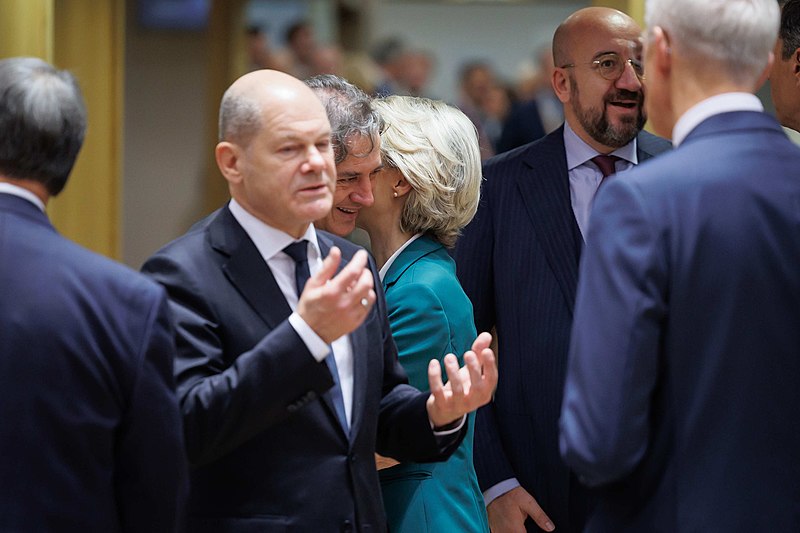
German Chancellor Olaf Scholz has warned the world against a new Cold War by dividing into blocs. Scholz also called on efforts to be made to forge new partnerships.
In an opinion piece for Foreign Affairs that was published Monday, Scholz stressed the importance of preventing another Cold War from happening by dividing the world into blocs. Scholz noted that while the West must stand for democratic values and protect open societies, “we must also avoid the temptation to once again divide the world into blocs.”
“This means making every effort to build new partnerships, pragmatically and without ideological blinders,” wrote Scholz.
Scholz cited China and Russia as two such countries that pose a threat to a multipolar world that would require stronger European and transatlantic unity to overcome. Scholz wrote that the transatlantic partnership remains important to confronting challenges posed by the threat of Russia’s assaults on the territories of allies, China’s shift toward isolation, and its approach toward Taiwan.
Scholz said that the challenges would need Europe and North America to forge new and stronger partnerships with countries all over the world.
“Germans are intent on becoming the guarantor of European security that our allies expect us to be, a bridge builder within the European Union and an advocate for multilateral solutions to global problems,” wrote Scholz.
Friday last week, a spokesperson for Scholz said that he welcomed the comments made by US President Joe Biden on modifying the Inflation Reduction Act, as the law raised concerns in Europe of potentially losing investment. The spokesperson added that a customs agreement for industry between the US and the European Union is better compared to a subsidy race.
Also on Friday, Scholz spoke with Russian leader Vladimir Putin, and the Kremlin said that Putin relayed to Scholz that the West’s and Germany’s line on Ukraine was “destructive” and that Berlin should rethink its approach.
The readout of the call between Scholz and Putin appeared to highlight the rift between Russia and the West over Ukraine. This is despite Moscow and Washington have said that they are open to talks in principle. Kyiv said that peace talks are only possible if Russia stops attacking Ukrainian territory and completely withdraws from Ukraine.













