


 US-Iran Ceasefire Under Pressure as Fresh Strait of Hormuz Clashes Shake Oil Markets
  European Stocks Fall as US-Iran Conflict Rekindles Energy Supply Fears
  Malaysia Unveils Energy Security Plan Amid Iran Conflict and Rising Oil Costs
  Saudi Aramco Q1 Profit Jumps 25% as Strait of Hormuz Crisis Reshapes Oil Exports
  China Export Growth Surges in April as Global Buyers Rush to Secure Supplies
  U.S.-China Beef Trade Deal Hopes Rise Ahead of Trump-Xi Summit
  Wall Street Futures Edge Higher as Iran Tensions and AI Optimism Shape Markets
  Gold Prices Rise as Weaker Dollar and U.S.-Iran Peace Hopes Boost Demand
  Asian Stocks Rally as Japan’s Nikkei Hits Record High on U.S.-Iran Peace Optimism
  Gold Prices Hold Firm as Iran Tensions and Dollar Swings Drive Safe-Haven Demand
  Oil Prices Surge as U.S.-Iran Conflict Threatens Strait of Hormuz Supply Route
  Japan’s Yen Intervention and BOJ Rate Hike Bets Support Currency Recovery
  S&P 500, Nasdaq Hit Record Highs as AI Stocks Rally and Strong Jobs Data Boost Confidence
  Trump Signals Possible U.S.-Iran Peace Deal as Markets Rally on Hopes of War Ending
  China EV Truck Boom Accelerates as Iran War Drives Diesel Prices Higher
  Oil Prices Rise Amid Strait of Hormuz Tensions and U.S.-Iran Ceasefire Uncertainty
  Dollar Struggles to Rally Despite Strong US Data as Fed Hike Expectations Remain Limited


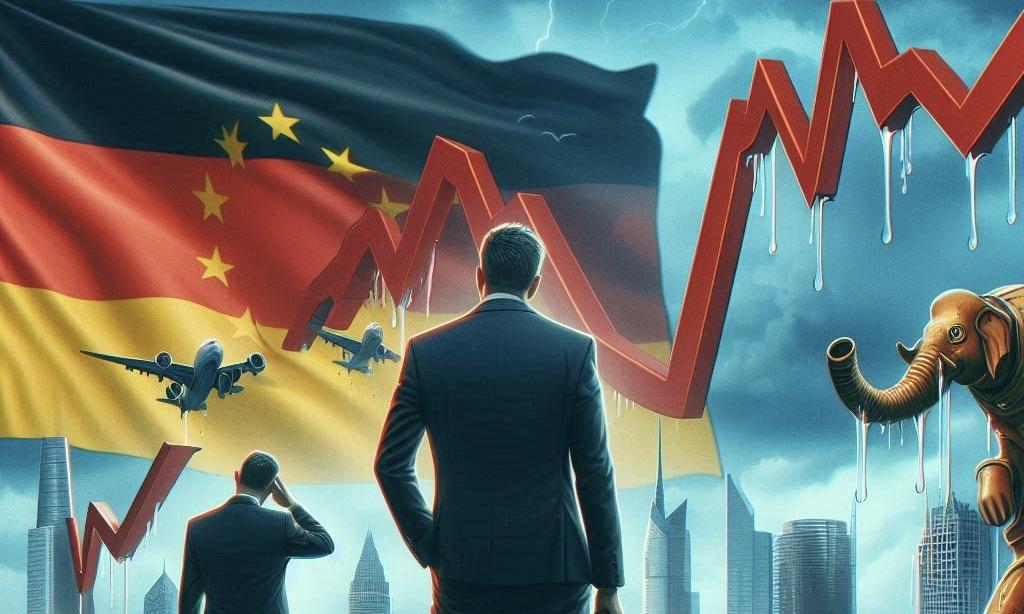
German business morale declined for the third straight month in August, as the Ifo Institute's business climate index dropped to 86.6, down from 87.0 in July. The survey of around 9,000 managers revealed increasing pessimism, signaling a challenging road ahead for Europe's largest economy.
German Business Confidence Declines for Third Month, Delaying Economic Recovery Hope
A survey conducted on August 26 revealed that German business morale declined for the third consecutive month in August, which has delayed the expectation of a recovery in Europe's largest economy.
The Ifo Institute reported that its business climate index decreased from 87.0 in July to 86.6 in August. However, it exceeded the 86.0 reading predicted by analysts polled by Reuters.
"The German economy is increasingly falling into crisis," said Ifo president Clemens Fuest.
In its survey of approximately 9,000 managers, Ifo discovered that companies were more pessimistic and perceived their situation as worse.
Ifo discovered that the industry's atmosphere has significantly declined, and service providers have also experienced a decline.
"The German economy has settled into stagnation," said Ifo economist Klaus Wohlrabe, citing a lack of order across all sectors and weak investment and adding that consumers were reluctant to spend due to uncertainty over inflation.
Wohlrabe anticipated that the German gross domestic product (GDP) would experience an additional decline in the third quarter, following an unexpected 0.1% contraction in the second quarter.
The present conditions index decreased from 87.1 the previous month to 86.5, while expectations were slightly lower at 86.8 from a slightly upwardly adjusted 87.0.
"There are not too many reasons for optimism at the moment," said LBBW bank's Elmar Voelker.
He identified a tumultuous global economy, geopolitical risks, and the impending U.S. presidential election in November as potential factors that could discourage optimism for any recovery before the end of the year.
VP Bank Economist Warns of Stagnation as German Economy Struggles Between Recession and Minimal Growth
Thomas Gitzel, the chief economist at VP Bank, also predicted that there would be no economic recovery shortly.
"The German economy continues to ride on a razor edge between recession and minimal growth," Gitzel said.
The most recent purchasing managers' index (PMI) data indicates that business activity contracted in August for the second consecutive month and was more than anticipated, consistent with the Ifo survey.
Combined, they are part of a series of indicators that have indicated an anemic expansion for the economy thus far this quarter.
The Bundesbank of Germany stated that a recession was improbable last week, although the general outlook remained subdued.







